
BY FAN FUEL – BLUE JAYS INSIDERS
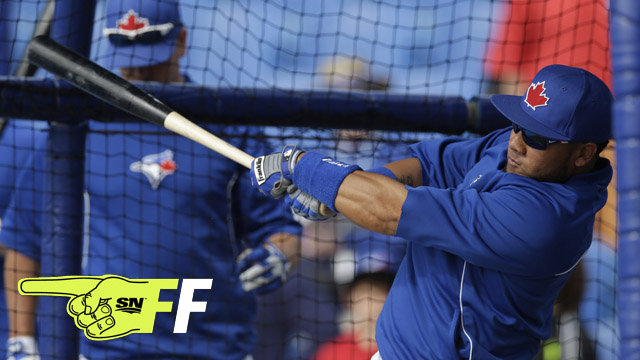
In this week’s edition of Blue Jays Central: Ask the Insiders, the Insiders answered several fan questions including how batting practice helps a struggling hitter and how Buck, Pat and Jack prepared to face opposing teams without the use of modern day video.
Carmen asks: I was wondering how the batting practice helps a struggling hitter with his timing. In BP, the batters are thrown lazy balls to hit, how will that help with them facing a 95 mph fastball or a 85-90 mph sinker?
Buck Martinez: Carmen that is a great question and many of the modern day hitting coaches think just like you. With the ballparks equipped with indoor batting cages, many of the hitters do most of the fine tuning underground early in the day through tee work and soft toss. The ritual of pounding baseballs thrown at 65 miles an hour is similar to a golfer standing on the driving range hitting a 1,000 balls. Rarely will a hitter see the same pitch he hits into 500 level of Rogers Centre during BP over the course of four at bats during a big league game. It is the same as a golfer stepping up to the first tee, feeling great about the practice session, looking down the first fairway wondering, “who put trees, sand and water on my driving range?”
Pat Tabler: Carmen, batting practice is just that… practice. The hitters are working on the mechanics of their swing. They might be working on going the other way or staying back or trying to build a more perfect swing. You do this in a variety of ways. Soft toss, tee work or regular batting practice off of the coaches. You are trying to get a “feel” for your good swing. When you teach this muscle memory into your swing, this helps you face Major League pitching. You will speed up to hit the 95 mph fastball naturally in the game — but not unless you have that good swing built through practice.
Gregg Zaun: Carmen, they throw BP from 45 feet so it gets on you quick like a 95 MPH fastball. A hitter’s timing is more internal than external. The only thing that should change is when he gets started in relation to a pitcher’s delivery.
 Have your say: Have an opinion on the news of the day? Better yet, want to become a Fan Fuel blogger? Email us here. | Ask the Blue Jays Central Insiders a question!
Mike Wilner: Batting practice tends to be almost exclusively fastballs, it’s true, and thrown about 20-30 miles per hour slower than game speed (5-10 slower when Jamie Moyer is pitching). But remember, BP is also thrown in front of the mound, not on it, and that definitely gets the ball to the hitters seeming a lot faster. Mostly, though, BP is about getting timing and rhythm and feeling good at the plate.
Patrick asks: This question is for Buck, Jack and Pat. When you guys played, how would you prepare for going over the opposing team’s pitchers/lineup? I understand now there is so much video/personal dvds etc. to be watched on the plane and in the clubhouse (or at home on the couch). I’m curious to know how you did it. Thanks!
Buck Martinez: Patrick when I would prepare for an opposing lineup as a catcher, I would meet with the pitcher, pitching coach and my catching instructor to go over the hitters. We didn’t have all of the scouting reports or video to lean on and I believe that may have made the process easier. Without the advanced reports we watched the hitter early during the game to see if he had changed his stance or stepped into the batter’s box in a different spot the normal. With my pitchers I always stayed with their strengths to keep them as comfortable and confident as possible. As the game went along we might change the plan for hitter to hitter or inning to inning according to the many factors. The score, the inning, where we are in the opposing lineup, how well are they swinging and how’s my guy throwing. All of those things factor in my pitch calling decisions throughout the course of the game.
Have your say: Have an opinion on the news of the day? Better yet, want to become a Fan Fuel blogger? Email us here. | Read more Fan Fuel blogs here
Pat Tabler: Patrick, great name by the way! Back in the olden days (That is really hard to say!) teams would go over scouting reports built through our advanced scouts. We would hold “Advanced Meetings” before every new series we would play. The scout’s reports would tell you who was hot or who was not. There would be a report on pitchers who were on the opposing club and what they liked to throw. The scouts would also tell you where to position yourself on defence. The hitters had their own meeting and the pitchers would have their meeting to go over how they would pitch to each batter. Baseball is such a visual game so there was no video to help you “see” what they were talking about. You would create your own scouting report for facing the pitcher at some earlier time. We would keep individual diaries of pitchers we’ve faced for our own personal report. You would have to get a feel for the game by just playing it and using what the scouts told you. Video has really enhanced the game for the players. I wish it could have been around on this larger scale when I was playing. It really would have helped!
Jack Morris: We did have scouting reports and every time you start a new series you would go over the tendencies and strengths of the opposing hitters with the pitchers. Most importantly how they did against you. Now, the more I faced a guy the more I understood what they wanted to do against me.
Levi asks: As far as the Clay Buchholz doctoring the ball issue goes, is there any repercussions for the manager to ask the umpire to check the pitcher for a foreign substance? I believe in hockey if you ask a referee to look for an illegal stick, the team gets a penalty if the stick turns out to be fine. If there is no penalty to the manager, then did the entire dugout just miss it?
Buck Martinez: Levi there is no penalty for asking to check the pitcher and finding he’s clean. The entire situation should have been handled on the field by the players, coaches and managers. I have been involved in games when pitchers have thrown spit balls or scuffed and cut balls and if you see enough of them you ask the umpire to check the pitcher. Back in the day, after a pitcher gets checked and the ump doesn’t find anything, the pitcher would throw at the hitter with the message, “check this one.” It is really much ado about a long time occurrence in baseball.
Gregg Zaun: There are no penalties for a manager asking an umpire to take a look at something. He either will or he won’t. Some managers have done it to just to unnerve opponents.
Dirk Hayhurst: If Clay was caught doctoring a ball or applying a foreign substance to his hands, he could (and should) be ejected on the spot according to the rules of baseball under 8.02. However, all rules on ball doctoring are subject to the umpire’s interpretation. If the umpire feels the player is not purposefully trying to doctor the ball, he can elect to warn that player that his actions could be seen as doctoring, and advise him to cease. If the player continues, the umpire can take action.
As far as rules and foreign substances go, I contend that every pitcher cheats to a degree. consider this part of Rule 8.02:
Rule 8.02(a) Comment: If at any time the ball hits the rosin bag it is in play. In the case of rain or wet field, the umpire may instruct the pitcher to carry the rosin bag in his hip pocket. A pitcher may use the rosin bag for the purpose of applying rosin to his bare hand or hands. Neither the pitcher nor any other player shall dust the ball with the rosin bag; neither shall the pitcher nor any other player be permitted to apply rosin from the bag to his glove or dust any part of his uniform with the rosin bag.
You can put rosin on your hands. Not your hat, or your forearms, or mix it with sunscreen, or wet hair, or gel, or pine tar, or whatever else a crafty pitcher has at his disposal-all of which are technically foreign substances. You could even contend that whatever “Mississippi Mud “is used to rub up baseball’s before the game is doctoring since it’s not “a part of the field at the time of play” and thus foreign. Super technicality, but it just shows you how much of all this unspoken and accepted around the league.
Have your say: Have an opinion on the news of the day? Better yet, want to become a Fan Fuel blogger? Email us here. | Read more Fan Fuel blogs here
Even David Ortiz said he knows every pitcher in the league does it, which supposedly makes it a non-factor.
More of what you can’t do, technically, here:
(3) rub the ball on his glove, person or clothing;
(4) apply a foreign substance of any kind to the ball;
(5) deface the ball in any manner; or
(6) deliver a ball altered in a manner prescribed by Rule 8.02(a)(2) through (5) or what is called the “shine” ball, “spit” ball, “mud” ball or “emery” ball. The pitcher is allowed to rub the ball between his bare hands.
Mike Wilner: I don’t believe there’s any specific penalty for asking the umpire to check a ball or a pitcher and not finding anything, but it’s a cat and mouse game and you don’t want to give your opponents a reason to check your guys, either.
Jamie Campbell: Levi, a manager has the right to ask the umpire to check the ball, and if there is evidence the ball has been damaged intentionally, the pitcher is automatically ejected. However, John Gibbons and his staff either didn’t notice, or simply didn’t think what Buchholz was doing was illegal.
Riley asks: Seems crazy that fans would demand that John Gibbons be fired with the slow start. Looking back to April, is there anything you can see that “If Gibby had…” the record would be better than it is? Or is it simply a matter of injuries (Reyes, Bautista & Lawrie) and too many new guys getting used to each other?
Buck Martinez: Riley, when was the last time Gibbons failed to get a hit with a man in scoring position? When did he last walk a batter or strike out with the bases loaded? The call for the manager’s head is always the quick fit solution but rarely turns things around. When all of the off-season acquisitions were made, we all were singing the praises of the front office and began making plans for the playoffs. Well, the fact of the matter is the players have not performed up to expectations and the coaches and manager have little to do with the bad numbers. Things will only turn around when the plays are made in the field, pitches made from the mound and the at bats are more determined.
Pat Tabler: Riley, I think it would be crazy to fire John Gibbons one month into the season. He has made all the right moves in trying to guide the team to victories. He has put the proper players in their spots to succeed and it just hasn’t happened yet. It is not his fault that the starters ERA is approaching five and a half runs per game or the hitters just can’t pick up those two out hits. If the pitching and the hitting were better, it makes the manager look a whole lot smarter. Gibby can’t field for them also. I can’t really think of one time where I said to myself, “If only he’d of done that….the Jays would have won!” Not once! The Jays just have to start playing better.
Jack Morris: Let me put it this way, you can tell your son or daughter to drink milk but if they don’t want to, they won’t. It’s not John Gibbons fault the way they are playing.
Gregg Zaun: Riley, it’s always been my opinion that managers get fired because you can’t fire the whole team. The players are the ones that play. Managers can’t do it for them. If Major League players need to be motivated to play the game properly, they are in the wrong business.
Dirk Hayhurst: This is one of those things that gets interpreted through the lens of the win loss record. The team is struggling as a whole so fans try to find one all-inclusive reason for cascade failure. They pick the manager, every time. There is no single thing that Gibby did that was so far beyond norm that you could pin this horrible start on. The manager makes calls on players, tries to put them in situations to succeed, but at the end of the day the player has to do their job.
Ironically, Joe Maddon gets highlighted in conversations like this. He’s supposedly the benchmark of managerial success and inspiration. He’s a great manager, sure, but he’s also the benefactor of a great team that plays up to expectations, and has succeeded despite a low payroll. He didn’t set the budget, and he didn’t draft the team. However, he has reaped the benefit of an amazing array of young talent producing, and, coupled with his charisma and eccentricities, fans think he’s a genius. I guarantee you that if the right set of players was offered in a trade to Tampa, Joe would be swapped like any other piece on a baseball chessboard.
Bottom line, Gibby could get penguins into the locker room, but the players still have to play.
Mike Wilner: What it really comes down to, Riley, is a group of good baseball players playing well below their capabilities. When that happens – when everything is going wrong and only three or four guys on a whole team are performing as expected – it’s tough to accept that everyone is playing badly and people want someone to pin it all on. The easiest target is the manager.
Jamie Campbell: Riley, I have a hard time faulting the manager for the awful start. Perhaps Gibbons’ mistake was assuming the veteran players understood their responsibility. They look like a compilation of good players, just not a good team. Losing Reyes in Kansas City didn’t help. It seems they haven’t recognized you can’t win often by constantly swinging for the fences.
Rob asks: I was listening to Baseball @ Noon the other day, and I like the idea of improving the awful infield defence while Jose Reyes is out by moving Jose Bautista to third, Brett Lawrie to second and calling up Anthony Gose for the outfield. What do you guys think?
Buck Martinez: Rob I think that was the initial thought of the organization when Reyes went down in Kansas City. Lawrie could play anywhere on the field in my mind and would be a terrific second baseman. When I was with the Brewers, Jim Gantner was our third baseman and Buck Rogers the manager moved him to second. I asked Buck why he would take Gantner off of third where he was one of the best in the league. He thought Gantner would be much more valuable to the team at second because he would have many more touches over the course of the season. It proved to be the right move as Gantner was a fixture at second for his entire career. With Bautista I think he would be great at third but it would take at least an entire spring for him to get the timing down to play the hot corner on a regular basis. He had back trouble after the games at third in KC but it wasn’t related to the defensive switch. The risk of making those dramatic moves during the season is that it could backfire with two players playing out of position. As for Gose he isn’t doing much in triple-A.
Pat Tabler: Rob, by making all of those moves that you described, a simple question struck me. “Wouldn’t this make our defence even weaker by playing three players out of position while they learned on the job their new assignments?” Bautista is a GREAT right fielder. Lawrie is an OUTSTANDING third baseman. Rasmus is playing a very good centerfield. Why would we just move them all around? With Reyes out can’t we just find another everyday shortstop (Brendan Ryan-Seattle?) and go from there. Seems to me to be the easiest solution.
Jack Morris: It’s not for me to say. The Jays just have to play better overall. Gibbons and the staff need to do what they need to do.
Dirk Hayhurst: I like it, except for the following facts:
Anthony Gose still K’s far too much, and that’s at triple-A. And, if he comes up, he doesn’t play every, which limits his development. Brett Lawrie could handle second base fine, I’m sure, but it puts him in more plays. The way he plays indicated more chances for injury, especially when you factor in base runners and double play situations. Moving Jose to third also puts him in more plays, and it takes a strong arm out of the outfield.
Mike Wilner: For me, that idea is more about improving the offence than the defence. Fielding second base has been rough, to be sure, but is the improvement there as much as the dropoff at third? Bautista is a good defender at third, but Lawrie is among the best there is. Also, it has been three years since Lawrie has played second, so there are no guarantees that he’d move over there and be great right away. I don’t mind the move, but for me it’s to get Gose’s bat and legs into the line-up over Izturis/Bonifacio.
Jamie Campbell: Rob, I oppose the idea of having Bautista move to third and Lawrie to second, even though the organization discussed it as a possibility before Lawrie came back from injury. It’s my opinion that consistency means something. Baseball is a game of routine, and having an All-Star right fielder and Gold Glove-calibre third-basemen get out of theirs is anti-productive.