Somehow, despite a huge talent infusion from Auston Matthews, William Nylander, Mitch Marner, and Nikita Zaitsev, the Toronto Maple Leafs have one of the worst records in the NHL heading into the middle of December.
The Leafs are in this situation despite a 51.22% score-adjusted Corsi and 54.44% xGoals for percentage at 5-vs-5, according to Corsica.hockey, the latter ranking third-best in the NHL. Toronto is the third-highest scoring even strength team in the league, and they allow among the most goals against.
Part of the blame there has to do with Frederik Andersen’s poor start from which he’s since recovered, and Jhonas Enroth not being able to stop anything. But you don’t bleed goals against like that without having some areas of weakness on defence. Not surprisingly, the focus of criticism surrounding the team has been on its blue line, so let’s examine those players.
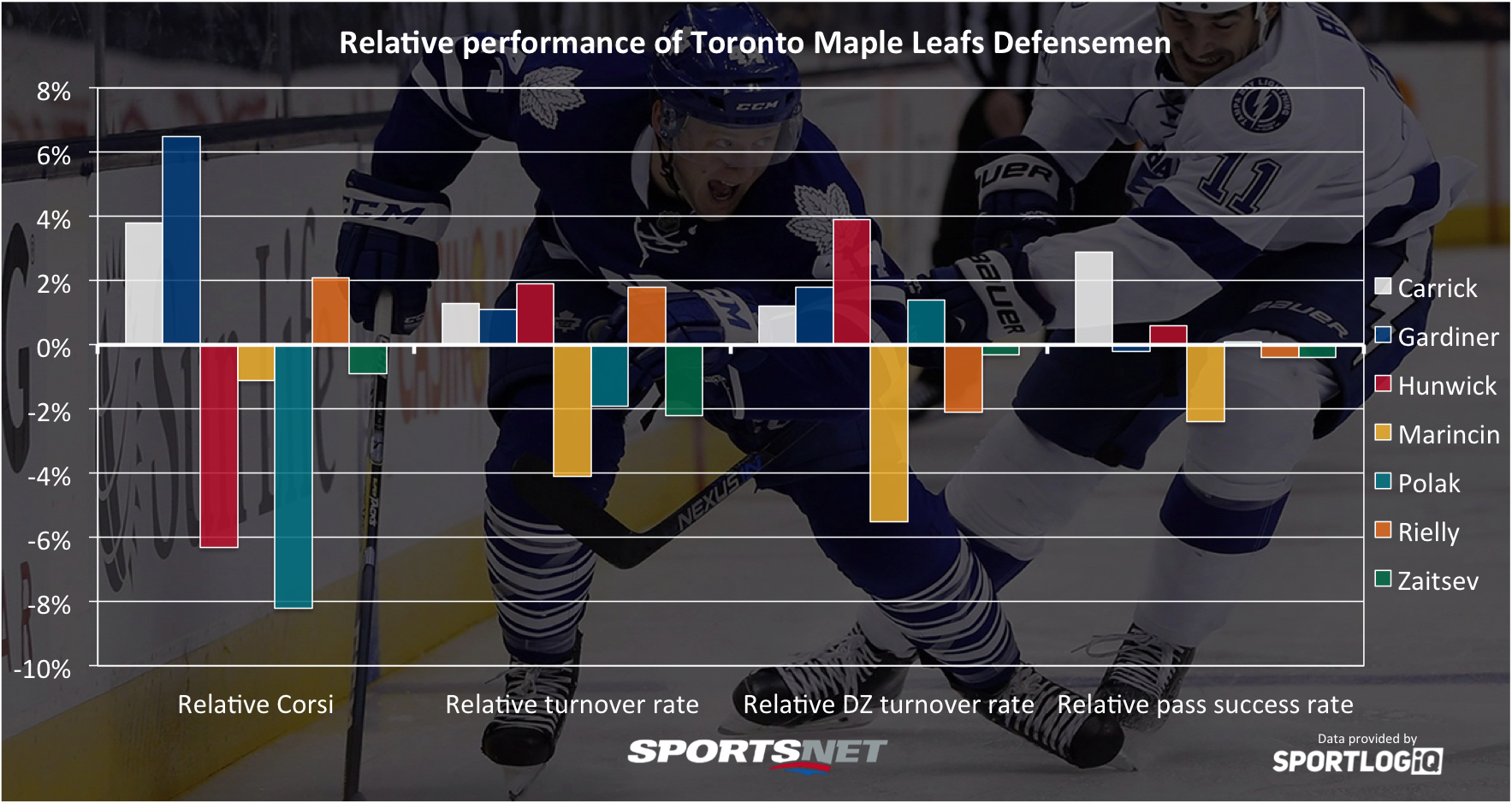
Obviously not allowing shot attempts against is a good indicator of defensive play, but I wanted to take a detailed look into which players are making mistakes, and who is relied upon. For the purposes of avoiding confusion, turnover rate is inverted so that positive numbers equal a positive result.
When looking at turnover rates, you can see that Connor Carrick and Jake Gardiner are very safe puck handlers, and the two form a very strong second pairing that dominates the shot clock. Morgan Rielly overall also has strong turnover numbers, but when it comes to the defensive zone, he struggles quite a bit more. This, combined with how aggressively Mike Babcock matches him against opponents’ best lines, could explain why the Leafs allow so many goals with Rielly on the ice.
Matt Hunwick is surprisingly successful with the puck on his stick both passing and overall, which doesn’t look right when you compare that to his Corsi numbers. But one thing to keep in mind for him is that while he’s at 44.9% Corsi overall this season, he’s at 49.3% without Roman Polak. That’s still below average, but not too bad for a third pairing defenceman. Unfortunately that Polak-Hunwick pair has been absurdly bad despite Babcock trying to aggressively shelter them. Neither player turns the puck over very often in the defensive zone relative to their peers, but they don’t get the puck much either.
Nikita Zaitsev is improving his puck handling lately after being comparable to Martin Marincin early in the year, who looks like someone the Leafs should avoid giving the puck to at all costs.
Other factors in turnover rates are the kind of plays defencemen are actually making, so who is being relied on to clear the zone?
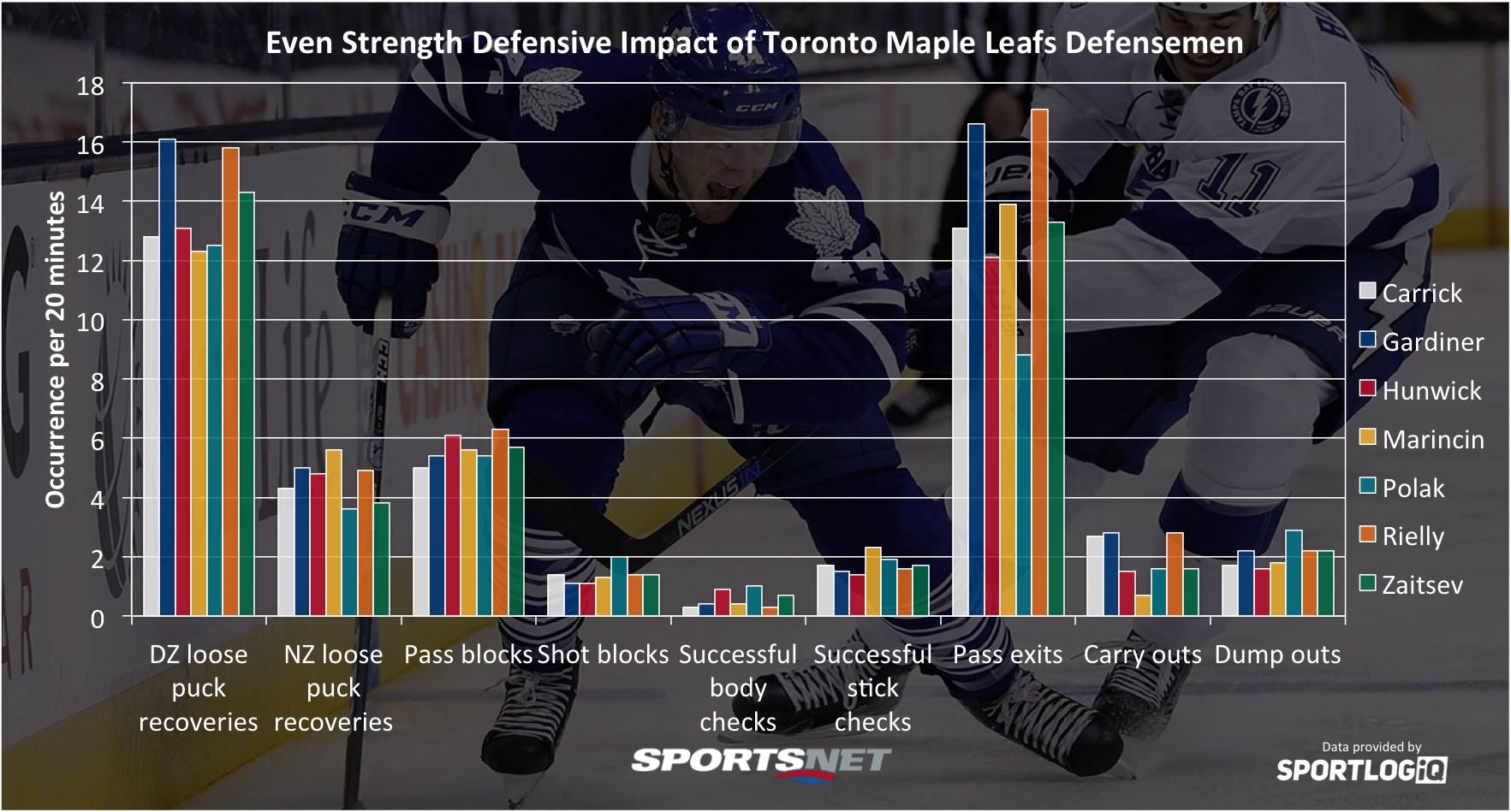
Notice that while Rielly has a higher than average turnover rate in his own zone, he is among the leaders in defensive involvement, blocking more passes than any other Leafs defenceman, recovering the second-most loose pucks in the defensive zone after Gardiner, and creating the most controlled exits with both passes and carry outs (tied with Gardiner).
Here you can also see that while Carrick is a bit more dependable to get passes tape to tape, it’s Gardiner who is doing the most work on that pairing, insulating the rookie defenceman and allowing him to thrive — it’s a very good situation for both players.
You can also see here where Marincin has had success in the past, specifically with stick checks and neutral zone loose puck recoveries. He is very good at denying opponents entrance to his defensive zone, however his limitations when passing or carrying the puck outweigh that skill and make him a liability overall.
With that said, even on his off side Marincin would likely be a better solution on the third pairing with Hunwick than Roman Polak. Polak is effective at taking the puck away from opponents with both his body and his stick, but he’s poor at recovering the loose pucks he creates, and even when he does recover them, most often he can’t accomplish anything with the puck.
Zaitsev seems to not really stand out anywhere, but also doesn’t seem to have glaring weaknesses, though he could stand to be a bit more aggressive in the neutral zone with a partner as mobile as Rielly. That all-around ability is likely why Babcock likes Zaitsev, and he could still improve as he adjusts to the NHL.
I think one of the reasons you don’t see the Maple Leafs making aggressive moves to re-tool their blueline is because they’re playing the long game. Both this season and last Babcock has seemed to have a very specific plan for Rielly to develop into a number one defenceman who can shut down opponents and score. And while there’s going to be growing pains, Babcock can live with them.
Carrick and Gardiner looks to me to be a far above average second pair and something the Leafs should stick with going forward. I don’t think there’s anything to complain about there.
The biggest problem if the Maple Leafs want to make the playoffs this season is likely that third pairing, which I know is an obvious thing to say. Hunwick may be a salvageable player with the right partner, but even though he and Polak have been extremely lucky relative to their teammates’ on-ice save percentage so far, they are a mess on the ice.
The good news for the Maple Leafs is that if they want to improve the blue line, the bottom pairing is the easiest part to boost — they really may only need one decent, right-handed defenceman.
Which is to say, it’s confusing why they haven’t used Frank Corrado very much.