At kickoff, it had been 23 years to the day since the Saskatchewan Roughriders had won their first and only Grey Cup. The franchise was back in the post-season for the first time in 11 seasons and, despite a vaunted offence led by quarterback Kent Austin, they’d just snuck in after finishing a rocky 1989 campaign with a 9-9 record. Few gave them a chance to even make it to the big game — never mind win it.
On the other hand, the Hamilton Tiger-Cats had finished atop the East standings sporting essentially the same roster that had appeared in the Grey Cup for three straight years from 1984 to ’86. So, it looked to be a one-sided affair. But by the time the clock wound down on the 1989 Grey Cup, the game would go down as the highest-scoring championship of all time, and the most exciting 60 minutes in CFL history.

PAUL OSBALDISTON, Tiger-Cats kicker Saskatchewan was definitely an underdog in the playoffs. Going into the game we were — and should have been — heavy favourites.
MILES GORRELL, Tiger-Cats offensive lineman We had a pretty good season and a pretty good team, first in our division. Mike Kerrigan, our quarterback, was hitting everybody. We had a good set of receivers with Rocky DiPietro and Tony Champion. Champion was an unbelievable athlete and a man who… he was just amazing.
OSBALDISTON Our offence that year was very dynamic. I think in 1989, I tried 74 field goals and almost 60 extra points. We won games 45–20, 40–30, scores like that. Our defence was younger; it was sort of the opposite of what got us in the ’86 Grey Cup, which was a stellar defence.
GLEN SUITOR, Roughriders safety and holder We knew they had a good team. They had some serious talent out there. Tony Champion was one of the great receivers in the league at the time.
DAVE RIDGWAY, Roughriders kicker Tony was at the peak of his game, Mike Kerrigan the same. We had played two fantastic games against them during the year. They won both the games, but they were barnburners.
RAY ELGAARD, Roughriders receiver Heading into the season, the thought was, “Sure, why not us?” There’s only eight teams in the damn league and we haven’t been in the playoffs in 11 years.
OSBALDISTON We were confident, but not cocky or arrogant. It wasn’t like we took them lightly. It would be easy to point a finger and say, “Geez, that’s what happened.” But it didn’t. There were enough guys on the team to say, “Listen, it doesn’t matter what your record is during the year. Either team can win here.” We knew the record during the season didn’t matter.
GORRELL They were a bunch of guys we respected because they were tough, hard-nosed football players. There was nothing fancy, they ran the ball well, had a good offensive line and could hurt you with Jeff Fairholm and Elgaard inside.
ROCKY DIPIETRO, Tiger-Cats receiver Even though we were confident, we knew they could score points. They had a good offence and Austin at quarterback. They had lit it up all year. It was like the way we came to the Cup in ’86; they had come out of nowhere. And the CFL is the kind of league where you can get hot at the end and you can ride that right through to the Grey Cup.
Finding themselves a win away from hoisting the Grey Cup would’ve seemed inconceivable to anyone in the Riders organization even a couple of years earlier.
JOHN GREGORY, Roughriders head coach I give [GM] Bill Baker a lot of credit. When they hired me in Saskatchewan the team was in folding mode. Financially, they were in horrible shape and had no money. And Bill Baker made a lot of changes and just worked so hard to get ticket sales up. He’d allow people to trade cattle, or trade grain for season tickets. He was a tough, ornery son of a bitch, but he did a great job.
ROB VANSTONE, writer, Regina Leader-Post John Gregory was one of the guys who would go anywhere to promote the team. He was tireless in terms of going out and spreading the gospel of the Roughriders. In 1987, they had even held a telethon to keep the Roughriders afloat. Two years removed from a telethon, they were in the Grey Cup.
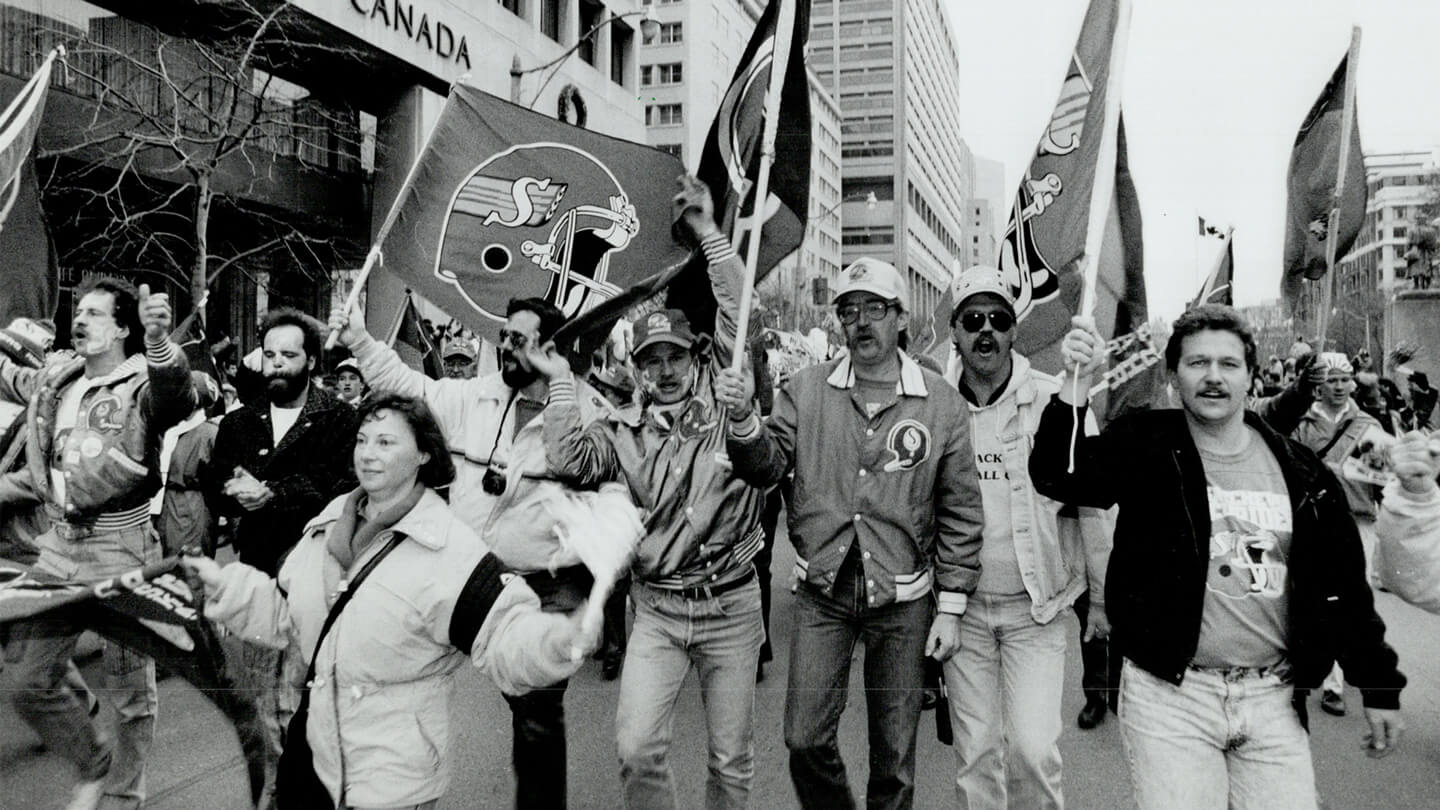
RIDGWAY Out there on the Prairies, they’re really rabid with their support. Win or lose, those guys are there. I played some really bleak seasons — ’84, ’85, ’86 — that just weren’t a lot of fun. But the fans still showed up.
VANSTONE A lot of the veterans who were there in ’89 had already taken 20 to 30 per cent pay cuts in ’87 just to keep the team afloat.
All of that sacrifice nearly amounted to nothing, when a pass interference penalty by Suitor cost the Riders a Week 10 game against the B.C. Lions, leaving their playoff hopes in jeopardy.
GREGORY Suitor was a good player, but the fans had been on him because they didn’t think he would hit anybody. Before that B.C. game, there were a number of articles saying that Suitor was a chickenshit. And I never thought that about him. He was a safety; he didn’t need to be a killer tackler. But you could see that getting to him.
SUITOR I was battling with David Williams of the Lions all game long, and I had a chance to get the last shot in.
GREGORY We were ahead by five points and there were seven seconds left. They were going against the wind and there was no way, even with a QB as strong as Matt Dunigan, that he could throw it all the way to the end zone. We played a prevent coverage, and he threw the ball downfield around 60 yards. All we had to do was let him catch the ball, make the tackle, and the game is over. Well, Glen came in and absolutely destroyed the receiver [before the ball arrived].
SUITOR I made a selfish choice.
The penalty gave the Lions another play. B.C. eventually won on a messy quarterback sneak.
RIDGWAY The fans were calling for Glen’s head.
ELGAARD That was the bottom of the valley. It was the straw that broke the camel’s back.
SUITOR We [knew] we were in trouble at that point, that we might not make the playoffs. But I felt our leaders — Kent Austin, Tommy Burgess, Ray Elgaard, Bobby Jurasin, Bob Poley — took the opportunity to stand up in the room and say, “We can blame one guy for what happened, or we can come together.”
ELGAARD Those moments have the ability to either kill you or bring you together. The way it worked out, that was the moment that brought us together.

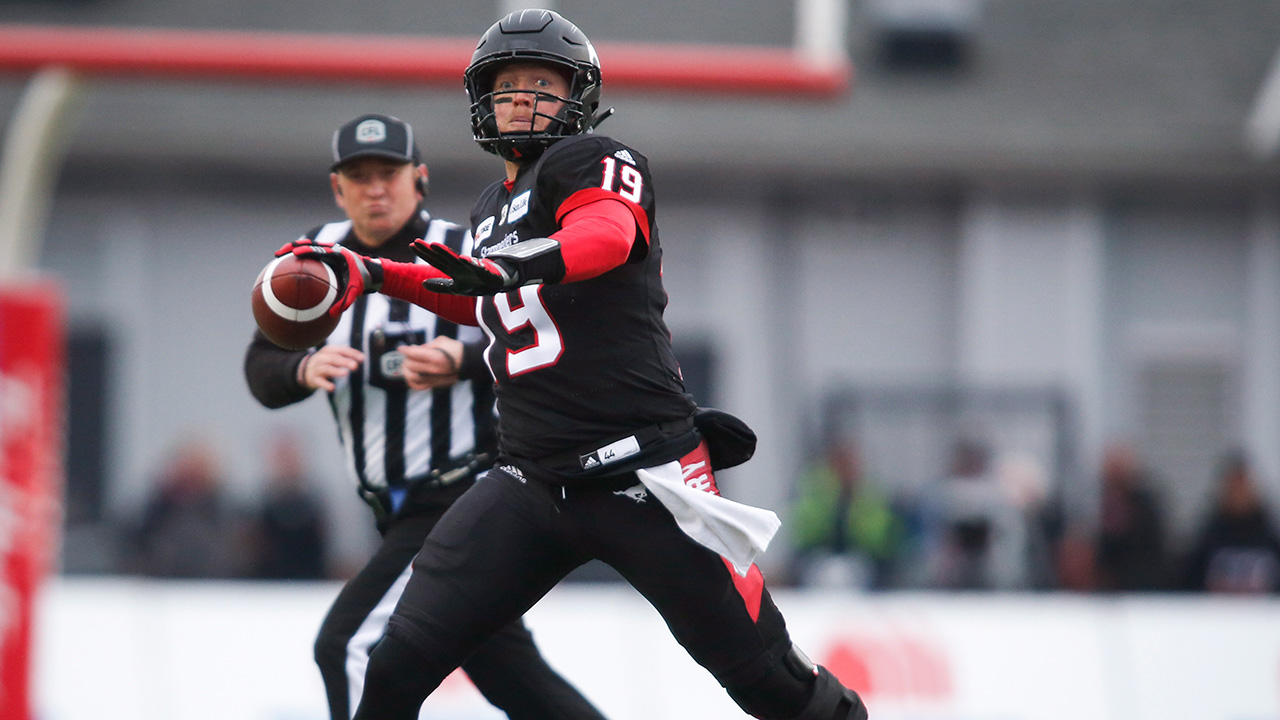
SUITOR The way John Gregory handled it also helped. I remember sitting in his office and he said, “You’re going to play. I know what the fans are saying, but you’re our starting safety and I have confidence in you.”
GREGORY When I brought him into my office he thought I was cutting him. Honestly, I think that’s what he thought.
ELGAARD The next day when Gregory brought us together he said, “We’re f—ing starting over. We’re better than this.” That’s when this psychologist guy showed up.
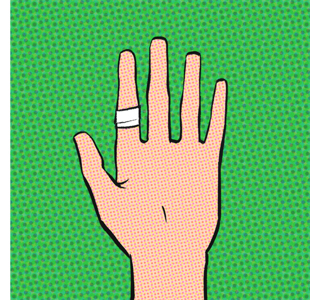
SUITOR Gregory had a sports psychologist work with us throughout the year. I had talked to him after that B.C. game. His question for the team was, “Have you thought about where you would wear your Grey Cup ring?” I thought, “Wow, if we’re serious, if we really think we can do this, why shouldn’t I think about where I’d put my Grey Cup ring?” So we all put a piece of tape on the finger we’d put the ring on — it was a team thing and we didn’t tell anybody about it. If you look back at replays, you’ll see that on the finger I wanted to wear the Grey Cup ring, I had a piece of white tape. I wore it in practice and I wore it in games.
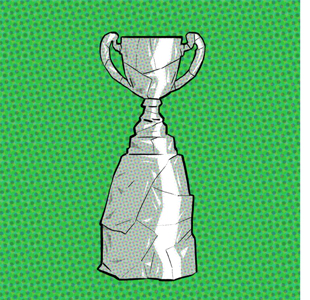
ELGAARD There’s more of a story to that than just tape on the fingers. The scene is: The team’s f—in’ falling apart. We were at the bottom of a dip in the season, lots of struggle and desperation — the typical Roughriders story. So the idea was that we needed to get the baggage of the Roughrider history off our backs and start the ’89 season over. [Gregory] made a new roster, new schedule. Like, “We’re starting the ’89 season today.” They did all kinds of weird crap. They made a tinfoil Grey Cup and put it on a little stand in the corner of the dressing room. All sorts of weird shit.
 SUITOR I’m not sure if it affected every player like it did me, but it crystallized the vision and let you know what you played for. Some guys rolled their eyes, but it was cool for me.
ELGAARD I’m a big believer in “plays make games, players make plays.” It’s gotta be done on the field; I don’t care how much you talk about it. You need to be properly prepared and physically prepared. And you need to play like an a–hole. Those are the things that actually win the games. But I didn’t discount the effect of psychology on the physical player. I didn’t drink the Kool-Aid, but I didn’t spill the jug on the floor either.
In the first round of the playoffs, the Riders bested a 10-8 Calgary Stampeders team, 33–26, despite lingering injuries to the receiving core. Moving on to face the Edmonton Eskimos in the Western Final, they were all-but-completely written off. The beat the Esks convincingly, 32–21, thanks to a complete effort on both sides of the ball.
VANSTONE The night before the Western Final against Edmonton a buddy asked me, “What would you do if the Riders beat the Eskimos? Would you make the trip to Toronto for the Grey Cup?” I just laughed at him. It just seemed like the most absurd question. If someone asked me to join Chippendales it wouldn’t have been as absurd.
SUITOR Absolutely nobody thought we had a chance against the Eskimos. Even their team was very vocal about the fact that this was going to be a walk in the park. They were talking about booking flights to Toronto early.
RIDGWAY We heard and saw all of it. We had the clippings in our lockers.
GREGORY [Against Edmonton] we started Kent Austin at QB and in the first series of the game he got an ankle injury. But Tommy Burgess came in and just had a whale of a game.
ELGAARD Burgess went in, threw a couple of touchdown passes, finished the game, and then the controversy began.
GREGORY One of the [radio] stations out of Saskatoon had a poll as to who I should start, but I didn’t want nobody to tell me the results of the poll, didn’t want that to have any effect on my decision. But Tommy won the poll. Everybody loved Tommy Burgess.
TOM BURGESS, Roughriders quarterback That was the third year both Kent and I were on the team. In ’87, I had gotten hurt and that’s when Kent first came in. Then ’88 and ’89 were two platooning years — whoever had the hot hand played.
SUITOR We knew we had great quarterbacking — we had confidence in both our guys.
GREGORY Look, the key issue for which QB would play was which kind of coverage we were facing. Tommy Burgess was especially good against man-to-man coverage, which was what Edmonton was using and that’s why he was so effective in that game. But Hamilton was mainly a pattern-read coverage, mainly a zone coverage, and Kent was just really good at picking apart zone coverages.
ELGAARD That’s a bunch of crap. They were both good quarterbacks; they both knew how to run the offence. We could win with either of them and we’d won lots of games with Tommy at QB. But in the end it was Kent, and he played unbelievably well like he did so many times.
[snippet id=4071101]
BURGESS Obviously I wanted to start, and that game was bittersweet for me because as an athlete you want to play on the biggest stage, and I didn’t. In hindsight I realized, even shortly after the game, Kent had played extraordinarily well during the second half of the season. And I had just demonstrated that I could be impactful if you needed me off the bench. So it was probably the safer and wiser call for coach Gregory. And he was right. Kent was unbelievable.
ELGAARD When push came to shove and the chips were down, f–k, they couldn’t stop [Austin].
With Saskatchewan Grey Cup–bound, it became a scramble to mobilize Rider Nation. An estimated 20,000 fans made the trek to Toronto.
GREGORY It was planes, trains and automobiles. Or planes, trains and buses. The whole city was coming to Toronto. Everybody was trying to find a way. There’d be advertisements in the paper that there were two free seats in the car, or whatever.
VANSTONE It became an issue not only for the fans, but for the franchise: How do you get the wives and tertiary people in the organization to Toronto? The Riders had an unofficial assistant equipment manager everyone called “Shorty.” The whole team got to Toronto and then realized, “Hey, Shorty’s not here.” So Ridgway stood up and said, “Listen, Shorty should be here,” so the players all chipped in to get him to Toronto.
RIDGWAY Normally, we would go in between 36 and 48 hours ahead of time. For championship and playoff games you go in earlier. We got in Tuesday night and as the week progressed, you started to see more and more Saskatchewan people in Toronto. One day, we came out of the Eaton Centre and there were several hundred Saskatchewan fans who had decided to hold an impromptu parade on the sidewalks down Yonge Street.
ELGAARD It seemed like a long week. Normally you’re at home and fly out on Friday and play on Saturday or whatever it is. You’re out there for a week living in a hotel. There was a lot of downtime and ass-dragging going on. Meanwhile, some of the Tiger-Cats were a bit more relaxed.
GORRELL I was a bit of a practical joker, so I used to have some fun. I’d buy these sticks of cordite, you know you put it in a cigarette and it would it explode. I put a couple of sticks in [Ti-Cats defensive coordinator] Rich Stubler’s cigarette pack, because he smoked all the time. He only had five cigarettes at the stadium and I put two in the cigarettes and neither one of them exploded. Me and [Osbaldiston] are thinking, “What’s going on?” This is a couple of days before the game. So we go out that night to the Whistle and Oyster, we’re sitting at the bar having some coconut shrimp, having fun. There’s Stubler and his mom and wife over at the other end of the restaurant having dinner. You could still smoke inside back then, and he lit a cigarette and it exploded and his mom almost had a heart attack. Whoops.
SUITOR I remember John Gregory saying, “Enjoy some of it early in the week, but this is a business trip and be ready to play on Sunday.” Based on my poor decision [with the pass interference penalty] a month and a half earlier, I knew there was no way I was going to enjoy the festivities. I was going to prepare.
GREGORY We had a bunch of good guys, good leaders on our football team, and I knew if anybody got out of line, Ray Elgaard would beat the shit out of them [laughs]. He was our quality control guy.
The day of the game — November 26 — was the biggest in many of the Roughriders’ careers. But despite the outsize nature of the contest, there was also a sense of familiarity for the players.
RIDGWAY There was a quiet anticipation in the locker room before the game. There wasn’t anything out of the ordinary. One of our offensive linemen, Roger Aldag, who was one of the seasoned veterans of the team, would always throw up pre-game, and it was no different for that game.
GREGORY When I was a young coach in college, I had some great speeches and I would think, “Boy, if we were ever going to win a game, this speech will make ’em do it.” I actually believed that crap. But I learned from my high school coach. He never gave a speech and we were undefeated two years in a row. What I believe in is get yourself prepared. The old boy scout motto: Be Prepared. So that’s what we did.
AL BRUNO, Tiger-Cats head coach I talked to my guys like men, told them to do their job. I didn’t give any pep talks — they didn’t need it. And that’s what I told them.
SUITOR When we got closer to the game — an hour, hour and a half out — you start to feel the energy building. It was just a sea of green. We’d poke our heads out of the locker room and you could see nothing but green and white. We knew it was a home game. A home game with double the people. I’m sure there were a lot of Hamilton fans in there, but when we looked at the crowd we just saw green and white, and heard the green and white.
BUD STEEN, back judge There are Roughriders fans everywhere. It doesn’t matter where the Riders are playing, these guys just show up. They’re everybody’s second-favourite team. So there was a strong contingent for them, but there were also a lot of Hamilton fans. There had been a campaign going in Hamilton: “Feed the Cat.” They would station this big cat near the end zone. So people would bring meat to the games and I remember early in the game somebody tossed a great big steak onto one of the end zones.
SUITOR I remember standing in the opening to the field for introductions, and I remember barely being able to feel my legs. The adrenalin was pumping so hard and you were so prepared to do everything it took that it was a work in progress to try and calm myself.
ELGAARD I don’t remember being overly nervous or awestruck, struggling with the noise or anything like that. You’re aware of what’s going on around you, but I don’t remember anything affecting me. It was just a big game.
SUITOR Looking back we probably all realized that we weren’t the best team in the league skill-wise, but that didn’t mean we couldn’t win. We were doing it for each other and we were doing it for a province that hadn’t seen it for a long time. We knew we were facing a great team, but we were on this roll, this mission. It wasn’t cocky, there wasn’t a swagger. It was more of a roll-your-sleeves-up-do-your-job-and-we’ll-see-what-happens confidence. Then we kicked the thing off.
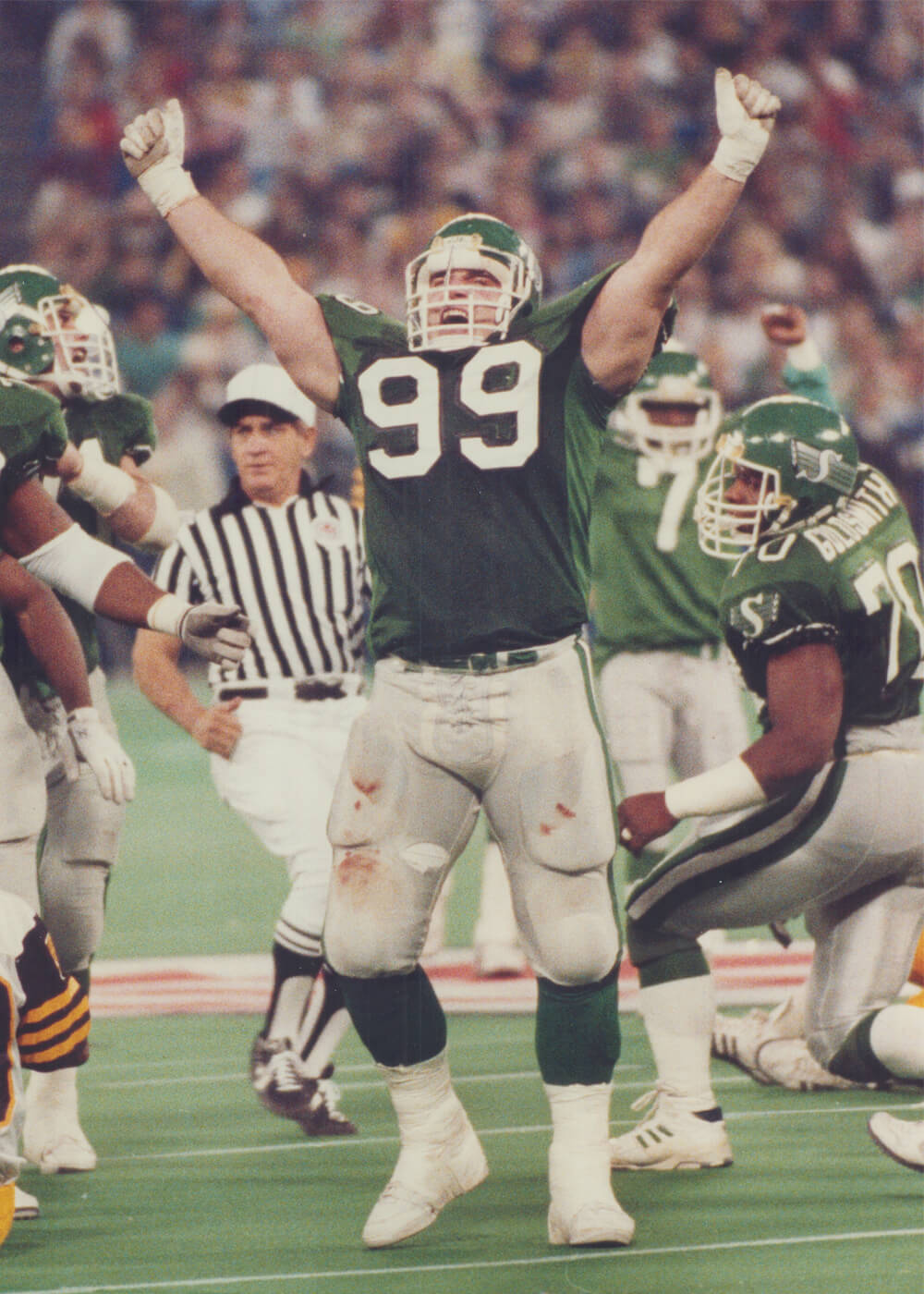
The game opened with something Ti-Cats fans had become very familiar with that season — a Tony Champion touchdown. But still early in the first quarter, Champion re-aggravated a rib injury on a rough hit.
STEEN I was right down there when he hurt himself in the Eastern Finals. He exposed himself on a catch and landed on the ball. It was pretty evident that he was seriously hurt. I didn’t really expect that he was going to be playing in the Grey Cup. I thought he’d be a scratch. When he came out of the tunnel I just thought, “Holy smokes, this is one tough dude.”
TONY CHAMPION, Tiger-Cats receiver [as told to Vanstone in 2010] I broke my ribs [in the first quarter of the Grey Cup]. I told the doctor, “Put an H bandage around them and see how long they last. I’ve got all winter long to heal up.” This is what you play for. I’m going to miss the biggest game of the year because my ribs are broken? I don’t think so.
GORRELL I saw him putting on the flak jacket and I went over and told him, “We gotta keep going, keep fighting. We need you.”
SUITOR Never did our coaches suggest that we should target an injured player. But I knew he was hurt, in all honesty. It wasn’t to deliberately hurt him, but I knew he was banged up and any more shots on him could have a lingering effect. Maybe he drops a pass late in the game because of some wear and tear early. There was one hit on the sideline [in the first half], and I thought it was a tad late but I didn’t get penalized for it. I probably should have. When I hit him, I heard him wheezing and gasping for breath a little.
OSBALDISTON You have to give him credit for the fact that he finished the game with cracked ribs. That’s a pretty gutsy thing to do.
BRUNO Tony Champion, come hell or high water he wasn’t going to miss the game. He said, “Coach, I’m OK.” I said, “Well get in there, then.”
It wasn’t long before the Riders found themselves down 13–1. With Kerrigan clicking with his receivers and running back Derrick McAdoo rolling, it looked like the Cinderella story was over in the first quarter.
ELGAARD We were down early, sure. That means you have plenty of time to get back up. But I’m sure there were lots of guys concerned, thinking, “Holy shit, these guys are walking up and down the field on us.”
RIDGWAY You know, I was a rookie in 1982 and so here it is 1989 and you had paid some dues by that point, but I hadn’t been to a Grey Cup before and neither had a lot of guys on the team. So we were down 13–1, I remember thinking to myself, “Boy, it doesn’t look good. You better drink in the atmosphere of what’s going on.” I removed myself to one end of the bench and looked around the stadium, and it was absolutely beautiful. It was filled with green and white banners. And before I ever really sat down, we scored a touchdown and were back in the game in no time.
DIPIETRO Most of us knew from experience [a comeback] could happen. Thirteen points is nothing in a CFL game. They had all kinds of good receivers — we were well aware of their potential.
GREGORY We were down a couple of early touchdowns and then Jeff [Fairholm, Riders receiver] made a great catch and went all the way on a hot route, right down the seam. That was critical in that zone coverage, hitting those seams.
RIDGWAY Jeff was probably one of the fastest players I ever had as a teammate — just incredible speed and great hands — a super athlete. And you could just see Kent’s confidence starting to build at that moment.
VANSTONE The Tiger-Cats were still celebrating a touchdown catch by McAdoo when all of a sudden Austin hit Fairholm with a bomb. It just shut down the Tiger-Cats’ celebration. From then on it was just an emotional roller coaster. Very stressful. It was absolute murder on your nervous system because you knew that every play could be the decisive play. It ripped your heart out in one second and left you three feet off the ground the next.
The Fairholm touchdown grab came partway through a wild second-quarter run in which both teams went back and forth, combining for five scores on five consecutive drives. At the half, Saskatchewan had clawed within five as the score sat at 27-22.
SUITOR It was this chess match that was happening at light speed.
DIPIETRO There were a few times I said, “Man, these [fans] must be having a great time” because it was a great game. But as a player you’re just gnawing inside. It felt like one of those games where the last team with the ball was going to win.
SUITOR It was amazing how little we celebrated when we made a play or how little we mourned when we were beaten on a play. We were in for a battle and we knew it. When you got the opportunities it was important to take advantage.
Near the end of the third quarter, with Hamilton still up five after the clubs traded field goals, the usually reliable Tiger-Cats special teams made an uncharacteristic error.
OSBALDISTON We were punting out of the end zone. It was a pretty tight part of the ball game and I got a high snap I had to jump up for. That throws off your timing and it takes you longer to get the ball off and makes you susceptible to a blocked punt. So when I came down, I took a peek up and there was a period where I probably could have kicked the ball, but I would have had to rush it and my steps were off. This is all going through your head really fast, but I didn’t want to give them good field position at that time. I decided I’d rather take the safety than have a short or blocked punt. Play it safe and live another day.
[snippet id=4269767]
Osbaldiston tucked the ball and hit the ground. The safety narrowed Hamilton’s lead to three, 30–27.
BRUNO That was the right decision. I congratulated him afterwards. If he’d gotten rid of it, it woulda been a lousy kick. Those two points didn’t beat us.
Saskatchewan scored on a one-yard run by Tim McCray later in the third to take the lead for the first time in the game. After the teams again exchanged field goals to open the scoring in the fourth, Kent Austin was picked off in the end zone by Will Lewis, a controversial interception that was ultimately called back.
STEEN Hamilton was beginning to play very tight. The preceding play had gone to the other side of the field and I was a long ways away out on the left hash mark and my partner was on the boundary. The pass goes into his area and I saw a lot of contact but thought, “He’s closer than me, so I’m not getting involved.” I knew I had to be very careful with my calls. The next play comes out to my side and Will Lewis got a little grabby, and I banged him with a pass interference call.
ELGAARD I see [Lewis] all the time. He always comes up to me and says, “Hey, you’ve got my ring on” [laughs].
VANSTONE That looked like an interception to me. If there had been video replay back then, you may be reading a different story. That play could have and probably should have been turned over on video replay. Instead, the Riders keep the ball and kick a field goal to go up 40–33.
STEEN After the game we were in our dressing room and the director of officiating, Don Barker, was there with his assistant Neil Payne, and Neil came running over to me and gave me a hug. He said, “Bud, thank God you got that pass interference call right.” I told him, “So I guess that one’s going to grade OK, huh Neil?”
Still down 40–33 with 48 seconds left, Hamilton had the ball on the Riders’ 10. That’s when a controversial non-call set the stage for “The Catch.”
SUITOR I remember talking in the huddle with [defensive back] Richie Hall: “Who should we double team?” The coaches wanted me to help on Rocky DiPietro. We thought Mike Kerrigan would go there. And on first down he did.
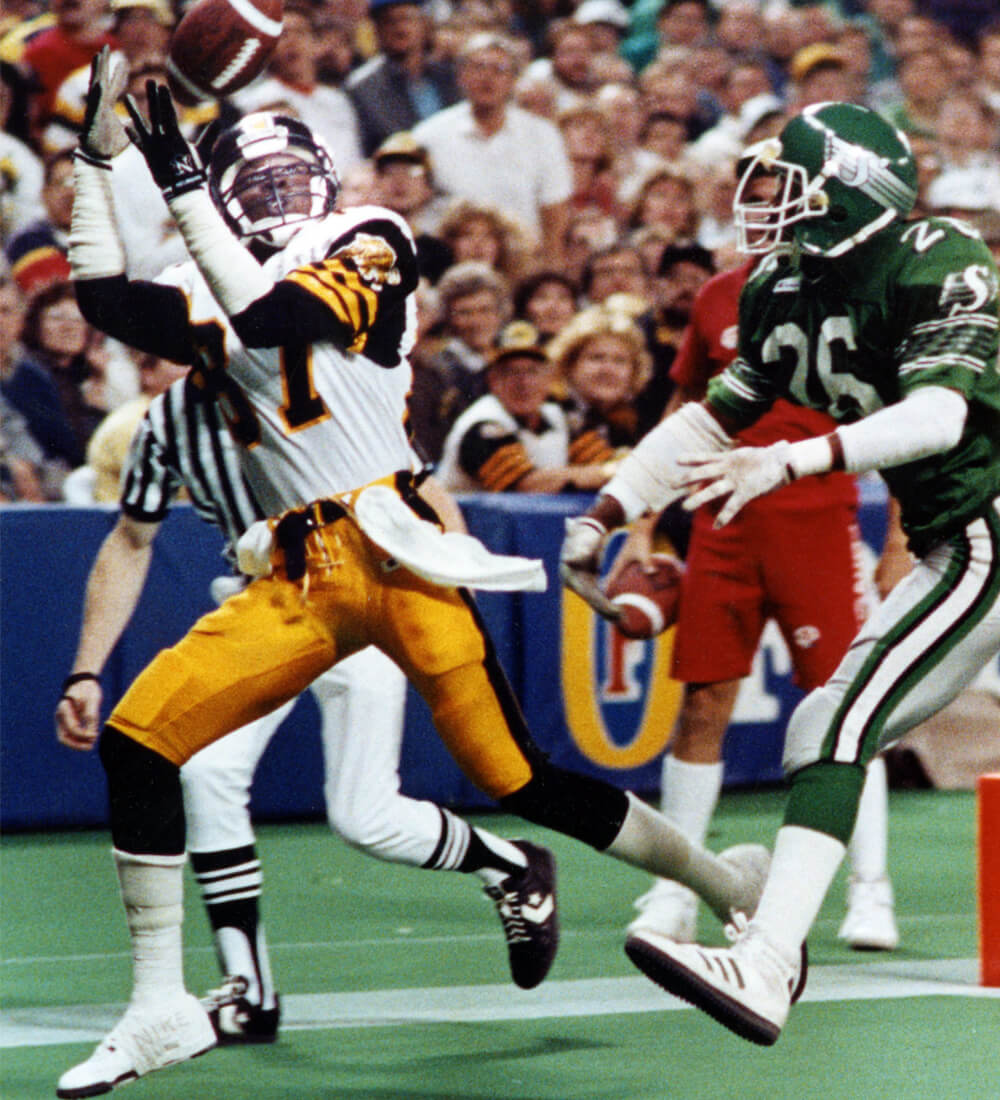
 DIPIETRO I had a chance to score but the defence made a good play and got a hand in.
BRUNO The defender held him by the jersey. DiPietro would have caught that ball — I know he would’ve.
ELGAARD There were lots of calls and non-calls that were a little bit questionable on both sides. There were three or four head-scratchers, but that’s the way it goes.
STEEN The term we used was “there has to be blood on the knife.” It wasn’t enough for a guy to have a knife out — you had to see blood on it before making a call. We didn’t want to be the deciding factor.
SUITOR Before the next play, there was the same discussion, “Should we double DiPietro again, or should I go to [Tony] Champion?” The call from the bench was, “Back on DiPietro. Stay hard on the middle.” Me and [defensive back Richie] Hall had a quick discussion as to whether or not we should change the call, “Shouldn’t we be thinking about Champion?” Richie wanted to make the change, [but] we ended up staying on DiPietro.
BRUNO We had a couple plays lined up and I told Kerrigan to look for Champion. If we’re going to score, he’s the one who can do it.
Champion had been Hamilton’s big-play weapon all season, setting a Tiger-Cats record with 15 touchdowns. Despite his broken ribs, he was still a constant threat to score.
CHAMPION [as told to Vanstone in 2010] I came back to the huddle, and [Kerrigan] looked at me and I looked at him. I knew I was getting the ball, and I was going to do anything I could to get it. The first hand the ball touched was my left. My right hand wasn’t on it yet. I turned around but, if you watch the replay, you can see that I never took my eyes off the ball. Then I fell backward and caught it.
GORRELL Tony’s looking inside and the ball is thrown way over to the right — this was all in slow motion for me. I can still see it, him twisting and turning and coming down with the ball. We were elated. That’s what you play for.
RIDGWAY That catch was as great as any of the ones you hear about — Lynn Swann down in Pittsburgh or any of those great catches in the annals of the NFL — it was unbelievable. Even more when we found out that he was injured.
Champion’s TD tied the game at 40.
DIPIETRO We were ecstatic. I knew Ridgway was a good kicker and playing in a dome, anything can happen, but we thought we’d be going into overtime.
CHAMPION [as told to Vanstone] If the game had gone into overtime, I probably wouldn’t have played. I was done. It had reached the breaking point. Afterwards, I went to the hospital and got my ribs checked out. I couldn’t get out of bed for two or three days.
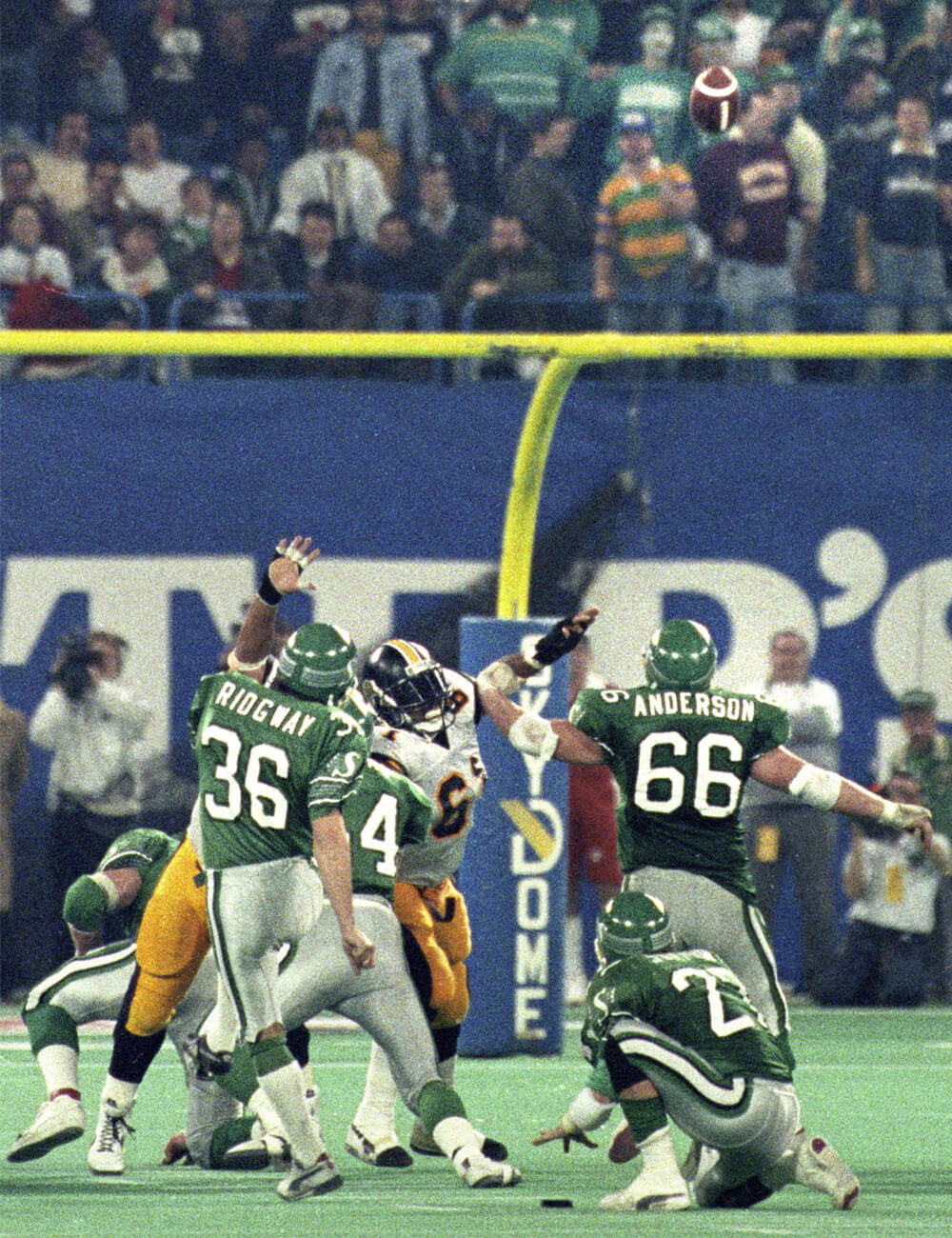
RIDGWAY As soon as I saw Tony’s catch and saw the referee’s arms go up signalling a touchdown, I immediately turned around and went to the kicking net and started loosening up. I had that much confidence in Kent Austin. I knew he would get us in range for a field goal.
VANSTONE There were 44 seconds left, and the way Austin had been moving the ball that day, and the way the Riders had gotten to the Grey Cup, pulling out a late one in the Western semis against Calgary and putting together clutch plays against Edmonton the week before, you just knew if they get even close, Ridgway’s not going to miss. They needed two or three first downs.
GREGORY I was hoping it would come down to a kick. We had the best kicker ever in the CFL.
OSBALDISTON They had a pretty good kickoff return and from there the wheels fell off.
RIDGWAY The first pass Kent threw was over the head. It almost looked like a clearing pattern but it wasn’t — he just threw it away long. The next pass was to Ray Elgaard down the right.
VANSTONE The play nobody ever talks about is the Ray Elgaard grab on second and 10.
ELGAARD I actually called that play. Well, Kent called it and I suggested it. I mentioned it to Kent in the huddle, he thought about it for a second and said, “Yeah, that’s a good one.” We’d used it a number of times over the course of the year, but it’s a situational play. It’s a wheel route up the sidelines, but then a stop. When you’ve got a defence that’s gonna play off because they can’t get burned over the top, that thinks if they keep it in front of them the clock will run out, then it’s a good play. We ran it and it worked out just right. They were in a zone and dropping off in the deep secondary and I just pulled up in front of where they were, Kent threw it to the spot and he knew I was going to be there. Then I stepped out of bounds. So now we’re down to 35 seconds and we’re still stuck on our 30-yard line.
RIDGWAY That’s when Mark Guy came into being.
Guy was a rookie receiver who’d made just 10 catches all year. In fact, his 100 receiving yards in the Grey Cup were 14 shy of his season total.
RIDGWAY The first catch was over the middle and he got hit by three guys simultaneously and managed to hold onto the ball. The second pass to Mark — I’m not sure many people thought Kent would throw it to him again — got us 10 yards closer. That was a great catch, too. He was such a great kid, younger than all of us, and he was just a first-class guy.
With the ball inside the Hamilton 30-yard line and two seconds on the clock, it was time for the man they called “RoboKicker” to step in.
RIDGWAY Playing in a dome, you tell your coach 50 yards and in; 52 yards you can maybe push it. The fact that we got to the 27-, 28-yard line was a bonus. Once you get inside the 40 everybody expects those field goals. Miss a 50-yarder and people will make excuses for you. Get inside the 40 and people expect it. Everybody thinks back to Scotty Norwood and what he did in Buffalo.
SUITOR There was the out to Mark Guy and then Gregory just said, “Field Goal.” And out we go.
ELGAARD For some reason there was a lot of chaos before the kick. I don’t know why there would have been — we had a timeout, we were in field-goal range, we had RoboKicker on our team, we’re playing indoors so there’s no wind or anything. But there was anarchy on the sideline.
SUITOR Gregory wanted to run a snap-down, which is a deliberate attempt to draw the defence offside. I said to him, “Let’s just kick it and win this game.” My gut instinct when Gregory said, “Let’s snap down,” was, “He’s going to make the kick. Coach, he’s going to make it.”
GREGORY We decided, “Let’s just kick it.”
SUITOR When I got back to the huddle, the offensive line was standing around Dave and trying to talk to him — first time ever, by the way, that the O-line thought they were kicker coaches. They were saying, “Keep your head down. Make sure you follow through.” I had to get them away from Dave so we could have a conversation.
RIDGWAY Glen became my holder around 1984. There’d be times when I’d look at him before a kick and say, “Talk to me about something other than football.” In the past, he’d talked about restaurants, “Where do you want to go after the game? Are we going to golf on Tuesday?”—those kinds of things. We were both fans of Robert Bateman’s artwork, and sometimes he’d say, “Did you see that Robert Bateman print?”
SUITOR Yeah, Robert Batemen, absolutely. “Did you get ‘The Wolves’ by Robert Bateman?” [Laughs.]
RIDGWAY We’re on the left hash so [the Hamilton players were] talking a lot of stuff, as you can imagine. But it was Glen I was paying attention to.
SUITOR Whenever we had big kicks to make, I’d try to lighten the mood a little. Or we’d make it like practice; I’d say, “If you bounce this in off the upright, I’ll buy you a steak dinner.” I know other kickers don’t like that — they want to stay focused and don’t want their holder joking around.
RIDGWAY We were talking about going camping, and I had said something about bears and he started off with, “I won’t be in trouble, because I can run faster than you.” Then he said, “To hell with it. Let’s just kick it and go home.” It put me in the zone. I remember Wally Zatylny with Hamilton had dove to block it, so I didn’t have my full follow-through, but I saw the ball in flight and I looked at Glen and he already had his arms up signalling it was good. We hugged and with all the crowd noise I just said, “Oh my God, we did it.” My eyes felt like they were silver dollars. I was just so aware of everything.
SUITOR I still to this day can’t describe the feeling. Because I don’t think anything I can say will do it justice.
DIPIETRO Heartbreak. Just, heartbreak.

OSBALDISTON It’s funny. Some things in sports happen in slow motion and sometimes they happen before you know it. In movies there are scenes where things seem to take forever and that is actually one of the things the movies get right. The ball seems to take forever to travel a certain distance.
RIDGWAY When we kicked that field goal, Paul Osbaldiston was stationed back in the end zone in case of a single. After we had made the field goal and were jumping on each other, everybody was ecstatic. As I walked back to the bench before that final kickoff, somebody tapped me on the shoulder. I turned around and Ossie was standing there and he had the ball in his left hand and had his right hand out to shake mine and said, “Hey Dave, I thought you’d like this.” I don’t tell that story very well because I get choked up every time. I’m one of those people who cries during long-distance commercials.
Before he and his teammates had a chance to truly celebrate, Ridgway still had to kick it to the Ti-Cats. Hamilton received the ball, then out of desperation punted it back into Riders territory, and into the hands of Glen Suitor.
SUITOR After “The Kick” there was this feeling of, “Wait a minute, there’s two seconds left.”
GREGORY We still had to kick off.
BRUNO I got everyone together, and we were trying one of those razzle-dazzle plays. We were going to put guys in motion, throw a lateral pass down the sideline, then throw it deep to Champion [laughs]. Oh well.
RIDGWAY Glen just caught it and dropped down. After the trauma he had gone through earlier in the season, it was kind of poetic.
VANSTONE I was trying to digest what I just witnessed. Not only had the Roughriders won a Grey Cup, 23 years to the day after they’d won their first one, but they won it in this amazing game following an amazing upset and a season that was all over the place. I was just in shock. Like, “What have I just seen?”
ELGAARD On the field it was immediately hugs and congrats and “Oh my God, we won the Grey Cup.” There’s the usual milling about while they bring the Cup out and the commissioner stands up to talk. Baker’s out there on a podium with the Cup and we stormed the podium. We all went up there and grabbed the damn thing. Then it was party time. In the dressing room we go. Booze is flowing, girlfriends, wives, brothers, sisters. The place was packed.
SUITOR Everyone’s jumping on each other, and there are grown men crying. You can’t believe it just happened.
GREGORY I tried to give a quick talk afterwards, get ’em settled down a bit, but that was almost impossible. Everyone was having fun and dumping all kinds of — I don’t know what it was — beer and champagne and whatever else.
RIDGWAY After the game, you do your interviews and you head to the locker rooms and have a beer or two with the guys. Most of the guys had family that had come in, and the higher-ups in the organization, they’re all there getting pictures with the guys. I just sat down at my locker. Yeah, I got my picture kissing the Grey Cup, and then I sat down. One by one, people are straggling out of the ballpark. And when I was finally getting changed, there were four or five guys at that end of the room — Roger Aldag, Bob Poley, James Ellingson, myself — who just didn’t want to leave. You just wanted to drink in the atmosphere—and I’m not talking about the beer.
SUITOR A couple of buddies back home in Vancouver were watching, and the CBC was doing interviews and my friends were wondering why I wasn’t on any of them; they were wondering where I was. I had found a little quiet spot — and I guess I have to hand in my man card now — but I was emotional, just crying my eyes out. Because it had happened. It was that unbelievable season, everything that you work for, here it was. That white piece of tape was going to be replaced by the ring.

VANSTONE It was a seminal game at a time when the league wasn’t in great shape. The CFL needed that game.
BRUNO That was a great game, wasn’t it? It was really something. Deep down in my heart I think we should have won it. Hell, it could have gone either way. I shook Gregory’s hand and congratulated him. He was a good man.
DIPIETRO I don’t try to think back on it, really I don’t. In the end it was a loss; I think about ’86 more. The people who were there got their money’s worth. But as a player it’s a loss, so it goes down as a loss.
OSBALDISTON A lot of guys played exceptionally well, but when you’re on the losing team at a Grey Cup game that goes forgotten or unnoticed, but that’s the game we play.
STEEN There was a moment near the end of the game when I was lining up on the sideline and John Tory and Bill Baker were standing there — they were co-commissioners at the time. And Baker comes up to me, slaps me on the ass and says, “God, Bud, this is one hell of a football game, innit?!” And it was. I officiated 511 games in my career, and the 1989 Grey Cup always sticks out in my memory.
SUITOR Because of the drought, the adversity we faced, the way we came together, to beat Edmonton in Edmonton, to give the fans that trophy, and the way it went down — that’s why every player that was a part of that team feels so proud to have been a part of it.
RIDGWAY As soon as we finished the game, two or three minutes after, Scott Oake with the CBC came up to me with a microphone and the first question he asked was, “Do you want to dedicate this game to anybody in particular?” And my first thought, and it was really heartfelt, was to dedicate it to the people of Saskatchewan. They’d hung with us for a long time, and it was time for them to celebrate and enjoy it.
GREGORY They weren’t phony, they were honest-to-goodness diehard fans. And they were so good to me.
ELGAARD It meant a lot to us, too. There were people on the team who had suffered through many lean years in that province and it was a big deal for them. That was a big deal for us and the fans in Saskatchewan, yeah. It was a huge f—in’ deal.
STEEN When they pull the tubes out of me at the end, I’ll be thinking about the ’89 Grey Cup.
RIDGWAY Thank God the kick went through.
Designed and edited by Evan Rosser. A version of this story was first published in 2013.