Chicago Bears cornerback Charles Tillman walked to within three yards of the line of scrimmage and slowly squatted into a crouch, lying in wait like a sniper in tall grass. Justin Blackmon, the former college star playing receiver for the Jacksonville Jaguars, stood in front of him and watched as, to his right, Bears strong safety Major Wright crept up to the line, showing blitz. Blackmon had a one-on-one with no safety to worry about—all he had to do was beat Tillman downfield. Or so he thought. As Blackmon took off in a dead sprint for the end zone, Wright suddenly dropped back and followed him down the sideline. Jaguars quarterback Blaine Gabbert, who recognized the man-to-man coverage before the snap, put the ball up in Blackmon’s direction. That’s when Tillman jumped the route.
For two-and-a-half quarters the Bears and Jaguars had scratched and clawed their way through a week-five defensive battle, with Chicago earning a tenuous 6–3 lead. It looked like one of those games that would come down to whoever had the ball last, or which kicker could steady his nerves and boot a deciding field goal as time expired. But Tillman and the Bears defence changed all that.
Tillman easily corralled Gabbert’s pass and started making his way towards the Jacksonville end zone as all 10 of his teammates immediately converted from defenders to battering rams, racing downfield to throw blocks and set up the return. Brian Urlacher, the Bears 34-year-old middle linebacker, sprinted 25 yards downfield to make the final block, clearing Tillman’s path. The 31-year-old strolled into the end zone, and the Bears ran away with the game.
Tillman’s pick changed something, you could feel it through your television. After the pick, Chicago scored touchdowns on their final three possessions and on one of Jacksonville’s, when linebacker Lance Briggs grabbed a deflected pass and rumbled 36 yards into the end zone, matching Tillman with a second interception return TD in as many weeks. The game ended 41–3.
In this explosive era of quarterbacks who throw 50 passes a game, the Bears are winning football games with the guys on the other side of the ball—one big play at a time. Like the monsters of the midway who came before them, this bunch is downright scary. And we haven’t even mentioned six-foot-seven, 287-lb. defensive end Julius Peppers, one of the most physical ends in the league, who, at 32, has already tied a career high this season with two fumble recoveries. Or 28-year-old cornerback Tim Jennings, who pulled down four interceptions in the first three games of the season, despite standing five-foot-eight and being dwarfed by most of the receivers he covers. It’s a defence built to create turnovers and fill highlight reels. And this year isn’t even that special. Over the past eight seasons, Chicago has solidified itself as the next great defensive dynasty. Like the Steelers of the ’70s or the Bears of the ’80s, this is the next group they’ll be writing about for a long, long time.
What separates these modern Bears is the way they do it. They can’t be held up to the same statistical standards of other classic defences. For starters, it’s a different era, featuring high-powered, versatile offences that would have given the defences of the ’70s and ’80s fits. But more importantly, the Bears operate differently. They want teams to move the football. They want quarterbacks to try to throw against them. They want running backs to smash into their defensive line. You can’t make big defensive plays until the offence makes its own move first. And this group is the best ever at making big plays.
Since 2004, the Bears defence is first in the NFL in takeaways (280), defensive touchdowns (28), three-and-out percentage (26.4%) and third-down stop percentage (33.8%). It is second in opposition passing yardage (6.55 yards/attempt), interceptions (168) and fumble recoveries (112). It is third in interception return touchdowns (21), fourth in opposition scoring (19.4 points/game) and passer rating (76.2), and sixth in rushing average (four yards/attempt). Its defence-adjusted value over average (DVOA) as compiled by Football Outsiders—a metric that takes every single play of the season and adjusts its value depending on the quality of opposition and situational leverage—has ranked in the top 10 in seven of the eight seasons since 2004, and in the top five four times.
Most figured 2012 could be the end of all that. Tillman, Urlacher, Peppers and Briggs—hell of a name for a law firm—are four starters in their 30s on a defence that was supposed to be too old to compete in the pass-happy NFL. But through week six the Bears led the league with 17 takeaways (13 interceptions, four fumble recoveries) and five defensive touchdowns. The unit was allowing just 14.2 points and 291.2 yards per game, lowest and fifth-lowest in the NFL, respectively. And this wasn’t the result of the Bears coming up against a string of poor offences—they ranked first in DVOA.
So they’re really good, this much we understand. But what happened in 2004 that turned the Bears into a defensive juggernaut? They hired Lovie Smith.
Smith joined the Bears for his first go-round as a head coach after 20 years as a defensive coach and coordinator with several NCAA and
NFL teams and immediately began implementing his defence-first approach. He installed a host of new systems, including a variation of the “Tampa 2” defence he helped engineer with Tony Dungy when they worked for the Bucs in the mid-’90s.
The key to the Tampa 2 is pure, high-octane speed. That’s why the Bears often start undersized defensive backs like Jennings and Wright—they’re burners. The Tampa 2 relies on zone coverage, asking players to be accountable for large swaths of field instead of sticking to one receiver. The idea is to take away big plays and force the quarterback to check down to his running back or a short-yardage receiver. Once the quarterback makes his decision, the defence immediately swarms the ball carrier for a gang tackle, with the first man to arrive slowing his momentum and holding him up while the others attempt to cause a fumble, ripping and punching at the ball. The system also creates interceptions because the zone schemes allow the speedy defenders to read the quarterback’s eyes and trust their instincts rather than sticking to one receiver.
When Smith took over in Chicago, he began calling defensive plays himself, a rarity for NFL head coaches. The Bears brass tested the patience of the fan base by trading Chicago’s first overall pick in 2006 and choosing defensive players with his next five selections. At the time, fans and local media ravaged Smith for not selecting offensive players to bolster a unit that ranked 26th in the league. Of course, that draft landed return specialist and three-time pro-bowler Devin Hester (who converted from cornerback to wide receiver), and the Bears had the second-best offence in the NFL in 2006 as they romped to the Super Bowl. So the fans got over it quickly.
Smith has always operated that way: Staying true to his beliefs and flying in the face of modern, offence-is-everything NFL thinking. He has three NFC North championships to show for it. This season, with his Bears 4-1 after week six, Smith is defying his critics again. And he’s done it all with the best big-play defence the NFL has ever seen.
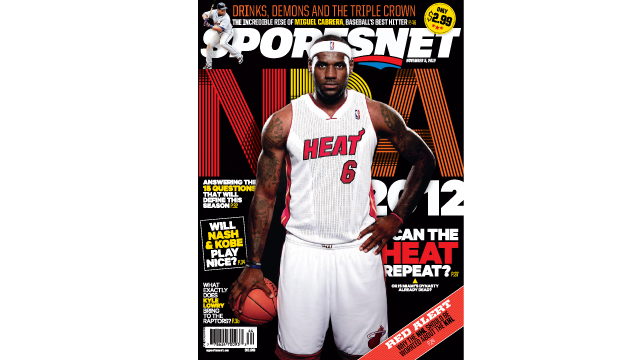
This article originally appeared in Sportsnet Magazine.
When Animals Attack: Bears defensive dynasty