
There was a complete turnaround in the IndyCar championship standings over the weekend at the Grand Prix of Houston, but unfortunately, that wasn’t the biggest story.
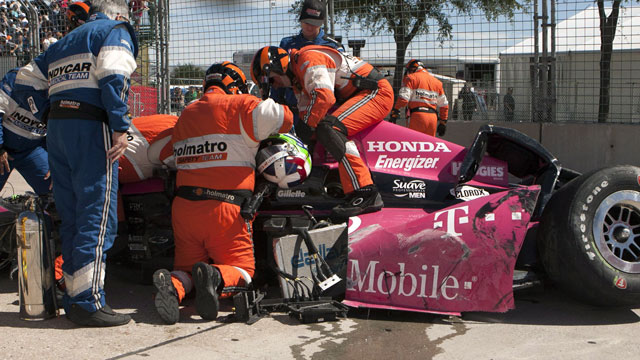
Of course, the last-lap crash that sent Ganassi driver Dario Franchitti airborne and into the catch fencing, scattering debris into the crowd and injuring more than a dozen spectators took precedent.
Franchitti suffered a concussion, two spinal fractures and a fracture to his right ankle and remained in hospital overnight. Two spectators and an IndyCar official were also transported to hospital for treatment. Racers understand the risks involved in this dangerous sport but it’s very upsetting when fans are impacted in an incident like this.
As we often see following these types of accidents, there are always knee-jerk criticisms. Many are quick to recall the most recent calamities and wonder about the future of the sport. Having worked in pit lane for numerous racing series over many years, I have seen a lot of crashes up close. They are violent and shocking and can take your breath away. And that’s why every person involved in the sport wants it to be as safe as possible.
So while a greater tragedy was averted in Houston, I do have some questions about this event. For one, I wonder about the close proximity of the grandstand where debris flew off the track. It appeared to be quite close, especially considering the height of the grandstand exceeded the catch fencing. This isn’t something new, but on that part of the track with cars running at such high speeds, debris can fly great distances when there’s impact made. It needs to be examined to see if changes should be made.
Another question I have is: why weren’t the cars immediately stopped where they were to avoid having drivers weave through the accident scene, possibly delaying the arrival of the safety crew? I know the series has a protocol, but this also needs to be looked at.
All weekend, we heard about the great job organizers did putting the course together with only one week to complete the preparations. Well, the track wasn’t ready, as we also saw problems with a large bump going through Turn 1 that was launching the cars into the air. This did not play a role in the Franchitti accident but did force a change in the weekend schedule. A temporary chicane was set up on Friday to slow the cars down and that delayed the start for the drivers’ time on the track.
Grinding operations on the bump took place overnight before Saturday’s action was to begin. While that did help improve the track, the bump was still significant enough that the normal double-file restarts had to be abandoned and Sunday’s race was changed to a standing start to again avoid issues with the track.
There are always going to be hiccups with a first-time event or a temporary circuit like the one in Houston. The series hasn’t had the benefit of racing there for many years and the facility is multi-purpose. The rain showers that forced cancellation of Sunday morning qualifying didn’t help matters either.
In spite of the less-than-ideal track conditions, there was good racing and credit goes to the drivers. They are superbly talented to be able to adjust to the ever-changing schedule and logistics and still be able to put on the driving presentation they did for race fans.
Fortunately, the injuries suffered by Franchitti and fans this past weekend in Houston weren’t more serious. Now, it’s time to examine ways of making safety improvements to avoid similar incidents in the future.