
With over 40 years as a major league player, manager and broadcaster, Buck Martinez has experienced baseball from all angles. Now in his new role as the Toronto Blue Jays play-by-play announcer, Buck is taking your questions in a weekly blog for sportsnet.ca, Behind the plate with Buck.
JAY ASKS: Hi Buck, great to have you back in Toronto. My question is with over 2000 hits, almost 500 doubles, 473 home runs and over 1500 RBI do you think Carlos Delgado will ever be inducted into the Hall of Fame?
BUCK: I really don’t think Delgado is a Hall of Fame player. He had a good career but I don’t think he was the dominant player at his position during his playing days. I also think the Hall of Fame looks at your impact on winning a championship and Delgado didn’t have a long resume of winning.
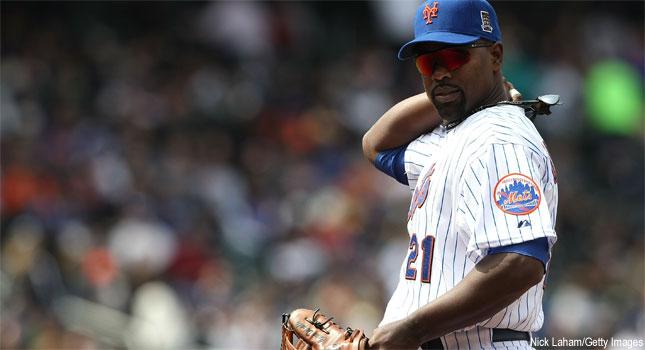
DAVE WALTERS ASKS: Hey Buck, what is the purpose of the necklaces that the players, mostly pitchers, wear? Dave Walters
BUCK: I just asked the Jays trainer the theory behind the necklaces as I wasn’t sure. He told me they are Titanium and are thought to have an impact on the ionic composition of the body. The necklaces are said to help the body bring the chemical balance closer to normal and give the player a “refreshed” feeling. The same is thought about the copper bracelets you see some golfers wear. I am not sure how effective they are but the players wear them an awful lot.
JONATHAN STEPHENSON ASKS: As a catcher, how important is it to keep your pitcher focused and not have his emotions take control of the situation, and if there’s some jawing between your pitcher and the umpire, would you step in and get yourself thrown out, as a way to keep your pitcher in the game?
BUCK: Jonathan, it is the primary job of the catcher to get the best out of his pitcher and sometimes that means he must put out fires before they begin. If a pitcher is distracted to the point of worrying more about the umpire than the hitter, we have problems. I always used the approach that the umpire and I could work out anything to avoid getting the pitcher involved at all. I don’t remember getting thrown out of a game specifically to keep a pitcher in the game.
ANNIE ASKS: Hi Buck, in last week’s blog you mentioned that you caught a screwball (the pitch) and a few screwballs (the pitchers). What were some of the more ‘colourful’ characters that you had the pleasure of catching in your big league career?
BUCK: The most interesting pitcher I caught was Moe Drabowsky. He was a great reliever with the Orioles in the mid-1960s, and in fact had a great World Series in 1966 against the Dodgers. He came into the game in relief of Dave McNally and struck out 11 including eight in a row at one point. Moe was always quick to play practical jokes. He would go to a pet store and buy goldfish to put into the water bottle in the opposing team’s bullpen. He would get the phone number of the bullpen and during the game call posing as the manager to get a reliever up and throwing. I remember sitting in the bullpen in Baltimore when Moe dialed the stadium operator got an outside line to call Ernie Banks. DURING THE GAME! “Ernie it’s Drabo! How ya doin?” Moe always had fun.
RICK BUTLER ASKS: Hi Buck, when a player hits a single and the ball bounces through the infield to the outfield, the ball is thrown back to the pitcher to continue the game. Yet when a ball hits the dirt on a pitch it is replaced. Why?
BUCK: That is a real good question. Every ball that barely touches the dirt at home plate is replaced without the umpire even asking to see the ball. As you mentioned the hard hit balls through the infield are rarely checked. Pitchers can take a “scuffed” ball and make it dance. Some of the old-timers would have their third baseman scuff up the ball before throwing it to the mound. Now I think the pitchers are at an extreme disadvantage because the parks are smaller, the bats are harder, the mound is lower and the strike zone is a postage stamp. I would love to see the mound raised, artificial strike zone cameras removed and the old balloon umpire chest protector return. That big chest protector would be safer for the umpire and get them back to calling the high strike as they have to stand higher and directly behind the catcher.
MARTIN ASKS: How do you prepare yourself for the great calls you make and what do you do during the commercial breaks for Blue Jays broadcasts?
BUCK: I don’t know how great the calls are but I simply react to what happens on the field. I do prepare for each game in the same manner, looking for something new to bring to the viewer. I have been fortunate to be around the game my whole life and I am glad you think I help in your enjoyment of the game. Each day something different happens and I simply react to what I see. I have a couple of good baseball people with me in Pat Tabler and Rance Mulliniks, and the best “stats guy” in the game in Scott Carson. If you want to get some in-depth analysis, log on to sportsnet.ca and check out Scott Carson’s column.
MIKE ASKS: Hey Buck, what do you think of the recent push to ban smokeless tobacco from the major leagues?
BUCK: I think it is great because children often copy what they see from the big leaguers. Smokeless tobacco and cigarettes are a terrible drug that can cause cancer. It is unfortunate that youngsters get caught up in experimenting with smokeless tobacco because they may have seen one of the players “chewing” and thought it was cool. I applaud MLB for its efforts.
IAIN ASKS: Hi Buck. Can you go over the infield fly rule? I remember an instance of Robbie Alomar allowing the ball to drop and then turning the double play. If I remember correctly, the infield fly rule was put in place to prevent that from happening, correct?
BUCK: The infield fly rule applies when there are runners on first and second or the bases are loaded with less than two outs and the ball is popped up. If the infielder can make the play with normal effort the umpire will call the batter out if the ball is fair. (But the umpire must make the call on the play for it to be in effect.) The rule is designed to help the offensive team by preventing the defence from intentionally dropping a popup and possibly turning it into a double or triple play.