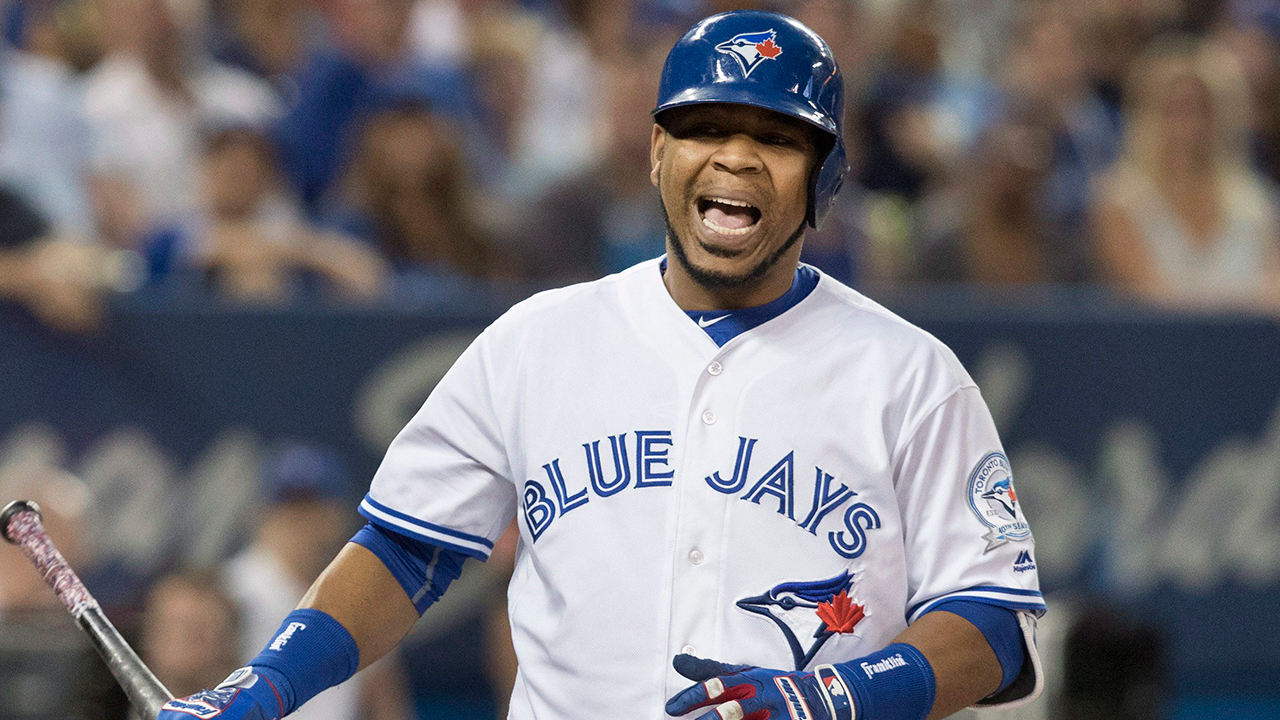
Cincinnati Reds star Joey Votto says that grappling with the death of George Floyd caused him to reflect on his own personal failings as an ally to Black teammates, and opened his eyes to the injustices experienced by those who don’t look like him.
In an op-ed written for Cincinnati.com, Votto admitted that when a Black teammate originally sent him the now widely circulated video of Floyd’s death while in Minneapolis police custody, his reaction was to instantly defend the officer’s actions.
“My instincts provoked an instantaneous defence of the officer. Perhaps the man was resisting arrest? Maybe there is a story the video isn’t telling?” Votto wrote.
The video showed no such thing. In the footage, Floyd, a 46-year-old African-American man, is seen pinned to the ground with his hands cuffed as Derek Chauvin — the primary of four officers in the video — pressed his knee against Floyd’s neck for nearly nine minutes. Floyd can be heard saying that he couldn’t breathe, and later paramedics are seen lifting an apparently non-responsive Floyd onto a stretcher and into an ambulance.
An independent autopsy has since found that Floyd’s death was caused by asphyxia due to neck and back compression that led to a lack of blood flow to the brain.
But Votto would not see that until the next day, because that night, despite his friend urging him to watch the video, Votto refused. Their exchange that night, as Votto remembers it, ended with him telling his friend “Not to yell at me,” and wishing him goodnight.
His friend apologized. Votto went to sleep. When Votto finally did open the video, he wept.
“The day after I rejected my teammate’s request to witness George Floyd’s death, I finally opened the video. I wept,” Votto wrote. “I texted my friend back and apologized. He graciously accepted, and then I moved on. I had acknowledged his pain. I had done my part.”
Votto wanted everything to go back to normal. He did not want to protest, raise his voice, engage in heated arguments that could risk friendships, or fight to dismantle systemic racism that had been in place for centuries. But he knew those systems existed. He knew racism did, too — even if he didn’t always choose to recognize it.
[relatedlinks]
The 36-year-old grew up in Mimico, a small neighbourhood outside Toronto, and from the time he was 18 years old, he was travelling around America on buses and sitting in clubhouses with teammates that were predominantly white Americans and Latinos. But Votto says, perhaps because of the diverse city where he was raised, he was drawn to the few African-American teammates that he had. They would play video games, eat pizza and listen to music in their shared hotel rooms on the road.
But within those good memories, years that Votto described as “some of the best” of his life, were glimpses of racism that could have opened his eyes to the realities of being a Black man in America.
“My teammates, my friends, the ones that I shared great times with, faced prejudices that I never did and when they shared their experiences,” Votto wrote. “I did not hear them.”
A mere week before Floyd’s death, before any protests against racial injustice took place, Votto had just finished reading Nelson Mandela’s autobiography, A Long Walk to Freedom. The book profiles Mandela’s early life, coming of age, education and 27 years in prison — with its final chapters dedicated to Mandela’s political ascension, and his belief that the struggle against apartheid in South Africa was not over.
Votto considered Mandela to be a hero for backing up his words with actions, for his willingness to sacrifice in the pursuit of a world where everyone was free.
But when a chance for him to be an ally to his teammate came along, a chance that asked him just to watch a video, to listen and to be there for his friend, he failed to rise to the moment.
In reckoning with that failure, in acknowledging his shortcomings, in grappling with his privilege, Votto grew. And now he’s ready to listen — to really listen — and ready to speak.
“…I hear you now, and so that desire for normalcy is a privilege by which I can no longer abide,” Votto wrote. “That privilege kept me from understanding the ‘why’ behind Colin Kaepernick’s decision to kneel during the national anthem. That privilege allowed me to ignore my Black teammates’ grievances about their experiences with law enforcement, being profiled and discriminated against. And that privilege has made me complicit in the death of George Floyd, as well as the many other injustices that Blacks experience in the U.S. and my native Canada.
“A week after I returned Mandela’s biography to the library shelf, I dismissed a Black friend’s plea for support. Only now am I just beginning to hear. I am awakening to their pain, and my ignorance. No longer will I be silent.”