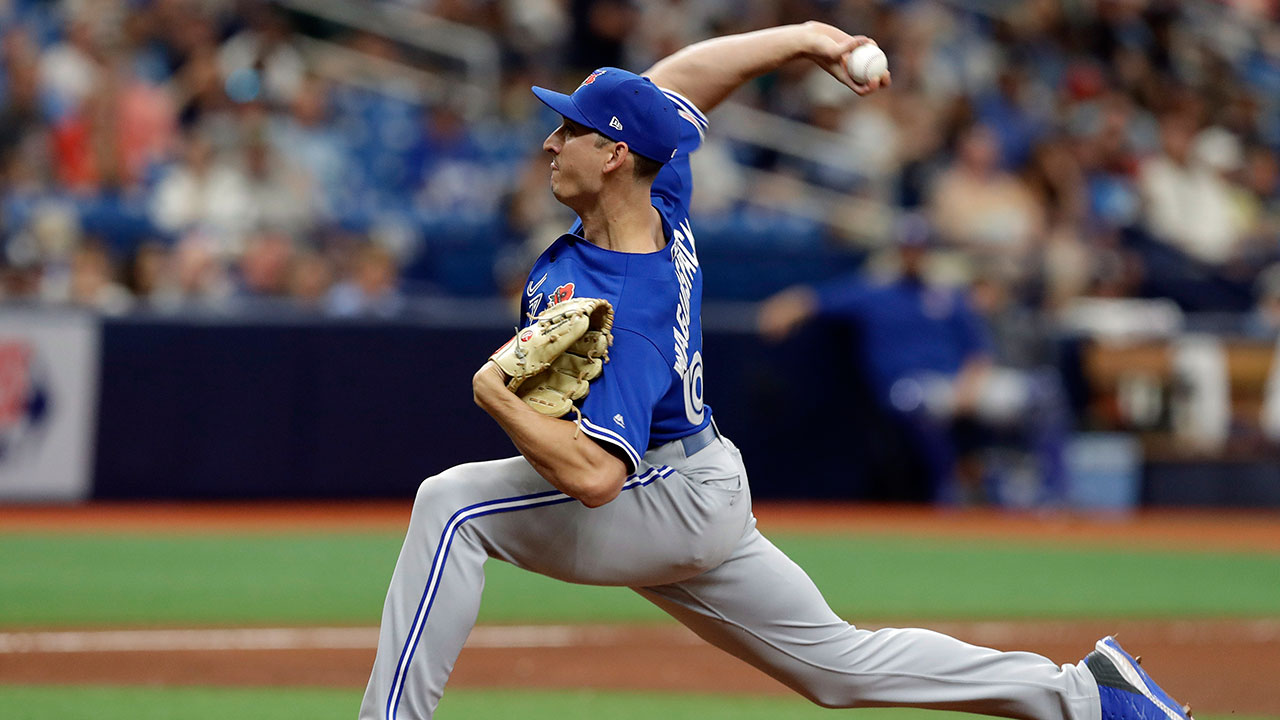
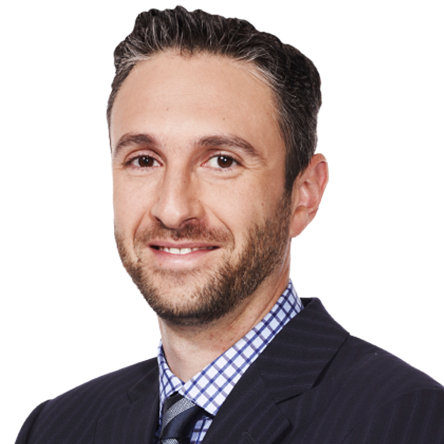
ST. PETERSBURG, Fla. – In 2015, the 30 major-league teams selected 1,215 players over the 40 rounds of the June draft and Jacob Waguespack wasn’t among them. A solid college reliever at the University of Mississippi with a sturdy six-foot-six, 235-pound frame, the native of Prairieville, La., figured to serve as, at minimum, good organizational depth for someone, an arm that could sop up the surplus innings around a club’s priority prospects. He was known to the industry, as the Pittsburgh Pirates had selected him as high-schooler in the 37th round of the 2012 draft, when he wisely opted for college. This time though, nothing.
"I was expected to get taken where the relievers get taken but it wasn’t in the cards for me to go then," Waguespack recalls after making an against-the-odds big-league debut with the Toronto Blue Jays this week. "I’m a positive guy. I always said that I could have pitched better, I could have had better numbers, I could have thrown harder, and then maybe I would have gotten drafted. Right after that I looked at the positives and played the cards I was dealt. You can’t sit there and mope about it – that’s not going to help you with anything or anybody."
A few days after the draft, Philadelphia Phillies scout Mike Stauffer phoned Waguespack and asked if he wanted to sign as a free agent. Waguespack accepted, pitched most of the summer with Williamsport of the short-season New York Penn League, and performed well enough there to earn a promotion to low-A Lakewood the following year. In 2017, the Phillies turned him back into a starter and he reached double-A Reading. Last year, he’d accumulated enough industry value to be used in a deal for Aaron Loup at the trade deadline.
[relatedlinks]
Now, he’s a big-leaguer, striking out seven batters over four innings in his debut against the Tampa Bay Rays before landing on the injured list with a mild shoulder strain. Coming less than a week before this year’s draft, Waguespack’s breakthrough couldn’t be more timely, underlining the crapshoot element that remains inherent to the projection process.
"It’s a great reminder to us that these players come from everywhere and as we go through these players in our draft room over the next few days, there are big-leaguers at every point of that draft," says Steve Sanders, director of amateur scouting for the Blue Jays. "There are players that certainly surprise us and looking back at those players maybe to learn a little bit more about why a player with that type of ability that’s been able to achieve the success they’ve had wasn’t drafted or wasn’t drafted sooner is certainly something we reflect back on. But it’s really more continuing to work to find those guys late in the draft, and after the draft."
***
The priority for teams, of course, is to leverage their picks early in the draft, where the vast majority of big-league talent comes from. The 30 opening-day rosters this year consisted of 666 players selected in the draft, 205 of which came in the first 60 picks of the various drafts. Only 269 of those players were chosen beyond the fifth round, it’s only 61 for players taken from the 21st round onward.
In that sense, the draft works relatively efficiently, with the best players being identified and taken at or near the top. Yet there remains a lot of swing and miss even in the first few rounds of the draft.
Consider that the Blue Jays’ 39 first-round and supplemental first-round picks since 2000 – only two of them in the top-10 – have produced a combined WAR of 99.9 per Baseball Reference, an average of 2.56 per player.
Nearly a quarter of that total comes from one player alone – Aaron Hill’s 23.7 – and only five other picks are in double-digits if you round up Ricky Romero’s total of 9.9. One of them, James Paxton, didn’t end up signing and was subsequently selected by the Seattle Mariners, where he accumulated the vast majority of his 11.5 WAR before they flipped him to the New York Yankees for prospects this winter. Only Marcus Stroman (12.3) and Aaron Sanchez (10.2) are still with the team.
For comparison purposes, over the same span the Tampa Bay Rays selected 34 players in the first round who have generated 139.6 WAR; the Boston Red Sox 34 players with 101.8 WAR; the Baltimore Orioles 26 players with 106 WAR; and the New York Yankees 26 players with 66.6 WAR. Important to note is that the Orioles had 11 picks in the top-10, the Rays 10, a major differentiator.
The St. Louis Cardinals, never picking higher than 13th, chose 36 players that have produced 100 WAR. The Los Angeles Dodgers picked 28 players with 121.4 WAR, although 65.1 of that comes from Clayton Kershaw, drafted seventh overall in 2006.
[snippet id=3305549]
Of course, draft picks aren’t only leveraged on the field.
The Blue Jays turned several first-rounders into big-league assets, including Noah Syndergaard, whose 13.6 WAR is second among Blue Jays first-rounders this century, in the deal for R.A. Dickey. Joe Musgrove (2.2 WAR), Asher Wojciechowski (minus-1.4) and Kevin Comer (never reached majors) also returned some value that way, bringing back J.A. Happ in a 2012 trade.
The second round has had even more miss for the Blue Jays, with the 23 players selected since 2000 combining for a WAR total of only 6.9. The clubhouse leader on that front is Dave Bush’s career total of 3.6, although Bo Bichette, a second-rounder in 2016, is sure to change that equation in the near future.
Still, the Blue Jays got really, really lucky with Bichette, who very easily could have ended up somewhere else if not for the failure to sign Brady Singer the previous year. That gave them a compensatory draft pick in the second round of the 2016 draft, No. 57 overall, which was used on J.B. Woodman, the prospect sent to the St. Louis Cardinals for Aledmys Diaz two winters ago and released last year (Diaz was cleverly flipped to the Houston Astros for righty Trent Thornton this winter).
Had Woodman still been around at No. 66, the Blue Jays would have taken him instead of Bichette, as he was higher on the draft board.
The Blue Jays have also done relatively well later in the draft in recent years, with Kevin Pillar (32nd round), Rowdy Tellez (30th round), Ryan Tepera (19th round), Danny Jansen (16th round), Ryan Borucki (15th round), Jonathan Davis (15th round), Tim Mayza (12th round) among their finds.
All of which underscores how inexact a science the draft is, despite the advanced models teams use now to project players, based on the outcomes of past players with similar body types, athletic movements and career paths.
Teams are going to miss a whole lot more than they connect.
"In some ways I try not to concern myself with it too much because I can tell you this, we go into every draft looking to hit on every single one of those picks," Sanders replies when asked what he considers a good rate of return in the early rounds. "History dictates that the further down you go a draft board or the rounds of the draft, the smaller the percentages become of that players reaching a certain success level in the major leagues. But the reality of it is there are different levels of investment, different expectations and a lot of definitions of success.
"For us, taking guys in the later rounds that make us better as an organization that may or may not reach the major leagues but may have some other positive impact on the organization along the way, whatever that is, are small successes in their own right," he continues. "As far as the top of the draft, every draft we go into, especially in the first and second rounds up in that range, we’re looking to add impactful big-leaguers, hopefully impactful big-leaguers to the Blue Jays. Some of those guys might end up impacting other teams if they end up in a transaction, or something like that. We shoot for 100. The numbers often times fall short of that."
***
The Blue Jays own the 11th overall pick this year (assigned value, $4,547,500) and have a total signing bonus pool of $8,463,300, the 15th largest, to work with this year. Players in the big-leagues selected 11th overall in the majors this season include Max Scherzer, George Springer, Andrew McCutchen, Addison Russell, Neil Walker, Dominic Smith and Justin Smoak, who for a long time looked like a failed first-rounder before finding himself as a waiver claim in Toronto.
Last year, the Blue Jays selected 12th overall, and took advantage of their bonus pool by not using the pick’s full assigned value of $4,200,900 on Jordan Groshans, reallocating some of the to Adam Kloffenstein, who was taken at No. 88, with an assigned value of $652,900, but still got first-round money in the third round.
The Blue Jays will seek ways to be similarly opportunistic next week, although the current sense is that they are fixated on a college arm that can move rapidly through the system.
[snippet id=4545751]
Addressing an organizational shortage of pitching is a top priority but drafting based on need is a dangerous game. Passing up Troy Tulowitzki for Romero in 2005 because the club had taken infielders in the first round the previous two years – Russ Adams in 2003 and Hill in 2004 – is Exhibit A on that front.
Inevitably, some players will slip through the cracks, like Matt Shoemaker, the Blue Jays right-hander who was in the midst of a brilliant season before a knee injury cut his year short, who has produced 7.1 WAR after going undrafted out of college.
Or Jacob Waguespack.
"I went through a couple of injuries in college, so I didn’t have the nice college career, I went through some adversity there," he says. "In the minor-leagues, I was a free-agent signed reliever, so there’s not much room for error. I’ve always had to create my own path and really just put in the work to earn what I’ve been given. That’s how I was brought up and that’s how my family raised me, to just work your ass off and the rest will take care of itself.
"I took a different route to the big-leagues. That’s all part of it. Not everybody is going to have the same path to the big-leagues. I’m just grateful and blessed to be here."