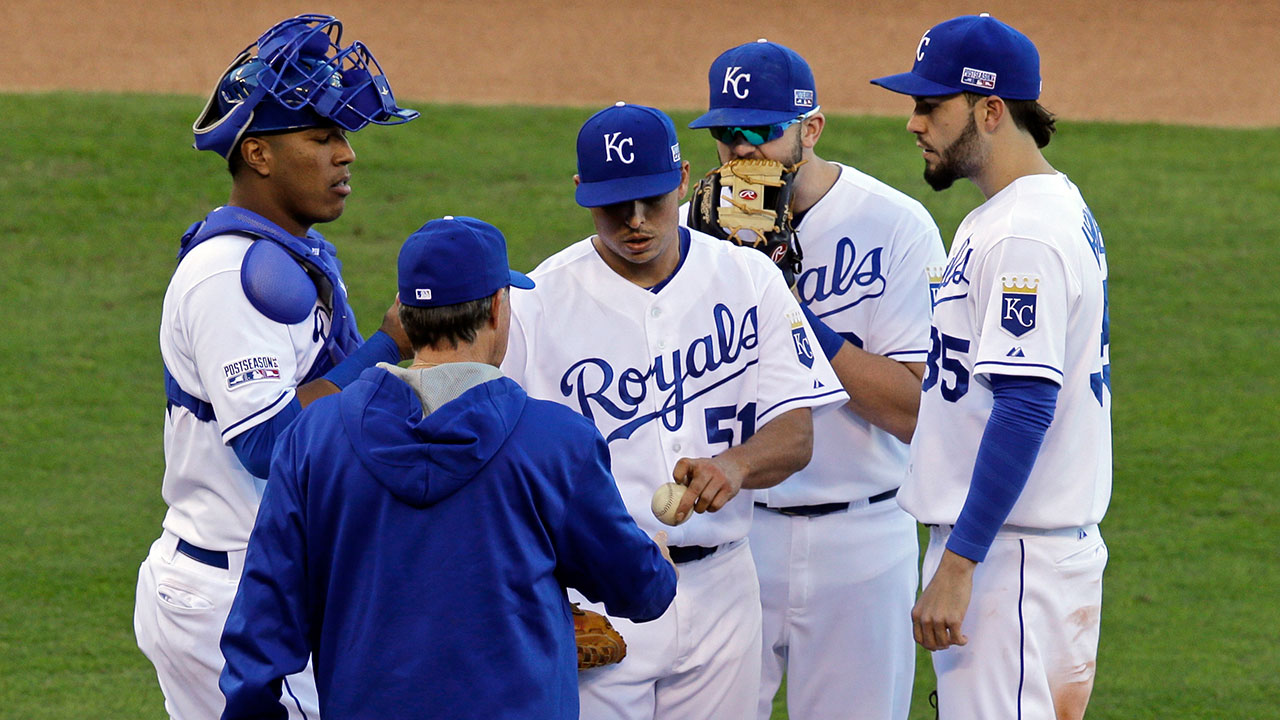

It’s been apparent for a while now that the Kansas City Royals have exceptional relief pitching and defence. When their biggest shortcoming — home run power — suddenly became a strength, they became virtually unstoppable.
One crazy play-in game and two series wins later, they’re undefeated in October and the next game they play will be game one of the World Series. It’s only been eight games, but here’s a look at what the Royals’ playoff run means for Kansas City and the rest of the league:
PROGRAMMING NOTE: Watch the NLCS on Sportsnet ONE Thursday starting at 8 p.m. EST.
Yost Vindicated
Remember when many prognosticators picked the Baltimore Orioles over the Royals because of Buck Showalter’s apparent advantage over Kansas City’s Ned Yost? It was happening mere days ago.
A lot has changed since then, and it goes beyond mere vindication. Not only did Yost’s Royals win the ALCS in convincing fashion, they did so because of his moves, not in spite of them.
Yep, the manager who last month made the absurdly rigid suggestion that Kelvin Herrera could not be called on in the sixth inning because he’s a “seventh-inning guy” showed a deft touch in the ALCS. He removed starters once they started struggling and called on ace relievers in the biggest spots instead of pre-determined slots.
Yost adjusted, to his credit, and you can be sure no one will be picking the Royals to lose because of him anymore.
Bullpen Evolution
When the season began, Brandon Finnegan (pictured below, Matt Strasen/AP) was pitching for Texas Christian University and Jason Frasor was pitching for the Texas Rangers. Now they’re the Royals’ top relievers aside from the dominant trio of Herrera, Wade Davis and Greg Holland.
So while GM Dayton Moore’s biggest moves were undoubtedly the trades involving Zack Greinke and James Shields, he did bolster his bullpen to fortify a team strength midseason.

Team of Destiny?
The Royals are playing an impressive brand of baseball right now, and there are all kinds of reasons to root for them in the World Series. Still, the 2007 Colorado Rockies and 2008 Tampa Bay Rays were riding high before losing in the World Series.
Don’t forget that this Royals team finished last in the league in home runs this past season. While players such as Eric Hosmer aren’t as powerless as their regular season numbers suggest, expecting this team to continue averaging one homer per game sounds overly optimistic.
Dominant Relief
If the Royals get through six innings with a lead, it sure seems as though Herrera, Davis and Holland will lock it down from there. That’s partly because they’re so talented and partly because the regular off-days during the playoffs allow Kansas City to call on their relief aces in nearly every game. In this way, the structure of the playoffs favours teams with top-heavy bullpens.
Could that affect the way teams construct their rosters going forward? Well you have to get to the playoffs first, and if that means having five or six equally skilled relievers instead of a Royals-esque trio, so be it.
Copycat Approach
Baseball teams copy each other all of the time, and the Royals’ emphasis on defence and relief pitching stands out. In theory, that could lead to copycats around the league.
But teams are already well aware of the value of defence and dominant relievers. It’s finding and obtaining those players that’s the challenge, and there aren’t many Greg Hollands and Lorenzo Cains out there. Still, the Royals’ success could be somewhat encouraging for David Robertson, the top relief arm available this off-season, and defensively adept free agents such as Chase Headley.