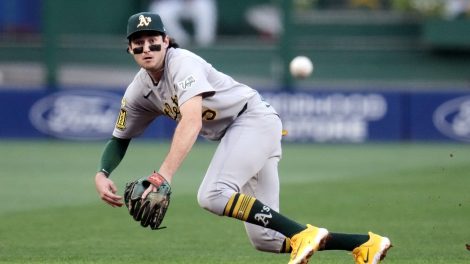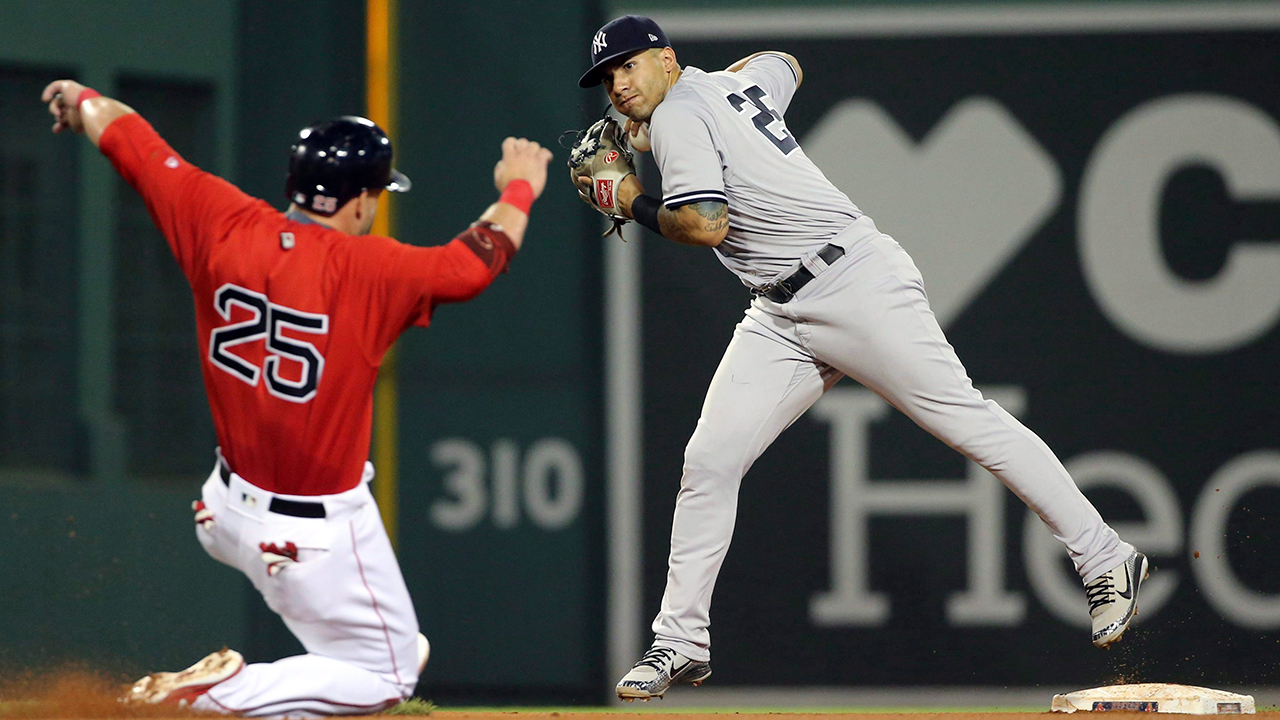

Nostalgia can be a powerful and evocative force in swaying our own perceptions, and those of others. And few sports are as profoundly steeped in nostalgia as baseball.
Many of us should be far too young to know about The Shot Heard ‘Round the World, or Ted Williams hitting a homer in his last at bat, or Babe Ruth’s called shot, or Willie Mays’ catch. And yet, there is a wistful machine of sentimentality that ensures that any baseball fan knows and pays homage to the past.
At the right times and in the right doses, this nostalgia can be perfectly pleasant and benign. The recent weekend assembly of Blue Jays from the 1992 and 1993 World Series Champions was a great opportunity for fans to connect with the past, and remember the contributions of some of the underappreciated members of those teams. (Like Juan Guzmán, of the 2.44 post-season ERA in eight starts as a Blue Jay. When he was good and not quite so wild, he was very, very good).
Unfortunately, the downside of nostalgia too often creeps into discussions of the state of the game, with past players using their platforms as commentators to raise up the way the game was played in the past, while running down today’s game and players.
Too often, these discussions of the way in which pitchers are managed, or the lack of stolen bases or the prevalence of strike outs focus on how the game is somehow diverting from its essence. These pronouncements, especially when made by ex-players like John Smoltz on national broadcasts, help to perpetuate a perception that there is something wrong with the game.
As someone who watched the game closely in the era that John Smoltz played, I can tell you: This is a load of horsefeathers. Because baseball – the game, and the players that play it – has never been better than it is right now.
Baseball players run faster, throw harder, and hit balls higher than they ever have. If you were to transplant the much-celebrated 1927 Yankees into today’s game, they’d get swept by MLB’s current also-rans, like the Orioles, Royals or Padres.
Why do I think this is the case?
Players are Bigger, Faster and Stronger
If you watch a vintage MLB game, you immediately notice the difference in the quality of play. While some may bemoan the pace of play in the current day, it’s clearly noticeable that the pitches thrown are much slower, and the speed of balls coming off the bat is much more leisurely.
So if there is any perception that the quality of hitters was better because they could “handle the bat” or “go the other way,” it certainly helps to have ace pitchers who threw 87 m.p.h. fastballs with minimal movement. And when balls are put in play, they are not nearly the challenge to fielders then that they are now.
One area that some may point to as evidence that players aren’t as fast as they used to be is the prevalence of the stolen base in past eras of the game. But in fact, the lack of stolen bases today is another example of how the game has improved. Pitchers today are better at holding runners. And no pitcher with a long and deliberate move to the plate would ever make the grade in today’s game.
Similarly, catchers’ improved ability to control the running game and throw out potential base-stealers has made as much a difference in this aspect of the game as the unwillingness to run on the part of players or managers.
Middling players like Vince Coleman stealing more than 100 bases wasn’t a feature of a better brand of baseball. It was a bug that has since been corrected.
The Game is Smarter
Some bemoan the analytical side of baseball, such as Jayson Werth’s recent screed against “super nerds” ruining the game. But even the romantic view of baseball has always had a strong connection to the numbers.
What has changed is that instead of the handful of numbers on the back of the baseball card, we have access to an increasingly massive amount of information on the game. Rather than relying on handed-down axioms from baseball lifers, teams and players have immediate feedback on every aspect of the game, almost as soon as it occurs on the field.
With this much knowledge of both one’s own performance, and that of the opposition, the level at which the game is being played is that much higher.
Teams literally send volumes of information to players so that they understand not just a pitcher’s arsenal, but his predispositions and sequences. And the dramatic way teams shift their defenses to account for hitters’ known tendencies makes clear that there’s less room for blind luck as the level of the game continues to rise.
And while fans might not have access to all of the same information as the teams do, there is a considerable amount of data that allows them to understand the science behind the game in addition to the art and craft displayed on the field.
Moreover, teams have a growing ability to measure an assess players off the field. From wearable health monitors to greater access to imaging and diagnostics, players are not playing at diminished levels due to unreported or undiagnosed injuries.
And So Much More…
Watch an old game from the early 1980s, and you’ll notice how big and bulky the bats are. Or the cleats that look somewhat akin to bowling shoes. And the game is being played in a cookie-cutter stadium on top of carpet on concrete.
The game not only is better, but it looks much better.
There is little room for error in baseball these with the level of gameplay today, which conversely means that those failures – in a game defined by failure – stand out that much more.
But make no mistake: We are truly seeing baseball being played at its highest level.
[relatedlinks]