
“Any questions about anything other than Biogenesis or brain cancer?”
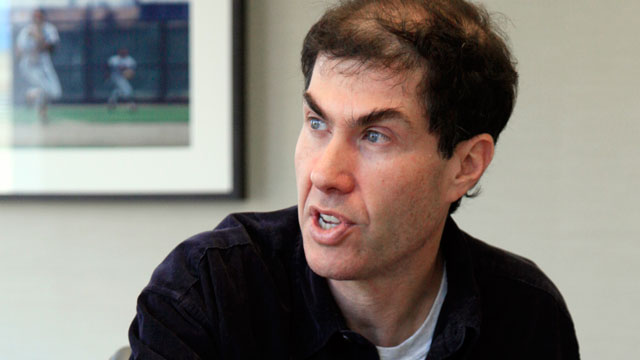
Michael Weiner, who died at age 51 on Thursday, asked that just this past July 16 during a meeting with members of the Baseball Writers’ Association of America, displaying the sharp, disarming wit that allowed him to turn foes to friends, and made him a bridge-building voice of reason during his 25 years of service with the players’ association.
Confined to a wheelchair, robbed of movement on the right side of his body by an inoperable brain tumour, Weiner had followed commissioner Bud Selig at a packed conference room at a Manhattan hotel to field all manner of inquiries, which that day were primarily about the Biogenesis doping scandal.
A picture of courage, intelligence and dignity, he provided crisp, nuanced and analytical responses, the kind anyone who had spoken to him in the past was accustomed to. Many of us had seen him looking strong and fit during spring training, when Weiner would visit each club. With the way cancer was destroying his body, the mental agility he displayed that afternoon was absolutely remarkable.
He began the annual session by offering the following matter-of-fact update on his condition: “As some of you know, I have brain cancer. In the last couple of weeks, I would say the middle of June, I experienced a rapid increase in my symptoms, particularly the right side symptoms. I can’t move my right side. I can’t walk. I cannot move my right arm at all. I’m using a drug approved for treating melanoma. It has not been approved for brain cancer. We’re hoping that happens in the next couple of months. I’m hoping to have an MRI in a couple of weeks. So that’s my situation.”
It was then on to the next subject, and he proceeded to break down the delicate issues at play in the Biogenesis case with a brilliant lawyer’s cunning and a noble man’s moral compass. It was during a lull that Weiner made the quip above. He smiled afterwards, and everyone laughed. And then there were more questions, some even on other topics. Eventually, someone asked whether cancer had changed his outlook on life, even as he continued to go to work as executive director of the players’ association every day despite his rapidly deteriorating health.
“I don’t know if I look at things differently,” Weiner said. “There are things that became more important to me, more conscious to me. As corny as it sounds, I get up in the morning and I feel I’m going to live each day as it comes. Not taking a day for granted, not taking the next morning for granted. What I look for each day is beauty and joy. If I can find beauty, meaning and joy, that’s a good day. It’s not that much different, believe it or not, than I did beforehand.
“For those of you who have not been in a grievance arbitration with (Chicago White Sox owner) Jerry Reinsdorf, he’s the meaning of joy,” Weiner added with a wry grin. “I shouldn’t say that about Jerry, he’s been very helpful in the last round of bargaining. I live each day and I wake up each day looking for good things, because I don’t know how much time I have. Maybe I’ve just become more aware of things. So I look at my life in a different way.”
The grace and poise with which he delivered his reply captivated the entire room, and a long standing ovation followed.
I’ve thought of that afternoon often in the months since, still awed by the power of his presence, his determination to continue working, the strength of his composure. Though I knew him only through a handful of interviews and media sessions, it’s easy to see why many players I’ve talked to over the years liked and trusted him the way they did. Listening to him speak was always a pleasure.
Weiner’s death leaves significant questions within the players’ association, and by extension the sport as a whole. For now, deputy executive director Tony Clark moves into the role of acting executive director, with the union’s leadership to be addressed at next month’s executive board meetings, a succession plan put in place during the summer, soon after his meeting with the baseball writers. But in spite of his vast talents as a labour leader, he’ll be missed personally far more than professionally.
“Right now, tears are everywhere at the loss of Michael,” Gene Orza, the union’s former chief operating office, said in a statement. “In many cases, they are shed by those who only knew him in passing or on the margins, but still could sense how special he must be, and how unfair it is that he be taken this young. And they are right. He was special, and it is unfair.
“For those of us who worked alongside him in the offices of the Players Association, there is nothing less than a hole in our hearts right now. We all loved him so very much. But we have an advantage over most who are ridden by sadness tonight. Deep down, we know Michael was a gift, and that’s how we are destined to remember him.”
May peace be upon him.