I have an apology.
Until last week, I’d forgotten that professional athletes are human, or at least was willing to overlook it in my haste to see sports back.
It was Stu Jackson, a long-time basketball executive and current NBA Network commentator, who put it in perspective for us on Writers Bloc: like the rest of us, many pro athletes have been living under stay-at-home orders or being careful to utilize best practices and now, just as society is taking steps to re-open, they are being asked to submit to further quarantine in order to play in Orlando, for the most part, to help fulfil ownerships financial obligations. Yes, accommodations will being made for families but from a distance. It sure as hell seems like a largely joyless experience compared to normal life. And what awaits them on the other side when they come out? A possible second wave?
While NHL players, for the most part, have been willing returnees and MLS players have followed suit despite hard feelings arising from a new collective bargaining agreement, it is NBA asking the most pointed questions about insurance for young players (long-term lung damage has been reported in some novel coronavirus cases) and the desirability of being cooped up with limited freedoms and the optics of playing basketball at a time of profound social concern in the Black community. NBA players have been front and centre since the murder of George Floyd and some are loath to retreat from what they see as a crucial role in supporting the movement. Sure, they might be able to take a knee and do other things to show solidarity with the protesters and the NBA’s commissioner Adam Silver can be counted upon to have their back, but they won’t be able to leave quarantine and go into the streets.
Oh yes, the players have also taken note of the recent spike in COVID-19 cases in Florida, a state that has been criticized for a cavalier approach to the virus, including fudging numbers.
And they’ve already received most of their salaries.
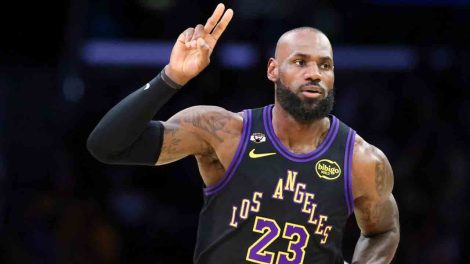
I can hear you now: because of their high salaries, stay at home for, say, LeBron James is probably a vastly different experience than what you or I are going through. We’re not talking sequestering in a cramped, one-bedroom apartment. Second, while three days, let alone two or three months, at Disney can suck the very soul out of you, NBA players will most likely be given the five-star treatment. Third? The players on the court and those around them will be tested so often you can make the cases that the environment will be one of the safest places out there. Certainly, there has been nothing in the experience of Bundesliga teams that should cause concern — there’s been plenty of sweating and body contact and squaring up to each other without any positive cases. Fourth, have you seen the money these guys make?
In these times, I’m reminded of something I was told as a cub reporter that has always rung true — you can’t B.S. the players. Regardless of the sport, players mostly know their capabilities and that of their teams. I think this is especially the case in the NBA which, by and large, follows the form-chart more than most sports. Yes, you can have the odd season of blessed convergences (see the 2018-2019 Toronto Raptors) but those are, by and large, outliers. Could the confusion and interruption wrought by a pandemic throw the entire thing off-kilter? Sure. Maybe. But enough to make the Miami Heat win the title? Let’s be honest: likely not.
So where, exactly, is the impetus, here?
I get that there is a danger in assuming that just because stuff has worked in one sport or one league it’s going to work everywhere. The Bundesliga has profited from the fact Germany had competent leadership during the crisis, plus there was never any need for a “hub” concept because travel between cities is relatively easy. That has meant that players have been able to stay at home while practising social distancing and being tested. It has been less intrusive to daily life. Tough to do that in North American leagues. So more than ever, I’m willing to hear out the dissenting voices without prejudice. None of us should have needed reminding that athletes are flesh and blood and not names in a fantasy draft. But here we are.
Quibbles and Bits
• If you’ve read or heard me on the topic of national anthems, you’ll know I have long argued they have no place being played before every domestic sports event, where in many cases they’ve been bastardized into a kind of “Welcome To The Jungle” rallying cry and an excuse to hoot and holler as opposed to showing respect for, well, whatever respect any song or flag deserves to be shown. The Europeans figured this out a long time ago, of course, which isn’t much of a surprise since they’ve had painful first-hand experiences about carelessly trotting out national symbols. They save them for big, international matches instead of turning them into a habit. Longer debate, of course. But I wonder, MLS has already said it won’t play national anthems before its tournament matches in Orlando and societal events have once again brought into focus Colin Kaepernick’s protest against police brutality suffered by African-Americans to the point where leagues have effectively decided to enact rules defending rights that most of us already assumed were inherent — again, another debate at another time. The NFL says it won’t prevent players from kneeling, same with the U.S. soccer program. Given that most games will be played behind closed doors and most of us believe there will be a number of temporary changes that become permanent, are we in the beginning stages of seeing the national anthem disappear as a regular game-day feature? Fingers crossed.
• The Toronto Blue Jays selected Vanderbilt’s Austin Martin with the fifth-overall pick in baseball’s draft and signed his teammate Harrison Ray this weekend as one of a group of players left wanting by baseball’s truncated draft. Ray was one of the veteran leaders on the Vandy squad and hit in 17 of 18 games and was a star during the Commodores’ run to the College World Series title two years ago. Vandy’s baseball program is one of the best and most advanced in the game and their hitting coach, Mike Baxter, spent 2016 as a special assistant to the Blue Jays, whose director of player development – Gil Kim – played at Vanderbilt. “Philosophically, a lot of our ideas are aligned,” said Baxter, who believes Martin can be an above-average defender in centre field who will play well “wherever he gets reps.” As for hitting, “the window of opportunity for winning is open in Toronto,” said Baxter. “He will be able to hit the ground running …”
• The Blue Jays had a spotty history with Scott Boras clients such as Martin when Paul Beeston was Blue Jays president, less so under Mark Shapiro. Draft picks have even less leverage than in the past so it would be surprising to see Boras take Martin overseas as he did with J.D. Drew, who ended up playing independent baseball when the Philadelphia Phillies wouldn’t meet his demands and took pitcher Carter Stewart to Japan in 2019 after a stalemate with the Atlanta Braves in 2018 sent Stewart back to junior college for a year. Returning to school is less of an option since it’s doubtful Martin would improve his draft position.
• With Bayern Munich all but declared Bundesliga champions and the return to health of Lucas Hernandez, it will be intriguing to see whether manager Hansi Flick uses Canadian Alphonso Davies in a more advanced role with an eye toward flexibility ahead of the resumption of Champions League play. If that happens, watch for the reaction of fans of the Canadian senior men’s team who have been hankering for head coach John Herdman to do the same. Herdman – rightly, I believe – thinks Davis can impact a game out of a hybrid wingback/winger position as he is most often used at Bayern.
The End Game
It’s early, but as Major League Baseball decides when it will order players back and how long the regular-season will be, from this vantage point it appears as if the biggest winner is Tony Clark, the executive director of the MLBPA, and his chief negotiator, Bruce Meyer. Going into the pandemic, one of the storylines being watched by industry insiders was how Clark and the players would emerge from any discussions with ownership, which has been widely credited with hammering the hell out of the union in the last round of collective bargaining. Multiple generations of ballplayers stepped forward after the agreement to rightly criticize players for taking their eye off the ball and focusing on “lifestyle” issues as opposed to core economic matters. Clark — who succeeded much-admired Michael Weiner as head of the MLBPA and is the first head of the association who is a former player and not a lawyer steeped in labour experience — has been frustrated by that characterization. Nobody is satisfied how this has been handled by either party, but Clark has managed to keep his group united during the time of a pandemic and – if it matters – he has emerged standing on the moral high ground with fans. Now let’s see how this all works out by the end of the season and how much money the players ended up giving away. Let’s see how the grievance procedure plays out and let’s see what free agency and arbitration look like this winter. But as we sit here, it seems to me that this is a stronger union than the one that went into this and if I’m management, I have a grudging respect for the MLBPA going into negotiations on a new CBA. Everybody focuses on 1994, but one of the reasons baseball hasn’t had another stoppage has been the discipline and engagement of the union. If the MLBPA has regained its mojo? Put me down as believing that augers well for the next round of negotiations. I think ownership has a better idea now\ of what they face. It’s up to them to deal with it.
Jeff Blair hosts Writers Bloc with Stephen Brunt and Richard Deitsch from 2-5 p.m. ET on Sportsnet 590/The Fan. He and Dan Riccio also host “A Kick In The Grass,” Canada’s only national soccer show, heard along the Sportsnet Radio Network on Monday nights.
[relatedlinks]