
ESPN Films’ highly anticipated documentary series “The Last Dance” about Michael Jordan and the Chicago Bulls’ chase for a sixth NBA Championship in the 1997-98 NBA season recently premiered to a record American audience before being released in Canada and internationally on Netflix.
“The Last Dance” was the term legendary coach Phil Jackson called this season, due to the fact there was friction between the organization’s front office and the players on the team.
Originally slated to air in June during off days of the NBA Finals, the series was rushed to completion to feed sports fans yearning for content during our current void in live sports due to the COVID-19 pandemic.
The best part of the documentary, in our opinion, is the nostalgia it elicits. The music takes you back to the time with old-school hip-hop heard throughout like classic Nas track “If I ruled the world” takes you back to the era when Jordan himself was bigger than the world’s greatest musicians and Atlanta rap duo Outkast’s “Rosa Parks” plays while Jordan dominates against the Atlanta Hawks in a sold-out Georgia Dome.
Those nuanced touches keep the series moving in between the unprecedented access footage of the Bulls and the candid stories they tell.
Director Jason Hehir, who also made HBO’s “Andre the Giant’ and ESPN Films’ “The Fab Five” and the 30 for 30 “The ’85 Bears” conducted 108 interviews over two years to make the documentary.
Shortly after he finished the final edit of the final episode, Sportsnet caught up with Hehir to gain his perspective on the player, team and cultural moment everyone in sports is talking about right now.
Note: This interview has been edited for clarity and conciseness.
[snippet id=3360195]
Sportsnet: You describe this documentary as “unprecedented. What do you mean by that?
Jason Hehir: Well, [Jordan] had been signed on before I even came into the picture. The first step was getting his permission after, at that point, 18 years of these films lying dormant in a basement at the NBA. The production company, Mandalay, had to go to Michael and his team and go to the NBA with a pitch and say, it’s time.
And you know, year after year, people had gone with pitches. It wasn’t a new thing, and it was kind of like urban legend in production circles this footage existed, but we needed Michael’s. permission in order for people to see it. Cause that was the condition under which they let these cameras and Adam Silver told him, “We’ll never use this footage without your permission.”
In the worst-case scenario, you have the best home movies of all time. So, it was about two or three months after he agreed that I was approached to see if I would be interested in directing it, which of course I was.
SN: You had to do this in the post-production phase through COVID-19. What unique challenges, and maybe even opportunities, did that present?
JH: There’s two challenges. One is technological. We’re going from a multi-million dollar edit facility with five or six offices and huge audio mixing suites and colour-correction suites and then all of a sudden everybody was in lockdown at their own homes. And we don’t have nearly the same technological benefits.
I mean, I’m finishing this thing on a desktop. There’s smoke coming out the sides of it by now. But technologically, it was challenging, but more so creatively and just the collaborative aspect of making these things.
The joy of it is sitting in rooms with people late at night and just kind of tossing a football around and saying, “Hey, what if we try this?” And that’s where you have these epiphanies that make the series what it is. No matter what project you’re working on, it’s the camaraderie of the staff and everybody giving their all and you’re all sitting there together. You’re like a family. Then they broke up this family. It’s tough to replicate that over Zoom meetings and text threads and email.
SN: What was Jordan’s input like throughout the process?
JH: He’s been involved. It’s been the perfect level of input because you want him to be involved and not be aloof and disinterested, but you also don’t want him involved so much that he’s overtaking the project and telling you what to do — which he could because he’s Michael Jordan and no one would be able to argue with him because it’s his permission that this whole thing is relying on.
He’s been the perfect partner because he’s actively watching cuts. And he’s giving notes that are actually thoughtful and really productive. It shouldn’t surprise anybody that he’s also the Michael Jordan of giving notes on a documentary about himself and his team. So he’s been the perfect level.
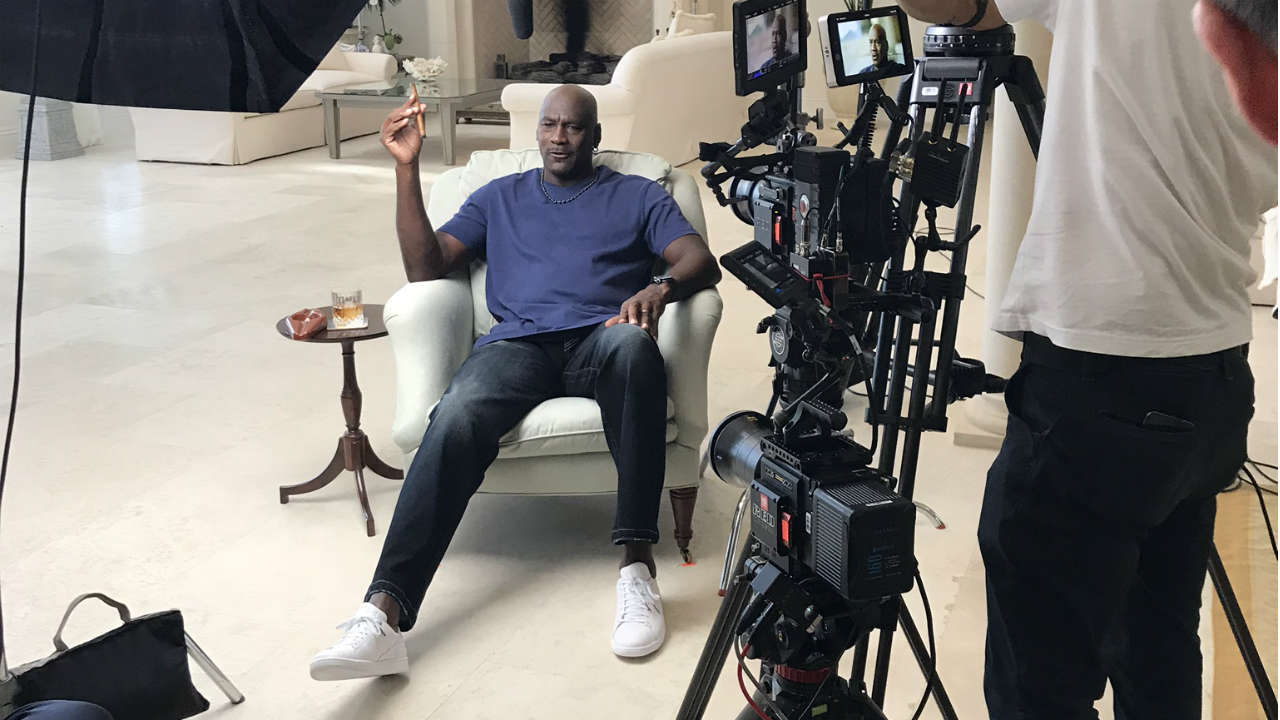
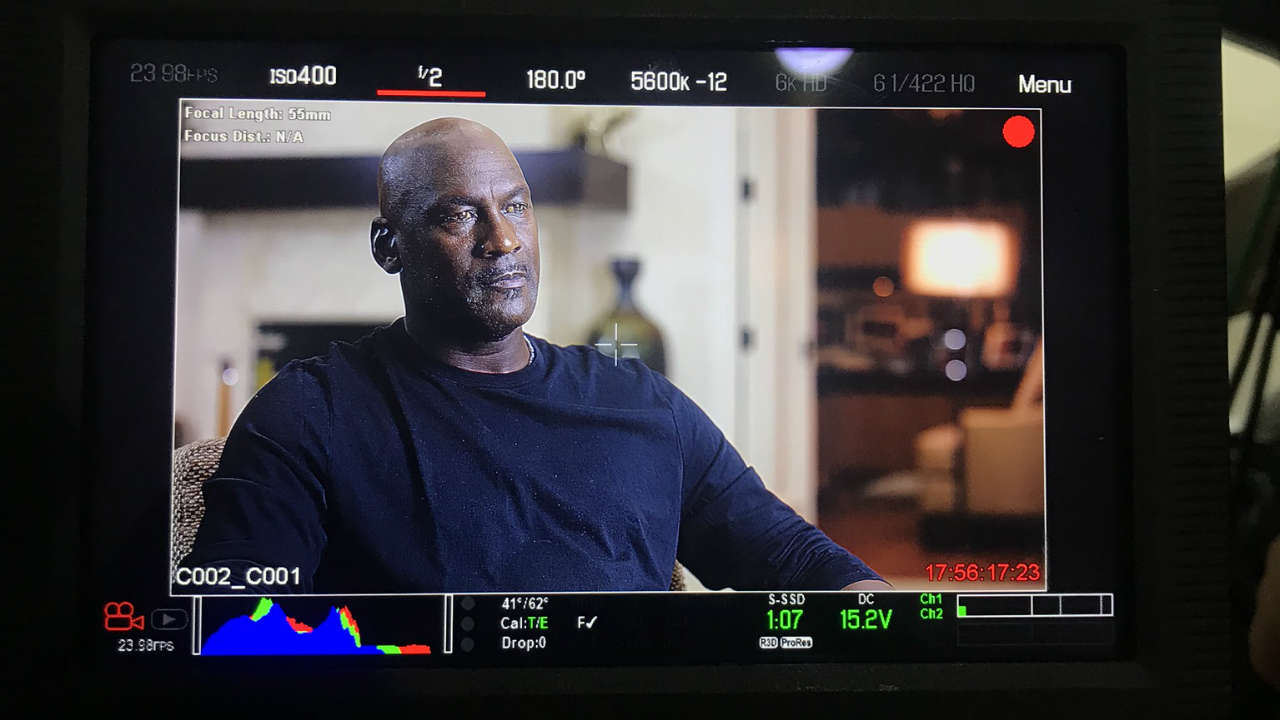
(Photo courtesy of Netflix)
SN: Now because everyone is at home and are social distancing, people are starving for content and people have watched this in the way they watch and communicate about a live sporting event. As the creator, what has that been like seeing people, consume your content in that way?
JH: It’s really gratifying to me and to our whole team because we were working 100 m.p.h. on this thing for the last six months or a year, and then we had to kind of ratchet it up to 125 m.p.h. just to get to this accelerated finish line.
But to be able to see it resonate with people the way that it has, and more so to hear the comments that people are giving about how this has given them an escape and diversion from these conditions and how I’ve gotten a lot of notes from dads and moms saying that they watched this with their sons and daughters, this reminds me of the time with my dad and we’re Zooming as a family before and after the shows.
That’s so gratifying because sports were a huge part of my life growing up and it’s one of the things that bonded our family more than anything else, is our love of sports, our participation in sports. I can’t think of a time during my childhood where I didn’t have a ball or a bat in my hand. So, it’s really, really gratifying to see that in a time of darkness we can bring a little bit of light for an hour or two every week.
SN: At one point, 25 of the top 30 trending topics on social media was related to “The Last Dance.” Why do you think this has been such a seismic cultural moment around your piece of work?
JH: I think more so that this is nostalgic. And I hope that it’s fun for people to watch. I hope it’s a diversion.
And then it brings people back to their youth and allows them to share their youth with the people they shared it with back then and also with their kids and younger people in their families or friend groups. I think that if we had done something a lot heavier, if this was a big exposé into a big, heavy topic, I don’t think it would resonate nearly as much.
Because I think that people, if they want to see heavy, go to any of the 24-hour news networks and you can see heavy all day long. I think that people need an escape and this is a vessel back to your childhood. It’s a vessel back to a really fun time in pop culture.
SN: One of the immediate responses from the first airing online and on television was the Jordan versus LeBron debate with fans on both sides. Why do you think people immediately went to that place?
JH: I think it’s instinct online. That’s where people go to argue about stuff and scream into the void. We all knew that was going to happen. From Day 1 I made it pretty clear that I didn’t want to make this a referendum on who was the greatest of all-time because Michael is certainly not interested in that argument and I am not interested in making that argument as well.
If you want to use this series as part of your evidence to have that argument have at it. I think it’s fun that people discuss that online, it’s part of what we love about sports. Our commonality is in agreeing about sports and in disagreeing about sports and having these, friendly, sometimes a-little-bit-more-intense-than-friendly dialogues online, but it’s just what people want to do.
And if anything, that’s kind of one of the offshoots of what’s gratifying about this is that it gives people a chance to get fired up about something else besides viruses and face masks and staying inside and all that. So if it generates discussion like that, and it’s harmless and it’s fun for people to argue about who they like better than have that.
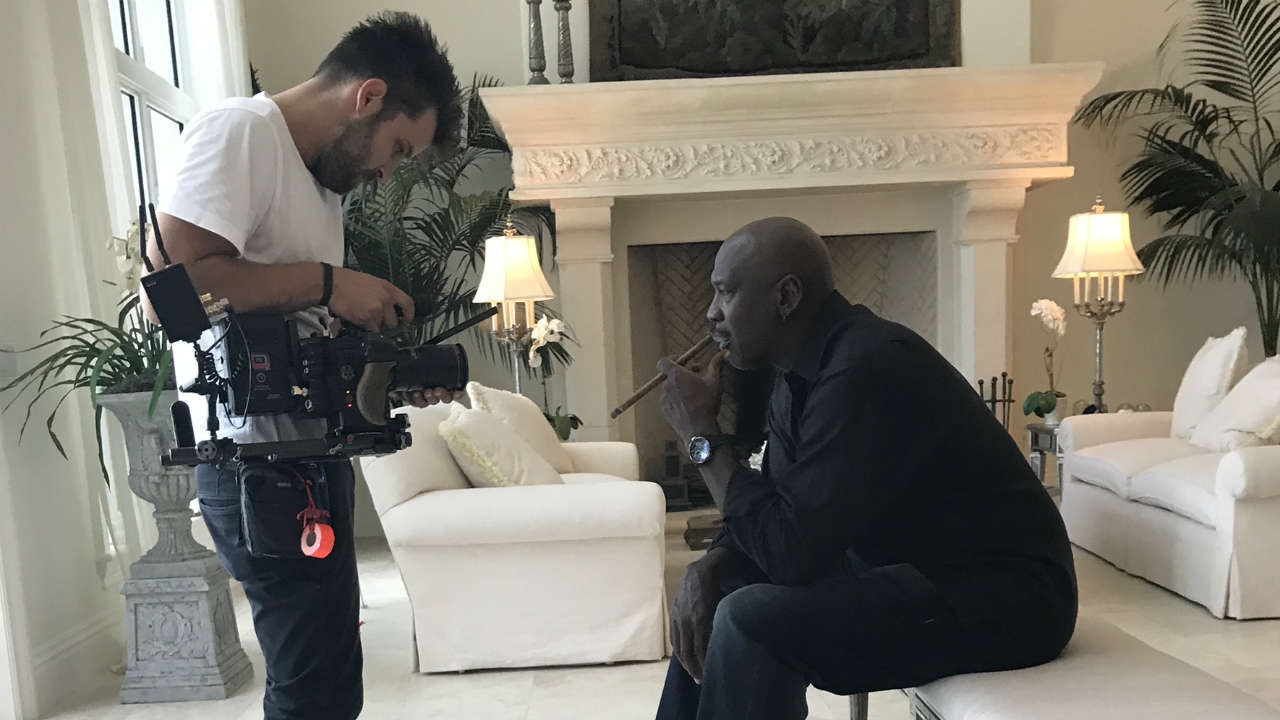
(Photo courtesy of Netflix)
SN: This is a unique project because there are so many stakeholders. Obviously Jordan and Jumpman, Netflix, NBA entertainment and NBA corporate, and then ESPN. What was it like managing all of that?
JH: It’s probably the biggest challenge because when you have that many powerful people in a room, sometimes the bullets are whizzing over your head and sometimes you’re catching bullets because you’re the one making the argument that you’re adamant about on that particular day or that particular week. So, there are a lot of knock down drag outs, respectful knock down drag outs, but people are passionate about this thing and people have different tastes.
You know, if you had 20 people at a dinner table, not everybody’s going to agree on what the entree should be. Somebody wants steak, somebody who wants fish, but he’s a vegetarian and we have the exact same situation with all of these partners.
What was key is that at the end of the day, cooler heads always prevailed and everyone had the humility to say, “You know what, this is the best way to go.” And oftentimes that was me, too, who would be dead set on saying, “This is the vision that I have for this thing, and we’re definitely doing it this way.”
And then someone would offer an idea and offer it again and say, “Try it this way. I really think you should try it this way.” And it actually worked. …
So, everybody I think is proud of the output or the final product, and I’m proud that we were all able to come to the table and manage our passions and have it be the best thing that it could be.
SN: What is the best thing you had to cut out and leave on the cutting room floor that you really loved but couldn’t include?
JH: Episode 1 could have been a lot longer. You could do a documentary about Michael’s years from his sophomore year in high school up through his UNC years and how that shaped him into the man he is today.
We all know the story about him being cut his sophomore year, but the meteoric rise that occurred after that for the next two years, how he got to five-star basketball camp and nobody knew who he was. I think one of the coaches there on the first day said, “Who the eff is Mike Jordan?” He’s looking at a list.
Cause this kid Mike Jordan from Wilmington was just schooling all of these guys. And he rocketed to the top of the high school recruit chart in one week and five days. He was the MVP of this camp that had a lot of big names at it. No one had ever heard of him. So stories like that.
SN: People are looking for entertainment right now. They’re also looking for inspiration. Is there one thing that you wanted people to take away that they can apply to themselves in their lives?
JH: I think that the biggest lesson that I learned is that it’s easy with all these years of hindsight to say it’s got to be just a given. Death, taxes and the Bulls in the finals are they only given things in life in the 90s besides when Michael left to play baseball, so it must have gotten easy for them. They had all these great players on the same team and they just trampled everybody in their path.
But it wasn’t that way at all. Anything that’s that significant and any accomplishment that looks easy is not easy.
[relatedlinks]