The Toronto Raptors are entering unchartered territory this season in more ways than one. For the first time, 60 wins will be looked upon as an expectation rather than exuberant optimism. Hope, now, takes the form of the Larry O’Brien Trophy.
It will require a pretty special coaching effort from a rookie head coach in Nick Nurse. The Raptors will also stand to benefit if someone plays like an MVP candidate, and the likeliest of those options will be playing his first ever season for Toronto.
Bridging those two together will be one of the few constants, Kyle Lowry. Entering his 13th NBA season and seventh as a Raptor, it’s hard not to wonder when his decline may begin. At 32, according to ESPN’s analytics guru Kevin Pelton, he’s already working against the odds.
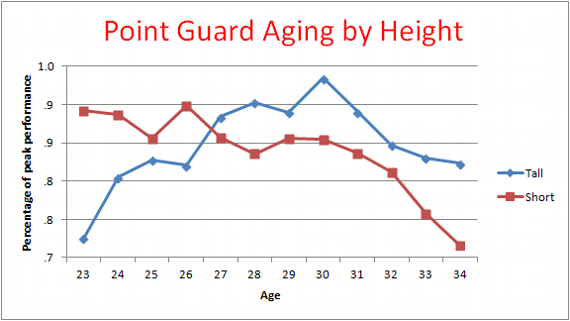
Granted, the sample size is small: point guards who stuck around for at least nine seasons, played a minimum of 10,000 minutes, and ended their careers between 2005 and 2010. Still, the results are noteworthy. Eleven players 6-foot-1 or smaller were classified as short, and the tall point guards were the 10 guys in excess of that.
Among point guards in the league today, Chris Paul is 33, and while still one of the premier stars, has missed 45 regular season games over the past two seasons and was conspicuous by his absence when the Houston Rockets squandered a 3-2 series lead against the Golden State Warriors and lost the 2018 Western Conference Finals. His body type is about as close a match to Lowry’s as any.
Memphis guard Mike Conley, 6-foot-1, will begin this season as a 31-year-old and played just 12 games last year. Cleveland’s George Hill is 32, 6-foot-2, and has missed 95 games in the past four seasons. Miami’s Goran Dragic, 32, has played at least 70 games in each of the past three seasons but he’s 6-foot-3.
If there’s a ray of light, it comes from the most important sample in Lowry himself, who has appeared in 68 games or more in five of the past six seasons. Until last season, he was consistently amongst the league leaders in minutes played, too.
The Philadelphia native is no spring chicken. His playing style has ensured it. From drives to the rim that leave him careening into photographers and stanchions alike, to drawing charges that even the most robust physical specimens in the league would refrain from, Lowry has played the game one way.
He’s had his share of ailments in the post-season as a result of carrying that load, which is arguably why Toronto decided to take matters into its own hands last year, reducing his minutes by five per game and reworking the offence to be more self-sustainable. Here’s a look at how Lowry’s possessions per play type changed as a result:
| Kyle Lowry | PnR dribbler | Isolation | Transition | Spot up | Off screen |
|---|---|---|---|---|---|
| 2016-17 | 482 | 136 | 209 | 167 | 64 |
| 2017-18 | 325 | 75 | 258 | 245 | 83 |
Lowry had the ball in his hands far less last season in both pick-and-roll and isolation scenarios as DeRozan, Delon Wright and Fred VanVleet all took on more responsibility. In seasons past, he was responsible for leading the devastating Kyle-plus-bench units, but that responsibility was taken off his shoulders, too.
After a slow start during which he admitted struggling to find himself in the new offence, Lowry took off from about mid-November, became an all-star once again and broke his own franchise record for three-point makes in a season. Toronto’s do-it-all point guard transitioned to what looks to be the ideal blueprint of the latter stages of his career. With the ball out of his hands, he attempted 124 more catch-and-shoot threes than the year prior, making 40.4 per cent of them. With energy to burn on the defensive end, he finished the season with a career-high 5.6 rebounds per game and led the league in charges drawn with 37.
Then, he came up big when it mattered most. Lowry had arguably his best playoff run, averaging 17.4 points while shooting 58.2 per cent from two, 44.4 per cent from three, 81.3 per cent from the free-throw line, a playoff career-high 8.5 assists, and threw in everything he does on the defensive side of the ball as well. The team found a way to get the best of Lowry at 31 going on 32, and the challenge will be even greater a year later.
It’s clear that the strategy to preserve Lowry’s body worked, providing plenty of incentive for rookie head coach Nick Nurse to continue that trend. The early signs through training camp, though, are that there will be — at the very least — an uptick in Lowry’s on-ball activity.
There’s certainly nothing wrong with putting the ball in the hands of one of your smartest players more often, but it is possible that trying to fix something that ain’t broke could backfire. Ultimately, this season is about winning it all, and if Leonard is only around for just this one, it makes sense to squeeze as much as they can out of Lowry in the here and now.
“I think things will be a little bit different this year, having the ball and being a little bit more assertive, a little bit more aggressive,” Lowry told the media at training camp in Vancouver on Friday. “The happy medium is winning games, that’s the happy medium, whatever it takes to win the game.”
The passion he exudes for winning is exactly why, despite his silence over the trade and whatever speculation there may be about him not being on board with the franchise trading his best friend, it’s hard to fathom Lowry not giving everything he has for what projects to be the best iteration of the Raptors he’s played on.
“I’ve always been prepared to come in, work, try to win a championship,” Lowry made clear at Media Day. “I come to work for the Toronto Raptors to try to win a gold ball and that’s the same as it’s been since my first year, and going into year seven, that’s still my sentiment.”
While plenty of new excitement will rightly surround Leonard and his ability to take the Raptors from good to great, it’s Lowry who remains the constant, his desire for winning burning bright as ever as the torch bearer for a championship flame yet to be lit.
[relatedlinks]