
Christmas can be complicated for a lot of people.
There are the joys of the moment: of family and friends and new things, and of appreciating what you have and what the season brings.
And there are the feelings that so many others share or even feel in parallel: thoughts of who is not there to share the moment with you, of what you are missing or never had.
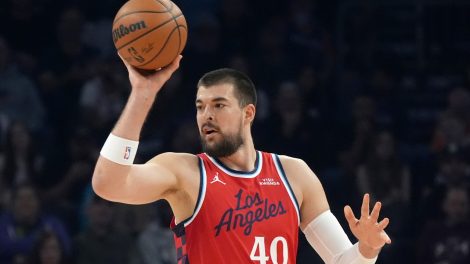
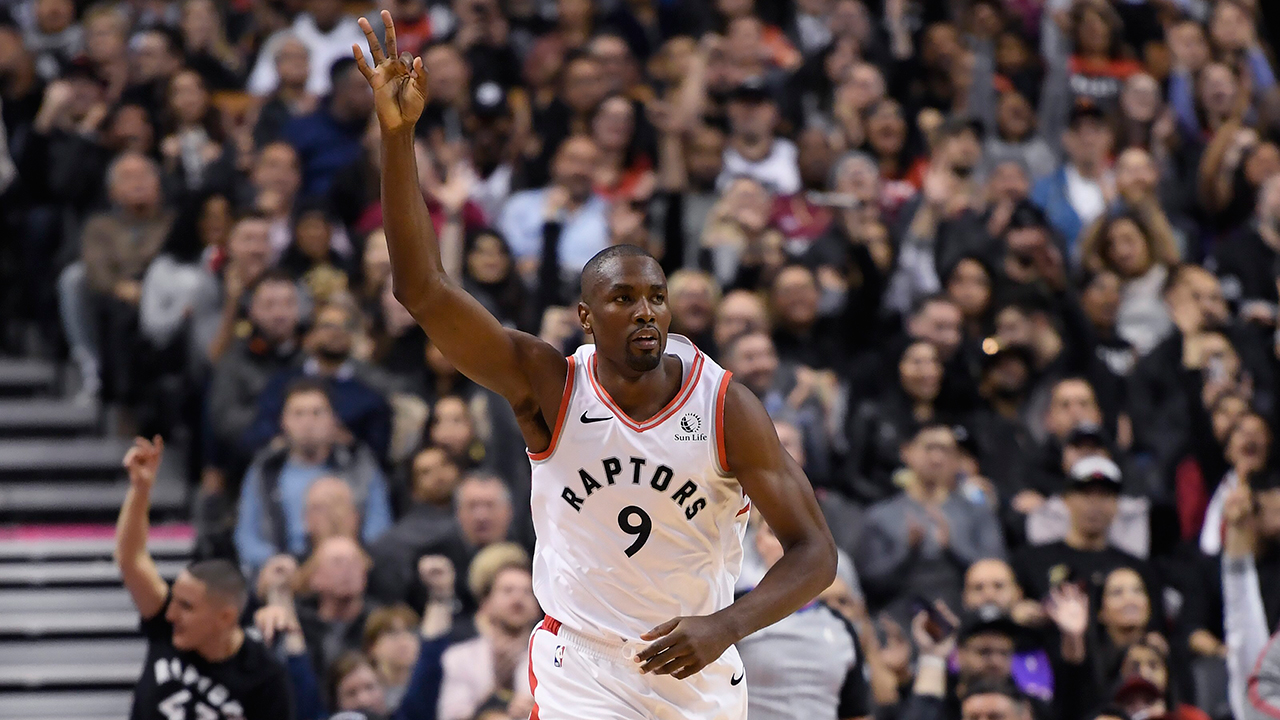
In all of this, Serge Ibaka is no different than many others. His holiday memories as a child growing up are filled with joy but also pain. Of what he had and what he lost.
Christmas in Brazzaville, the capital of the Republic of Congo, is not like it is in Toronto. Ibaka will tell you that.
“Since I left Congo, I don’t think I enjoy Christmas like I used to do, when I was back home,” he said recently after putting in his typically full workday at the Raptors OVO Athletic Centre. “Now I’m old, so it’s different. But as a young kid it was so much fun, man.”
[snippet id=4804250]
This is Ibaka’s 11th NBA season and 15th as a professional since the 30-year-old left home — first for France and then Spain before arriving in the NBA at age 20. He hasn’t made it back to Congo for Christmas since, but the memories of home still light up his broad, chiseled face. His eyes dance.
“At Christmas in Congo you see everybody out on the street – it’s so nice outside, not like Toronto. All the kids are dressing nice, playing with their toys, their games, plastic guns, bikes, wearing masks, taking pictures. It was beautiful. I miss those moments.
“We would have a big dinner I remember at my grandma’s house, and there would be music.”
And – not surprisingly, given Ibaka has made a bit of a name of himself as a chef with his popular How Hungry Are You YouTube series – there was food and treats.
“We would drink soda, and that was special,” he says. “It’s not like here where you say, ‘I don’t drink soda.’ No, there it was special — you didn’t get it every day. It was for special occasions.
“And everybody would have rice with ‘Saka Saka’ (a dish made of cassava leaves ground with palm butter, okra, garlic, peppers and other ingredients). You have to have that, it’s so good.”
This Christmas in Toronto, he’ll start his day with his father, Desire, and his 13-year-old daughter, Ranie.
“I give her whatever she wants,” he says. “Whatever I didn’t have, she has.”
And then he’ll go to work, taking the floor at Scotiabank Arena with the Toronto Raptors against the Boston Celtics, as the NBA’s annual Christmas schedule touches down outside the United States for the first time. It’s an honour that comes with winning the NBA championship.
Among other such honours has been a bigger platform for various members of the Raptors to share their stories and reconnect with their communities, the Larry O’Brien Trophy serving as a shiny, golden touchstone — proof of what is possible, regardless of circumstance.
Raptors point guard Fred VanVleet brought the trophy back to the hard streets of Rockford, Ill., where they held a parade for their favourite son. Kyle Lowry brought it to C.B. Moore Recreation Center in North Philadelphia, where he had learned the game, and offered a living lesson about where it can take you. Raptors president Masai Ujiri took it the dusty courts of Zaria, Nigeria, and Pascal Siakam to Douala, Cameroon.
[snippet id=3360195]
When Ibaka had his chance, he took the trophy to the streets of Brazzaville, where Christmas wasn’t always filled with toys and family and soda and Saka Saka.
At times, playing basketball on Christmas Day was an escape.
“That’s why I love basketball so much,” he says. “When I needed something to lean on, when I needed to somewhere to go and spend my time and forget about things. Basketball was there.”
Ibaka’s mother died when he was seven. When he was 12, his father was jailed for political reasons, a by-product of a bloody civil war in the region.
For a few years – in between those childhood memories filled with colour and celebration and later when basketball took him around the world – Ibaka was essentially an orphan, fending for himself.
“Christmas in Brazzaville for young Serge had many ups and downs,” he says, the third-person offering a bit of distance. “When I had my mom and dad, it was different. Then I lost my mom, and my dad was in jail, and it was different again.
“I remember when my mom was alive at Christmas, she would buy me anything I wanted. I was the only boy, the only son, and I knew that, so was greedy. I think those were my favourite moments. And then she was gone and it was rough.
“Of course at the time it was hard, I’m not going to lie to you, I wasn’t happy about it. It was sad. It was disappointing. I wondered: ‘Why me?’”
Not only did the Raptors’ championship run beget the franchise’s first Christmas Day game – one of the coveted slots on the NBA schedule — it also provided the occasion for Ibaka to revisit some of those moments he experienced growing up as he has come to more fully appreciate his story and the inspiration it can provide others.
The result was a recently released documentary, Anything is Possible, where Ibaka brings the NBA championship trophy back home. One of the most powerful moments of the film sees Ibaka returning to the small, open-air roadside café where he would linger as a boy, swooping in to eat the scraps left on plates by strangers, and where he recalled walking the streets in the dark, hunting bottles to exchange for money.
As he approached the old neighbourhood for the first time as an adult, as a champion and a man of wealth, Ibaka – one of the toughest competitors in the NBA, a physical presence both respected and feared – was moved to tears.
The documentary premiered at the TIFF Bell Lightbox earlier this month in front of fans, friends and teammates, some of whom knew his story — or the outlines of it — and many that didn’t.
“To actually see it on the screen and realize what he went through to get to this spot, it speaks volumes about his work ethic and why he does what he does. You get a better understanding of him,” says Raptors forward Malcom Miller. “People don’t see the vulnerable Serge. They see him when he’s dunking and yelling, but this is not the basketball Serge Ibaka — it’s the human Serge Ibaka. You can see how those two lives meshed together and how one supplements the other to create the player and person he is today.”
[relatedlinks]
No one was happier for Ibaka to share his story than his teammates, who have seen him grow from the somewhat-reserved presence who joined the Raptors three years ago to the outgoing leader he’s since become.
“If you know Serge, you know that story of him begging for food at that restaurant and cleaning the streets for money,” says Lowry. “But for him to put it out on film and for people to watch it and see for themselves was unbelievable.
“[But] he’s more confident. You win a championship and things like that happen. You’re able to go out into other avenues,” says Lowry. “I think winning a championship gave him a bigger stage to promote his continent, his people, and he’s doing that even more now.”
Ibaka’s purpose in sharing his story isn’t to draw attention to the low points of his life, but to prove that those challenges don’t have to be defining.
They haven’t been for him, even if it’s easy to draw a line from those childhood hardships to his indefatigable – almost legendary – work ethic and fastidious preparation or to his off-court passions for food and fashion.
He’s not the first person to come through trauma determined to work fiercely to protect what he’s earned, aware of how fragile it can be or the first to treasure as an adult what they didn’t always have as a child.
His motivation in sharing his story is not dwelling on the beginnings, but on the ending. That’s the gift he wants to share this Christmas.
“It was painful, but it’s part of life. That’s what made me who I am,” he says of those early years in Brazzaville. “At the end of the day, all the big things you see now have small beginnings.
“Sometimes things happen for a reason and those reasons make us who we are now. I feel like it made me stronger.”
Not surprisingly it has made him willing to help those who need it. Through his charitable foundation, Ibaka is working to fulfill a career-long dream of funding an orphanage in Brazzaville to serve children who had needs like he did when he was young. He’s also establishing after-school basketball programs in six different West African countries for teenage boys and girls.
It’s been a long process for Ibaka to become the person and player he is today. Not all of it has been smooth sailing. There have been storms many people would never have made it through.
But this Christmas, the kid from Brazzaville can call himself a champion, and he hopes that’s a gift that can keep giving. He’s embracing the season and all its complications.
“[Before], I didn’t want to talk about the bad things,” he says. “Most people are asking me about life in the Congo, and it’s not always poor — it’s not always sadness.
“But [now] I’m happy to talk about my story because it’s who I am — it’s what made me. So if you want to accomplish something but … you have doubts about it, my story can help.
“As a young kid, in the moment you wonder, ‘It’s Christmas — why don’t I have this? Why don’t I have my mom? Why don’t I have my dad?’ But now I look back and I think: This is why. My story can help anybody — that’s what is beautiful about it.”