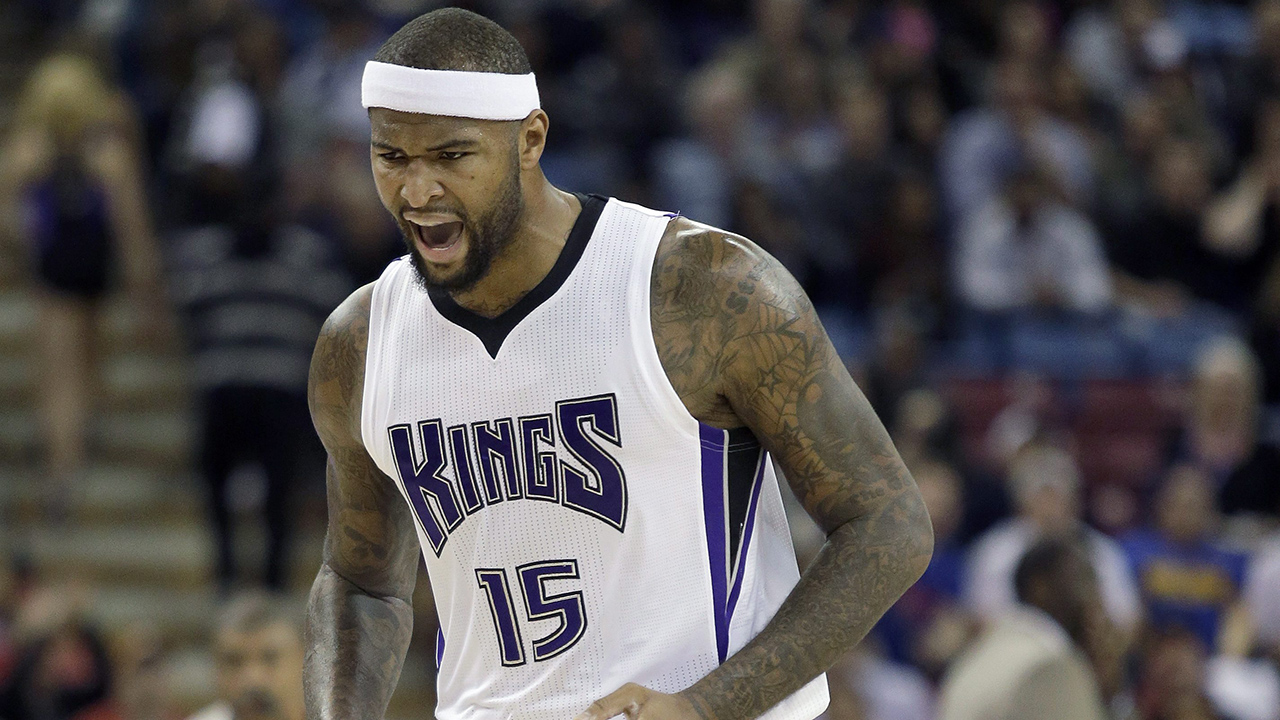
As the Sacramento Kings get set to swear in George Karl as the franchise’s 16th head coach since the 1985-86 season (when they moved to Sacramento from Kansas City), there’s still a lot of uncertainty in the California capital. Karl will be the fifth head coach in the last five years—and the third (THIRD!) this season—for a team that just hasn’t been able to stay out of its own way.
Two years ago, Vivek Ranadive, a businessman and engineer by trade, rode into town on a white horse and rescued the Kings from near-certain franchise relocation. It cost his group a then-NBA record $534 million and his promise to keep the team in Sacramento and finance a new state-of-the-art arena was met with the jubilant ringing of cow bells. If he had stopped there, he’d be a folk hero—never paying for a meal or a drink again.
Alas, he didn’t stop there.
An innovator in the tech world, Ranadive has proven he’s dead-set on innovating in professional basketball as well, regardless of how counterintuitive (read: dumb) some of those “innovations” may be. In fact, Ranadive’s clumsy meddling in the Kings’ basketball operations seems to have cost him nearly all the good will he’d banked in Sacramento over these past two years.
To fully appreciate the mess he’s made, though, you need to step back to a time before the Kings were up for sale.
Ranadive has always been a huge basketball fan. In 2010, when a minority ownership position with the Golden State Warriors became available, Ranadive seized the opportunity to become the first NBA owner of Indian descent. It was in the Bay area that his relationship with former Kings coach Mike Malone was formed.
Malone was hired by the Warriors in 2011 to be an assistant coach under Mark Jackson. He was well respected around the league and in 2012 was named the best assistant coach in the NBA in a poll of general managers. During their time with the Warriors, Ranadive and Malone essentially made a handshake deal that if and when Ranadive became a majority owner of a franchise, Malone would be his coach. Ranadive made good on his word and brought Malone in to coach the Kings in 2013. It was a good hire, but it violated a cardinal rule of pro sports front office construction: Don’t hire the coach before you hire the GM.
In any business environment (but especially one as ego-driven as professional sports), there needs to be an established pecking order to maintain amicable operations. Hire a coach before your GM, and you’ve disrupted that order, undermining the effectiveness of the front office. In other words, the Ranadive-era Kings, no matter how well intentioned, bungled their first move.
Meanwhile in Denver, the Nuggets were having a front office crisis of their own. They let Masai Ujiri leave to run the Raptors (bless their hearts), and next to go was Masai’s assistant GM, Pete D’Alessandro, whom Ranadive offered the Kings’ GM position. One of D’Alessandro’s first moves in Sacramento was to go after Andre Iguodala, an unrestricted free agent at the time who, like D’Alessandro, had just finished a season with the Nuggets. The Kings made a lucrative four-year, $52-million offer to the veteran swingman, but quickly grew frustrated when Iguodala wouldn’t sign immediately and pulled the deal off of the table.
Taking back the offer was not only incredibly unprofessional (and offensive to Iguodala), it also portrayed the front office as indecisive and petty—not exactly the qualities future free agents look for in an employer.
Then there was this past offseason. With a glaring need for a point guard and/or complimentary forward to pair with their franchise centre, DeMarcus “Boogie” Cousins, the Kings nevertheless elected to draft Nik Stauskas, a shooting guard, with the eighth-overall selection, despite the fact that they’d selected Ben McLemore, also a shooting guard, with the seventh-overall pick a year prior. Now, only three-quarters through his rookie season, Stauskas is reportedly on the trading block as the Kings look for…wait for it…frontcourt help for Boogie Cousins. Why not just draft a forward last summer?
Given that example, it’s not hard to see why Malone butted heads with Ranadive and D’Alessandro over personnel numerous times in his season and a half on the job, including opposing a trade that would have brought Josh Smith to Sacramento, as possible bait to also land Rajon Rondo (Smith and Rondo are close friends). Malone opposed the deal (as any sane basketball mind would) because of Smith’s untenable contract. Smith eventually landed in Houston after shooting his way out of Detroit.
Malone also had philosophical differences with Ranadive and D’Alessandro over the Kings’ style of play. Ranadive has gone on-record saying he wants the team to play more like a “jazz band.” He also says that the Kings, under Malone, were more like a Sousa marching band. Essentially, Ranadive wanted the Kings to play a more up-tempo, freewheeling, offensive game, as opposed to the deliberate half-court style and defensive mindset they played with under Malone. Because, you know, when you have the NBA’s most dominant low-post centre—who gets winded after one sprint down the length of the floor—what you really want to do is get out and run.
Malone was let go after the Kings began the season 11-13—their best start since the 2004-05 season, and one they managed despite losing Boogie for 10 games due to a scary case of viral meningitis. Interim coach, Ty Corbin, took over with a guarantee he would coach out the rest of the 2014-15 season. Corbin went 7-21 in his 28 games on the job, coaching a mentally checked out roster while the Kings held very public negotiations with George Karl over the past few weeks.
Appearing to panic after the Orlando Magic fired Jacque Vaughan and became a viable option for Karl, the Kings accelerated their negotiations with the veteran coach. Though a formal announcement has yet to be made, Karl and the Kings have agreed to a four-year, $14.5 million deal.
Karl inherits a team that has lost 14 of its last 16 games and sits 13th in the Western conference with a record of 18-34. Obviously, he has his work cut out for him fixing all the Kings’ on-court issues, but his biggest challenge will be navigating a front office that seems to be far too preoccupied trying to outsmart everyone else—ultimately, and frequently, launching moves that only serve to self-sabotage.
Ranadive has written two bestselling books on business, The Power of Now: How Winning Companies Sense and Respond to Change Using Real-time Technology and The Power to Predict.
Perhaps we’ll look back on all of these seemingly counterintuitive moves and think, “Wow, Vivek really did outsmart everyone.” Or maybe, a few years down the line, we’ll get The Power to Implode: How Franchises Disregard Chemistry and Personnel Strengths to Upset and Alienate Their Loyal, Once-Proud Consumer Base.
It’d probably be a real page-turner.