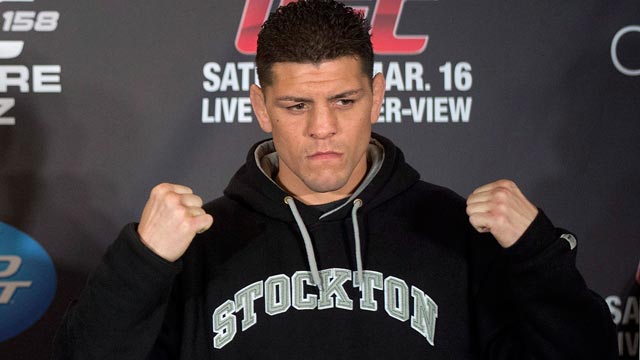

The Nevada State Athletic Commission (NSAC) shocked the entire MMA community earlier this month when they burned UFC veteran Nick Diaz with a whopping five-year suspension. Diaz failed drug screening in January at UFC 183, testing positive for marijuana for the third time in his career.
The suspension left most in disbelief with plenty of prominent MMA figures such as UFC women’s bantamweight champion Ronda Rousey and UFC commentator Joe Rogan responding in anger.
The ruling seemingly came from out of nowhere. Earlier in the year, while introducing new drug testing guidelines that went into effect on Sept. 1, the NSAC suggested a three-year suspension for offenders who tested positive for cannabis/marijuana for a third time. Diaz’s failed test was reviewed under the old policy in which Diaz’s UFC 183 opponent Anderson Silva was suspended merely one-year after testing positive for steroids in the same fight — under the new guidelines a first-time steroid offender like Silva would get a 36-month suspension.
The NSAC justified Diaz’s suspension by adding that previous violations — a no-show for a pre-fight test in California and his involvement in brawl in Strikeforce in 2010 — impacted the sentence. Commissioner Pat Lundvall originally wanted a lifetime ban but the commission eventually levied a five-year suspension.
It’s been argued repeatedly that marijuana is not a performance-enhancing drug and Diaz has a medical licence to use the drug under California state law. He earlier tried to apply for a therapeutic use exemption before his UFC 183 fight, but according to the NSAC waited too long to submit his application.
Also, Diaz passed two of his three drug tests around UFC 183. The two tests, which were administered by the WADA-approved Sports Medicine Research and Testing Laboratory, showed Diaz was clean but one test gathered by a non-WADA approved lab, Quest Diagnostics, showed Diaz had double the permitted amount of marijuana metabolites in his system on fight night.
A failed test is a failed test but it was interesting how it was the non-WADA approved lab’s evidence that the NSAC went on when recently Cung Le was able to overturn a positive HGH test due to a non-WADA approved collection process.
Diaz, through his attorney’s advice also enacted the Fifth Amendment during his NSAC hearing. Diaz’s legal team was hoping to delay the process until better evidence or a better argument emerged but the NSAC didn’t care and threw the book at Diaz. The commission didn’t give him the benefit of the doubt likely due to his past transgressions and perceived unruly attitude. It was a stern punishment to say the least.
The NSAC has long painted itself as a suspicious entity in the eyes of the fans and media. They have a slew of contentious judging decisions (i.e. Pacquiao-Bradley, Phan-Garcia) and inconsistent drug testing standards such as when former UFC light-heavyweight champion Jon Jones was randomly drug tested for cocaine. Jones’s test results were not revealed until after his fight with Daniel Cormier in UFC 182 and he was not punished by the NSAC because cocaine is technically not a banned substance when used “out of competition.”
The commission also seems partial to certain fighters like when they granted Vitor Belfort, a frequent TRT user and someone who has failed tests for elevated levels of testosterone, a licence. They also had no problem granting Floyd Mayweather a licence to fight after he was convicted of domestic abuse and was sentenced to serve a prison sentence. Their overly reverent attitude towards him during the hearing was also not to be overlooked. This difference in fighter treatment even angered UFC president Dana White who lamented that if the UFC ever had a fighter in Mayweather’s situation they would have never been granted a licence.
Diaz didn’t make things easier on himself with his failed tests and belligerent attitude and the writing was on the wall for his severe punishment. But with repeat cheats like Belfort and convicted criminals like Mayweather seemingly getting special treatment it’s a glaring sign that the NSAC is an organization that can be biased and unjust when making rulings.