BY MIKE CORMACK
sportsnet.ca
The PGA Tour is fond of saying “These guys are good.”
We’re about to find out just how good, especially from the rough. Beginning with this week’s season-opening SBS Championship in Hawaii, professionals will be playing under new rules for the types of grooves allowed in their irons, golf’s first mandated equipment rollback in 80 years.
It’s not exactly a switch back to hickory shafts, and opinions are varied on how significant the changes will be, but one thing is certain: grooves will be the hot topic in golf in early 2010 – that is of course until you-know-who emerges from hibernation.
What are grooves?
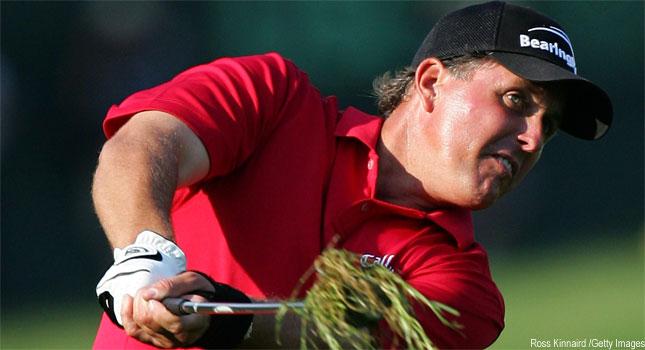
Golf World magazine may have put it best when it suggested thinking of grooves as “the golf-club equivalent of tread on a tire.” The bigger and deeper the tread (or groove), the more water (or grass) can be channeled away, providing a better grip (or additional spin). Over the years grooves have become sharper and deeper, moving away from the more traditional “V” shape to a wider “U” shape. The new rule will shorten the edges and hopes to reduce spin by about half.
What is the new rule?
In August of 2008, following three years of research, the sport’s two main governing bodies, the United States Golf Association and the Royal and Ancient Golf Club of St. Andrews announced that as of Jan. 1, 2010 new restrictions were being placed on the edge sharpness of grooves. All of the world’s major professional golf tours as well as the PGA of America and Augusta National agreed to apply to the new rules to their competitions going forward.
Why is it necessary?
The USGA and the R&A determined that golf was simply becoming too easy for the top pros. USGA president Jim Vernon pointed out that while driving accuracy in the 1980s was as critical to success on the PGA Tour as putting, over the past five years, the importance of accuracy was of hardly any consequence. In other words, a “grip it and rip it” approach had taken over off the tee as modern grooves removed the fear from playing out of the rough.
What will the effect be?
If you believe the R&A and the USGA you’ll see a lot more 2-irons and 3-woods in 2010, especially on tight tracks with deep rough. Scores could rise and some players might even switch to a softer ball that spins more but doesn’t travel as far in an effort to stay out of the thick stuff at all costs. In a column he wrote for the golfchannel.com, former European Ryder Cup player Luke Donald said playing under the new guidelines was resulting in “the ball flying 15 yards farther with a 7-iron. That’s a big change to get used to.”
Who will it benefit?
On first glance, you’d have to say the big winners could be the shorter, more accurate hitters. If that’s the case then the likes of Jim Furyk, Luke Donald, Tim Clark and Mike Weir must be licking their chops. But even the most accurate ball-strikers find the rough on occasion, so it’s what you can do once you’re in there that really counts. That’s why if erratic drivers, but short-game wizards such as Phil Mickelson, Tiger Woods and Padraig Harrington can find a few extra fairways in 2010, they could be the biggest benefactors of all. “I have no problem with (the new rules) because I feel like it’s a challenging thing for a player to judge shots out of the first cut of rough or out of the rough,” Mickelson explained. “Is the ball going to spin? How is it going to come out?”
Who will it hurt?
If Mickelson is right, the changes could expose otherwise weak short-game players who have benefited from the added spin and predictability u-grooves provided them with. If u-grooves closed the gap between the magicians such as Mickelson and Woods and young bombers but poor chippers such as Hunter Mahan, Rory McIlroy and Anthony Kim, then we could see the gap between them widen considerably this year. If the end result is the cream of the crop rising to the top more often on Tour, then the USGA and the R&A will have hit one straight down the middle.