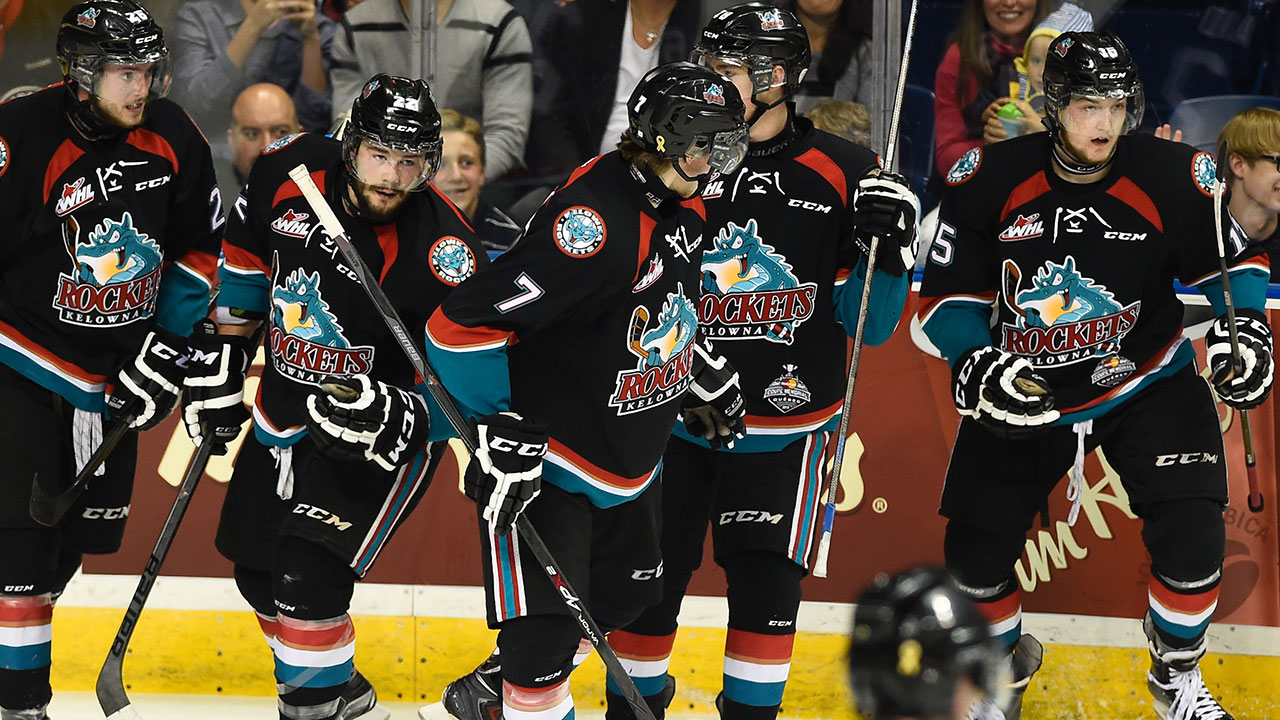

QUEBEC — The MasterCard Memorial Cup semifinal was a long shot to be a competitive game. In the post mortem, many will say that the Quebec Remparts ran out of gas when they hit their eighth and ninth periods played across a stretch of about 50 hours. Fatigue was a factor in their 9-3 thumping by the Kelowna Rockets, but you wonder if the home team would have been competitive even if well-rested.
Fact is, Kelowna was a better team on substance. Much better.
The WHL champs have two wins and two losses to show for their trip to Quebec but it’s one of the more uneven splits you could cook up: two one-sided thrashings of QMJHL opponents and two one-goal losses. They have a lot of talent and that has been stated and restated this year–they looked like a threat to win the Memorial Cup even before they dealt for Leon Draisaitl and Josh Morrissey in mid-season.
Really, when talking about gas in the tank, the needle for the Rockets seemed to be in the red when the tournament opened, losing in the opener to the Remparts.
Although the Rockets rolled through the WHL final, winning four straight against Brandon, they seemed to be off their game in dropping the opening affair of the tournament to the hosts. The semifinal in no way resembled that matchup.
Given Kelowna’s performance in Friday night’s rematch rout, you can see parallels between the 2015 Memorial Cup and last year’s edition. Twelve months back, Guelph was a heavy favorite going into the final against the Edmonton Oil Kings, the Storm having beaten the Oil Kings in the opening round. Curtis Lazar and the rest had to knock off the Val d’Or Foreurs in the semi to get a second chance at the OHL’s best in the championship game. The Oil Kings were the much better team in the rematch and hoisted the trophy at tournament’s end.
No doubt travel for the WHL team was a major factor in the course of last year’s tournament. Time difference and unfamiliar surroundings also figured in. This year seems no different. Oshawa beat Kelowna 2-1 in their last game of the opening round and by “beat” I mean “smothered.” The final-shot totals, Oshawa 29, Kelowna 21, suggests that the game was a fairly even fight and such was not the case.
At the 30-minute mark, you wondered if the Rockets were going to manage to reach double figures in shots on the Generals’ netminder Ken Appleby. Oshawa stuffed the neutral zone and on the rare occasion Kelowna sustained any possession inside the blue line, Oshawa’s defenders gave gaps in their own zone without the puck and effectively had six guys playing goal.
When Gage Quinney scored on an odd-man break with less than two minutes left in the second period, it came completely against the flow of play—it was hard to remember the last time that the Rockets had a legit scoring chance. Kelowna rallied: 11 shots in the third after 10 total through the first 40.
What’s more, the Rockets generated six shots from the slot and in during the last 20 minutes, having managed all of three in periods one and two. It was only somewhat a function of the Generals putting them on a minute-long five-on-three power play in the game’s late stages—the Rockets only were credited for two shots, one from the point by Morrissey and a follow-up in tight by Draisaitl. All of these are pretty good signs that Kelowna was figuring it out.
To my eye, the Rockets have played better in each game of their four dates here—saying that is to give due credit to a very good Oshawa team. And in fact, breaking it down even more, it looks like Kelowna has raised its game incrementally every period. This, again, is another parallel to the Edmonton team that won a year ago.
Okay, Quebec crashed and burned in the semi. Adam Erne talked about three-quarters of his Remparts’ teammates being in the trainer’s room being treated for various wounds. Well, maybe that explains why the hosts couldn’t rally in the third period but in no way does it account for Kelowna putting the game away in the first five shifts after the first intermission.
No, the Remparts’ injuries and fatigue had nothing to do with Draisait’s clinical finish on the power play 17 seconds into the second period or, for that matter, Justin Kirkland’s pair of goals just a few shifts later.
It hasn’t been a classic tournament by any stretch and neither of these teams will get much consideration when discussion gets around to the all-time greats. Still, the two teams in the final are quite capable of a game that will rank up there, especially if Kelowna’s fourth period against the Generals is an improvement on the third from the other night. Which is exactly how the Rockets have been trending.