Even in an unprecedented season with unexpected results, the Atlantic Division’s top two teams have managed a second-round meeting.
Is this the year for the Lightning? The last time these two met in the playoffs, Tampa Bay won it in five games but fell short in the Eastern Conference Final against the eventual champion Washington Capitals. In fact, Tampa has been to two of the past four conference finals, but last year’s first-round upset still leaves them with something to prove. We all know they have plenty of skill, but can they play “big,” “tough” and defence well enough to get all the way through? The Boston Bruins present the best test.
Between the round robin and Round 1, we saw two very different versions of the Boston Bruins. The first was a disconnected, disjointed club that was a far cry from the Presidents’ Trophy winners we saw before the league halted operations back in March.
But after a trio of losses that saw them fall to the fourth seed, the Bruins looked like the dominant team we’re used to seeing come playoff time. Can they keep it up as the going gets tougher?
Here’s our series preview:
[snippet id=4931344]
ADVANCED STATS
Playoff 5-on-5 numbers via Natural Stat Trick
Tampa Bay: 57.74 CF%, 54.84 GF%, 93.43 SV%, 6.77 SH%, 1.002 PDO
Boston: 52.30 CF%, 44.44 GF%, 91.07 SV%, 6.35 SH%, 0.974 PDO
POST-SEASON TEAM STATS
Tampa Bay: 13.3 PP%, 87.1 PK%, 20 GF, 20 GA
Boston: 17.9 PP%, 85.7 PK%, 19 GF, 20 GA
HEAD TO HEAD RECORD
Tampa Bay: 3-1-0
Boston: 1-2-1
Tampa Bay’s primary strength: Team depth
Even with Steven Stamkos still sidelined with a lower-body injury, the Lightning are loaded up front with Brayden Point and Nikita Kucherov leading the way. Tampa is strong down the middle with Anthony Cirelli and Yanni Gourde thriving defensively, while wingers Cedric Paquette, Barclay Goodrow, Blake Coleman and Patrick Maroon add a physical edge.
The blue line has a bit of everything, too. Zach Bogosian has found new life with the Lightning – playing beside Victor Hedman has definitely helped – while Erik Cernak and Ryan McDonagh are shot-blocking machines on the second pair. When Mikhail Sergachev and Kevin Shattenkirk are your third pair, you’re in really good shape.
Boston’s primary strength: They know how to win
Call it grit, call it resilience, call it mettle. Whatever you call it, there’s no denying that this battle-tested Bruins core knows what it takes to win. If you were among those plotting an early exit after an uninspiring round robin, you weren’t alone – nor were you the only one wondering if they could succeed without their leading scorer or starting netminder.
When Pastrnak was sidelined, in stepped David Krejci — Playoff Krejci — whose three-goal, eight-point performance in Round 1 against the Carolina Hurricanes was a major reason they were able to make such quick work of the storm surge.
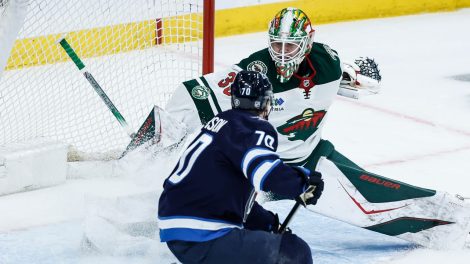
With Tuukka Rask opting out, Jaroslav Halak stepped into the blue paint and shone while the team in front of him tightened up in a rallying effort.
Down in the third period of Game 4 and in need of someone to score, Jake DeBrusk stepped up – twice – to fill that gap and give the Bruins the go-ahead victory and change the fate of Round 1.
And all throughout, Patrice Bergeron and Brad Marchand continued to lead the way – and made us all feel silly for doubting them in the first place.
Tampa Bay’s primary weakness: Right now it’s the fact they’re not finishing their quality scoring chances. The offence hasn’t been firing on all cylinders so far in the post-season – even when they’ve had the man advantage.
Despite a well-rounded forward group, the Lightning only have 20 goals through eight playoff games and the power play is operating at a disappointing 13.3 per cent (they ranked fifth in the regular season at 23.1 per cent). The team led the league in scoring during the regular season even though they ranked 19th in shots per game. That efficiency hasn’t been there in the playoffs. They’ve averaged 36.6 shots per game in the post-season – a number boosted by the marathon overtime game when they fired 88 shots on Joonas Korpisalo – but have only scored more than three goals in one game this summer.
Boston’s primary weakness: That the Bruins’ resilience was on full display in Round 1 was due in large part to their own slow starts. The Bruins gave up the first goal in three of their five games against the Hurricanes, and all three of their round-robin losses.
Sooner or later, this catches up to a team. They’ll need to set the pace, not keep up, against tougher opponents if they’re to proceed to Round 3.
Tampa Bay Lightning X-Factor: Andrei Vasilevskiy
The Russian netminder has led the NHL in wins in each of the past three seasons and won the Vezina one season ago, yet it didn’t matter one lick in the playoffs.
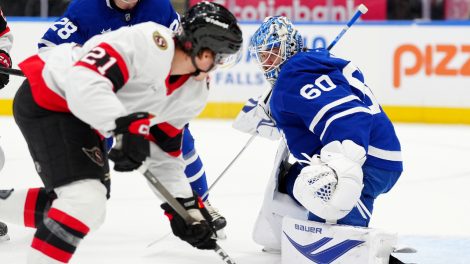
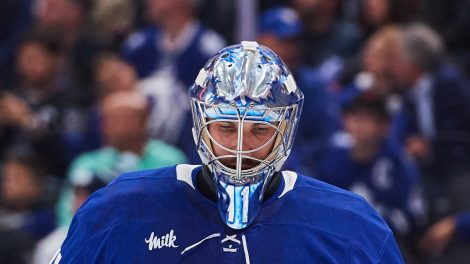
His even-strength save percentage in the regular season this year was a career-low .908, but he has bumped that up to .932 in the playoffs and kept his team in tight games. As mentioned above, the Lightning aren’t scoring as much as they typically do, so Vasilevskiy’s ability to shut the door has been all the more integral to his team’s success.
[snippet id=4167285]
Boston Bruins X-Factor: Jaroslav Halak
When starter Tuukka Rask made the difficult — and undoubtedly right — decision to leave the Toronto bubble to be with his family, he left the Bruins in the capable glove-hand of Jaroslav Halak.
More of a 1B than a backup, Halak is now in the spotlight as the No. 1 guy this summer and will continue to be as the Bruins reignite their drive to return to the Stanley Cup Final. It’s fitting, really, as he was in many ways one of the biggest reasons for Boston’s success last post-season and this past year. The 35-year-old’s strong play throughout the regular season last year allowed Rask to be well-rested for a long playoff run, and his solid play this year helped the team reach the top of the east.
Halak’s performance at the helm so far has been excellent. Since taking over the crease ahead of Game 3 against the Carolina Hurricanes, he has let in just five goals in three games for a trio of wins as the Bruins eliminated the Hurricanes in five.
While Carolina’s top line of sharp-shooters certainly put him to the test, the real challenge lies ahead. Though it wasn’t so long ago that he was an NHL starter – he started 54 games for the New York Islanders in 2017-18 – the last time he started a playoff matchup prior to this summer’s action was in 2015. While he hasn’t seen an extended playoff run in 10 years, he caught fire in 2009-10 with the Montreal Canadiens with 18 spring starts.
[relatedlinks]