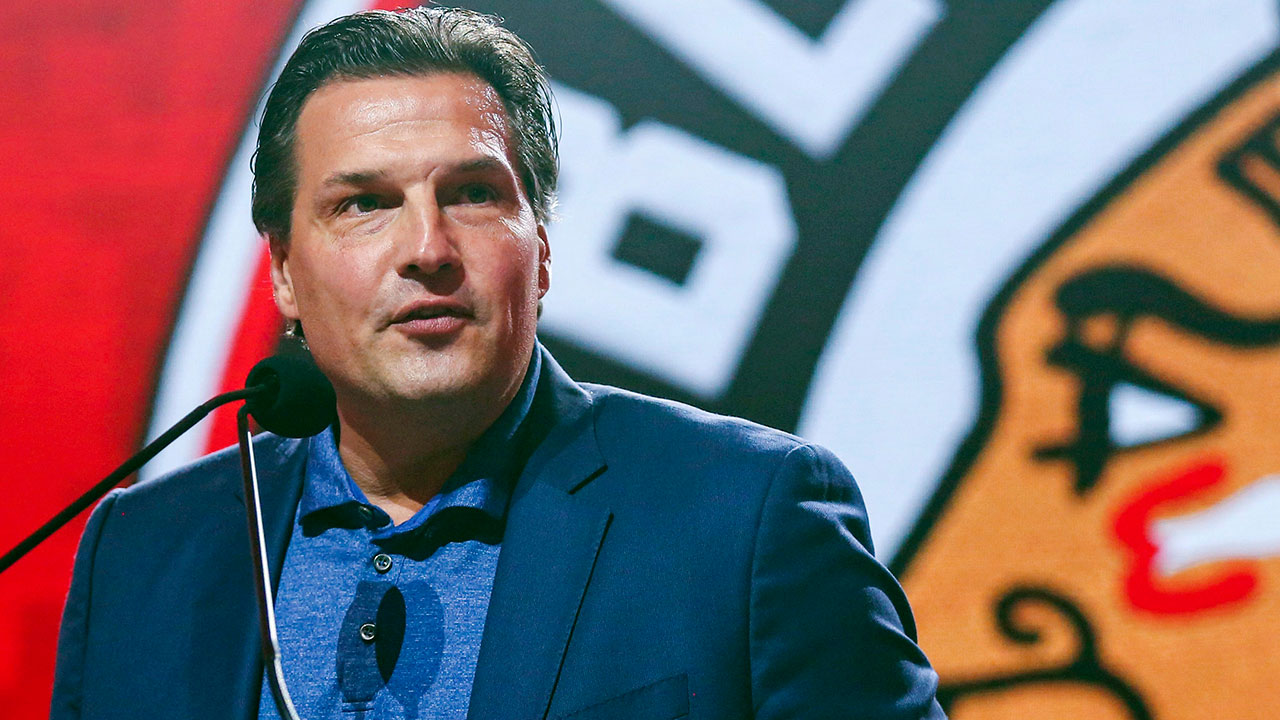

Ask Ed Olczyk a question, and you get an answer.
It’s not always so simple with athletes and ex-athletes, with public figures of any sort, who are trained and conditioned to offer soundbites and platitudes, rarely getting real.
Not so with Eddie O.
Ask him about the shifting culture of hockey coaching, and he offers the perspective of someone who came of age in a very different game, and has taken the time to rethink some of his old assumptions.
Ask him about what it was like to receive his stage-three colon cancer diagnosis, and he speaks openly about coming face to face with his own mortality.
Ask him about Winnipeg, the city where the kid from Chicago became a hero, pledging after that final game with the first incarnation of the Jets that someday they’d bring the Cup back, and you know that there’s a piece of his heart left behind in Manitoba.
Ask him about the future of sports and gambling, and a guy who loves the track and knows the horses opens the door to the very-near future, when every league in every sport will begin to cash in on what had forever been a dirty little secret.
There’s a reason why Olczyk all-but-seamlessly made the transition from a 16-year playing career, which established him as one of the best U.S.-born players in the history of the game, to the broadcast booth, where he’s won a couple of Emmys as the colour man on NBC’s national broadcast to go along with having his name engraved on the Stanley Cup.
He knows his stuff, obviously, but most importantly, a viewer can sense the sincerity, sense the real, extraordinarily likeable guy on the other side of the camera. It comes through.
And it comes through in conversation. Sitting down with Ed Olczyk is like sitting down with an old friend. It’s fun, it flows, it is effortless, it is intimate without ever becoming cloying or self-serving, it is down to earth and 100 per cent real.
In other words, it is a measure of the man.
In the latest episode of Open Invitation, Stephen Brunt sits down with Ed Olczyk, the Stanley Cup champion turned award-winning broadcaster, who beat cancer, established himself as one of the best U.S.-born players in hockey and mindfully acknowledges the game’s ever-shifting landscape.