With the NHL and the NHLPA finally coming to their senses and agreeing on a new collective bargaining agreement, there have been mixed feelings as the league prepares to return to the ice.
Like everything else, a shortened season has both good and bad things about it.
The Good
1. More Excitement and More Pressure Every Single Game
With just 48 games on the schedule, every single game is important.
Every contest will be fierce and exciting because getting those two points could mean everything when it comes to making or missing the postseason. Not only will the players know how important each game is, but the fans, especially the die-hards, will more than likely feed off of it.
Long time hockey staple and Hockey Night in Canada personality Don Cherry feels that the season is going to give fans some great hockey to watch and be a part of:
"It’s going to be terrific [hockey]. They won’t have 82 games, that marathon [of a standard regular season]. They’re going to [play games] in their own conference," Cherry told CBC News Network on Monday. "It’s going to be dynamite"
Former NHL goaltender turned analyst Kelly Hrudey shares the same sentiments that his colleague Cherry does: "It was amazing to feel that sort of pressure that quickly in a season. Every game was just so important."
Mike Miller, who was the radio play-by-play voice of the New Jersey Devils during the 1994-95 shortened season when the franchise won their first Stanley Cup, said that he was surprised at how good the hockey was then.
"Everybody was really leery about how the hockey was going to be, but I have to tell you, it was actually phenomenal," said Mike Miller, who was the radio play-by-play voice of the Stanley Cup-winning New Jersey Devils that season. "You could not get on a losing streak. If you lost five in a row, you were probably out of it," Miller said.
2. Opportunity to Build New Rivalries and Grow Existing Ones
The last time there was a 48-game regular season, the teams played within their own conference, which allowed new rivalries to begin and old ones to become even better.
It will be the exact same way this season. This means that once again, new rivalries will commence and old ones will get fiercer.
In the Eastern Conference, how about the Philadelphia Flyers and Pittsburgh Penguins battling it out for home-ice advantage in the postseason? Or what about the rivalry the Detroit Red Wings and Chicago Blackhawks in an all-out war in the Western Conference? Fans in New York and New Jersey must be dreaming about the importance of the games between their two respective clubs.
Cherry feels that with this format, the hate between two clubs will only grow and make the hockey even better: "They’ll play three games in four nights. And when you play each other a lot, a lot of animosity builds up, as [HNIC host] Ron MacLean would say, and that’s when the games are great."
3. More Parity than Normal
One of the best things about the NHL over the last few seasons is that there has been plenty of parity.
Since the last lockout, the league has seen seven different Cup winners. With this season being shortened, there is a good chance that there will be a new champion again, given that there will be all kinds of hot-and-cold streaks.
If one team catches fire early on and picks up a ton of points, it could end up propelling them to the next level come playoff time. Last season, the Minnesota Wild were one of the best teams in the league through the first three months and if they manage to do that again this season with their new look roster, they could find themselves back in the postseason for the first time since 2008.
The Bad
1. Greater Chance for Injuries
Professional athletes care of their body every single day to keep it in top shape.
This is especially true of hockey players, and with 48 games on the schedule there are going to be a lot of games in a short span of time. Unfortunately, the risk for injury is high.
Calgary Flames’ forward Curtis Glencross told reporters how injuries during a shortened season are just that more meaningful.
“You miss a few games to an injury," he said. "it could be a third of a season if it’s a minor injury."
2. Short training camp leaves teams unprepared
In the NHL or any professional sport, preparation is everything.
For this shortened season, the league is implementing a 48-game regular season schedule, which means that teams will not have a lot of time to prepare for it. In fact, it appears that the goal is for the league to open up training camps this upcoming Sunday and have games begin six days later.
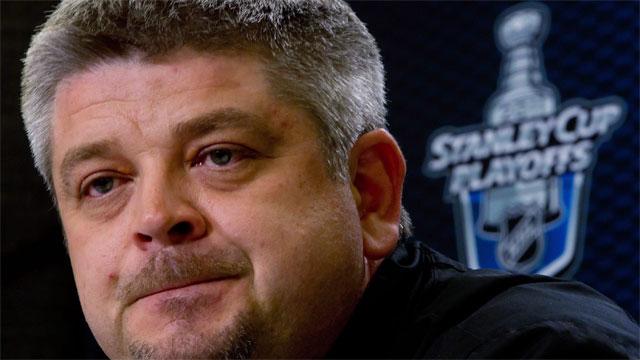
San Jose Sharks head coach Todd McLellan says that instead of approaching the season as something winding and long, teams now have to take a faster approach, which could end up leading to some hiccups along the way.
“This is a sprint,” Sharks coach Todd McLellan said, abandoning the usual description of an 82-game season as a marathon. “You can’t over-experiment, you can’t wade your way into a season, you can’t go on extended losing streaks. Your team has to be resilient.”
Boston Bruins power forward Milan Lucic echoed the same feelings that McLellan did.
"With less games it becomes a sprint right away," said Lucic. "Every game means so much more that we can’t afford to have a start like we did last year.
3. A Loss Early Could Mean a Lot Later
While there is no doubt that a shortened season might increase the excitement of each and every game for the players, there is going to be a ton of pressure put on the teams to get the job done right out of the gate.
In an 82-game season, there are teams that go through multiple losing streaks and at the end of the season, still find themselves in the postseason. At the other end of the spectrum, there are teams that have multiple winning streaks and find a way to miss the playoffs.
In a shortened season, losing streaks can be the death of teams. Should a team get off to a slow start, it could hurt their chances of clinching a playoff spot.
One player who agrees with that statement is Boston Bruins’ forward Gregory Campbell.
"It’s going to be interesting. Even when you play an 82-game schedule and you have a bad start it becomes difficult to recover from," said Gregory Campbell. "The stakes will be even higher in a shortened season. Every game will be critical."
In Philadelphia, there will be a lot of pressure on the Flyers to have a good season. According to defenceman Kimmo Timonen, it is something that will not be easy to handle because there just is not a lot of time.
“Every day from now on is going to matter,” said Timonen, who had offseason back surgery but says he is totally healthy. “There’s no easing into it. It’s a battle for the points right away. It’s going to be tough."