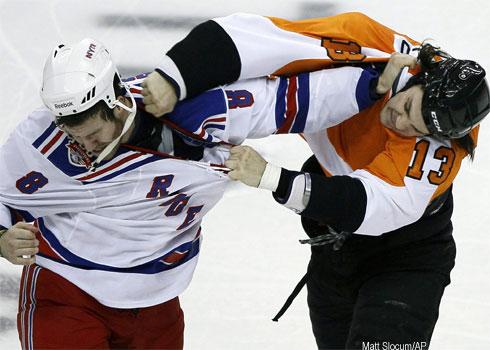

With blindside hits and checking from behind, fighting is not exactly the hot-button topic of the day.
Yet I was extremely surprised at the number of people who were eagerly waiting to watch it. I think part of the reason is because it wasn’t another discussion on the merits of fighting and whether it belongs in our game. We all know that’s been done to death, not to mention the NHL isn’t in any hurry to get rid of it anyway. Our show was simply about the human element involved in fighting and an inside glimpse through the eyes of the guys that live it.
First, let me say no enforcer ever grows up dreaming of being the team’s designated tough guy. Most fighters have had mild-to-great success putting the puck in the net at some point in their lives. Through minor hockey all the way up to junior and the American Hockey League, most of the guys who fight could score with some regularity. But if that success doesn’t follow you to the NHL level, you simply make a quick decision to find an alternative way to contribute and stay in the league.
As they say, it’s a dirty job but someone has to do it, and we are, after all, dealing with guys that want to play so badly that they are willing to do almost anything to stay. I found it interesting that Laraque and I approached fighting from polar opposites.
He said he fought calm and confident, while I fought scared and nervous. Perhaps if I had four more inches in height and reach, not to mention an additional 45 lbs, I wouldn’t have felt my heart pounding through my chest like it did every time I fought. Everyone thinks Ryan VandenBussche ended my career, but the truth is wear and tear did most of the damage, as did my lack of hunger to continue to do it.
I simply didn’t have the sustaining power to fight anymore.
When I broke into the pros, six feet and 200 lbs was a good size to fight with. Twelve years later I was well below average. I could no longer hold off bigger, stronger guys craving for success.
Listening to Florida’s Darcy Hordichuk talk about how a couple of bad fights could get you to the unemployment line was a quick reminder of how fighters live with different insecurities than most other players.
A bad week, month or year for a scorer is described as being an off year. Yet a bad week for a fighter may end his career. Case in point: Raitis Ivanans in Calgary who lost badly against Steve MacIntyre. Will he truly recover from it both physically and psychologically? If not, his career is over as fast as it started.
I also feel fortunate that I was single during my career and didn’t have to deal with explaining to my children why my face looks like it just went through a meat grinder on some nights.
Listening to Nashville’s Wade Belak tell the story of misleading his children about how he makes a living in an effort to protect them was sweet and a little bit sad at the same time. You can call us all crazy for what we endured during our hockey careers and argue all day long it’s not needed in the game, but what you can’t do is say its not deemed the most respected job in hockey by all the players.
Telling your teammates every single night: "I’ve got your back," is the most noble gesture among the guys that play.
People who have day jobs should feel so lucky.