
TORONTO — More than 20 years have passed since Tom Renney lived his dream by coaching Team Canada at the Lillehammer Olympics.
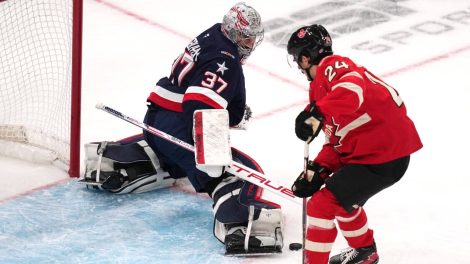
Strange as it seems now, they were the Bad News Bears of international hockey: a roster cobbled together with junior players, college players, a defected Czechoslovakian (Petr Nedved) and my Sportsnet colleague Corey Hirsch that managed to win a silver medal despite many predicting they wouldn’t survive the round robin.
It’s the kind of roster, theoretically, we might see again if the NHL decides not to release its players for the 2018 Games in Pyeongchang, South Korea.
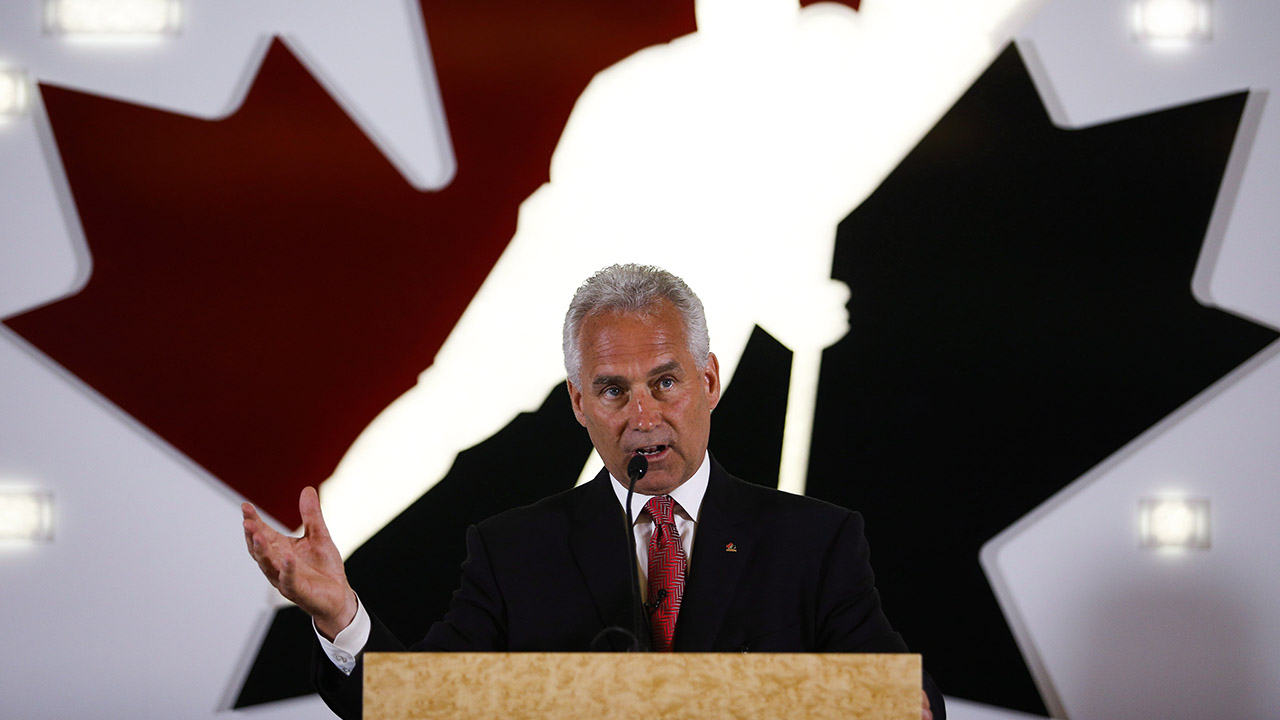
Renney has literally come full circle on the issue and, as president and CEO of Hockey Canada, is a vehement defender of the need to take the best pros to the Olympics. However, he still refers to the Lillehammer squad as his “dream team” and acknowledges that he once believed there was something more pure about having amateurs compete on that stage.
“Back then, I would have told you, ‘Yeah,’ ” Renney said during a Friday sit-down with a handful of reporters. “I can’t say that now. I’ve worked in the National Hockey League, [with] tremendous people from every country who plays the game at a high level….
“Just because they might be playing in the National Hockey League, I don’t think we can hold them hostage.”
Of the myriad issues dotting Renney’s agenda, none would be more pressing — or more scrutinized — than the Olympics if Hockey Canada suddenly had to select a men’s team from players not in the NHL.
To hear him tell stories from his experience in 1994 underscores what the challenge might be like. The team added 19-year-old Paul Kariya from the University of Maine and was able to take Nedved because he was locked in a contract dispute with the Vancouver Canucks.
The rest? They were from all over.
“College hockey, some of the guys had played for Dave [King] in ’92 in Albertville,” said Renney. “And then out of university, out of junior, some that were playing in Europe at the time. We had a director of player personnel that we had kind of given a plan to of what this roster might need to look like so we could win a game.”
While the smart betting money remains on the NHL continuing its Olympic participation — especially with Beijing set to play host in 2022 — Renney has had cursory discussions on what Plan B might look like.
He wouldn’t be doing his job if that possibility hadn’t at least been raised behind closed doors.
There are more pressing day-to-day matters, too, and as Hockey Canada wrapped up its winter congress and annual meeting, Renney touched on a number of them.
Participation numbers in the sport are flatlining — with a dip among boys being offset by a surge in the number of Canadian girls now playing — and there are numerous possible explanations for that trend.
Chief among them are cost, safety and reaching new Canadians, although Renney cautioned against drawing too many negative conclusions: “Let’s step back from the ledge and just understand where we really are here.
“If we make the [hockey] experience worth the investment in time, money, emotional support, I think we’re fine,” he said. “Fine doesn’t mean ‘great, good, we’re going to the White House’; it means that we’re doing OK. There’s a point in time where as much as great is a worthy pursuit, under the circumstances, OK is good because there are so many other factors that are involved here, that prevent kids from playing the game.”
Renney succeeded Bob Nicholson as the head of Hockey Canada in July 2014 and seems to have settled into the new role. He’s certainly more familiar with all that comes with leading the high-profile organization, noting, “We’re a pretty easy target because we’re hockey.”
At least there have been successes, with the country currently the reigning men’s gold-medal winner at the Olympics, world championship and world junior tournament for the first time in history.
But there is much to the job beyond the major events, and Renney has had to dive into the nuances of grassroots policy while crisscrossing the country on numerous occasions. That’s been an adjustment for a lifelong hockey coach.
“Historically I’ve been able to look up at the scoreboard at the end of the night and know how well I did,” said Renney. “This is a lot different. The results are a little more delayed.”
Decades have passed, and he still hasn’t brought himself to rewatch the gold-medal final from Lillehammer, where Peter Forsberg won Sweden the game with a spectacular shootout move that landed both he and Hirsch on a postage stamp.
It will be some time yet, after September’s World Cup of Hockey at the earliest, before we know if Renney’s next Olympic experience will include NHLers or not. But he must be prepared for both possible outcomes.
“Anything could happen — there’s no question about that,” said Renney. “I guess if it does, I’ve had some experience with it.”