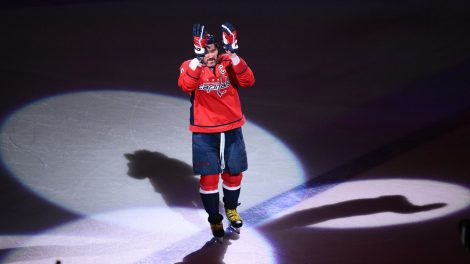
The hockey world is glad to have it’s sniper back. But what put the fire back in Ovechkin’s belly?
It’s tough to pinpoint the exact moment when Alexander Ovechkin’s shinny-loving spirit left him like the soul of a dead man, but here’s one theory.
In Vancouver, in the quarterfinals of the 2010 Olympic tournament, Russia met Canada in an elimination game, and no one in this country felt secure about the outcome against our great, historic rivals. The home team had finished sixth in the round-robin portion of the competition, spanked by the Americans along the way, and though the Russians hadn’t quite lived up to expectations either, memories were fresh of 2006, when they knocked Canada out in Torino.
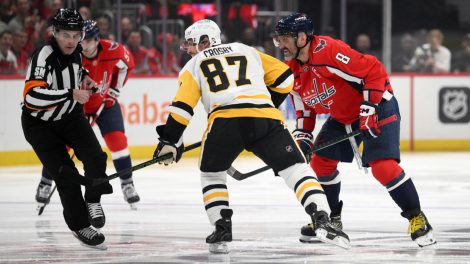
Of course, this was also the climax of another narrative: Sid versus Ovie, the best player on the planet versus 1A (with real debate as to which was which), a natural for the NHL and Olympic hype machines, but also reality-based.
It is a rare moment when two players for the ages reach their peaks in parallel—different guys with different styles and different personalities—all but forcing fans to make a choice. Did you prefer flamboyant, emotional Ovechkin, the polar opposite of the old Soviet “robots,” or the classic button-down Canadian hockey boy, Crosby? For the first time in the sport’s history, the split wasn’t defined purely by what it said on the front of your passport.
But after just one period in Vancouver, that mano-a-mano storyline went out the window. Canada led 4–1, living up to every cliché about the national hockey character, emerging from their dressing room, in the memorable words of Ilya Bryzgalov, like “gorillas coming out of a cage” and all but running the Russians out of the rink. The exclamation point was a crushing hit on Ovechkin by Shea Weber that seemed to instantly erase any thoughts he and his teammates might have had about fighting back.
Ovechkin rolled over, his team rolled over, and though there have been flickers of brilliance in the three years and a bit since that night, there’s no question that his career fell into precipitous decline.
Maybe he didn’t like playing for his next Washington coach, Dale Hunter (no shock there—oil, meet water). Maybe he was living a little too large outside the rink.
Still, a full explanation for Ovechkin’s fade remained elusive.
While Crosby battled back from concussion, eventually reclaiming his place atop the sport, Ovechkin and his Washington Capitals drifted into irrelevance. At an age when he ought to have been at the height of his powers, you could watch his team play an entire game and not much notice him, which was the greatest indictment of all.
His reemergence as a force during this oddball, lockout-shortened season caught pretty much everyone by surprise. During the first half of the campaign, the Caps seemed to be heading nowhere and Ovechkin was still largely invisible, while the Penguins were again ascendant and Crosby was earning Gretzky comparisons (at least he was before catching a puck in the chops) And then—it felt like all of a sudden—you looked at the standings and there was Washington rising from the dog’s breakfast at the bottom of the Eastern Conference and moving into the playoff discussion. You looked at the goal-scoring stats and a familiar name was inching inexorably towards the top.
Had he finally bought into what his current coach, Adam Oates, was preaching? Had the shift from left to right wing finally allowed him to find a new comfort zone? Did the prospect of an Olympic Games fast approaching on Russian soil start his heart beating a little faster? Did it finally dawn on him that what worked in the past wasn’t working so well anymore, that he had to change up his game and work a bit harder and rely on something other than his remarkable, God-given skills? Or maybe it was his engagement to tennis player Maria Kirilenko that allowed him to re-focus on hockey?
Theories will be proffered, most of which will boil down to some combination of X’s and O’s, few of which will veer towards a line of thinking more prevalent in art than in sport: That genius isn’t something you can manufacture, that it isn’t a product of trying really hard, that it comes and sometimes it goes in ways that straight, rational thinking simply cannot explain.
The bottom line is Ovechkin’s back, somehow, and as we head into the playoffs, that’s a great thing for hockey, even if a full renewal of Sid vs. Ovie fails to materialize.
All of the adjectives between good and great are going to get used and overused in any season. Special, transcendent, once (or twice) in a generation—those you don’t hear so much.
This column originally appeared in Sportsnet magazine. Subscribe here.