
Ousted early in the WHL playoffs, the host Saskatoon Blades are fresh, ready and scary
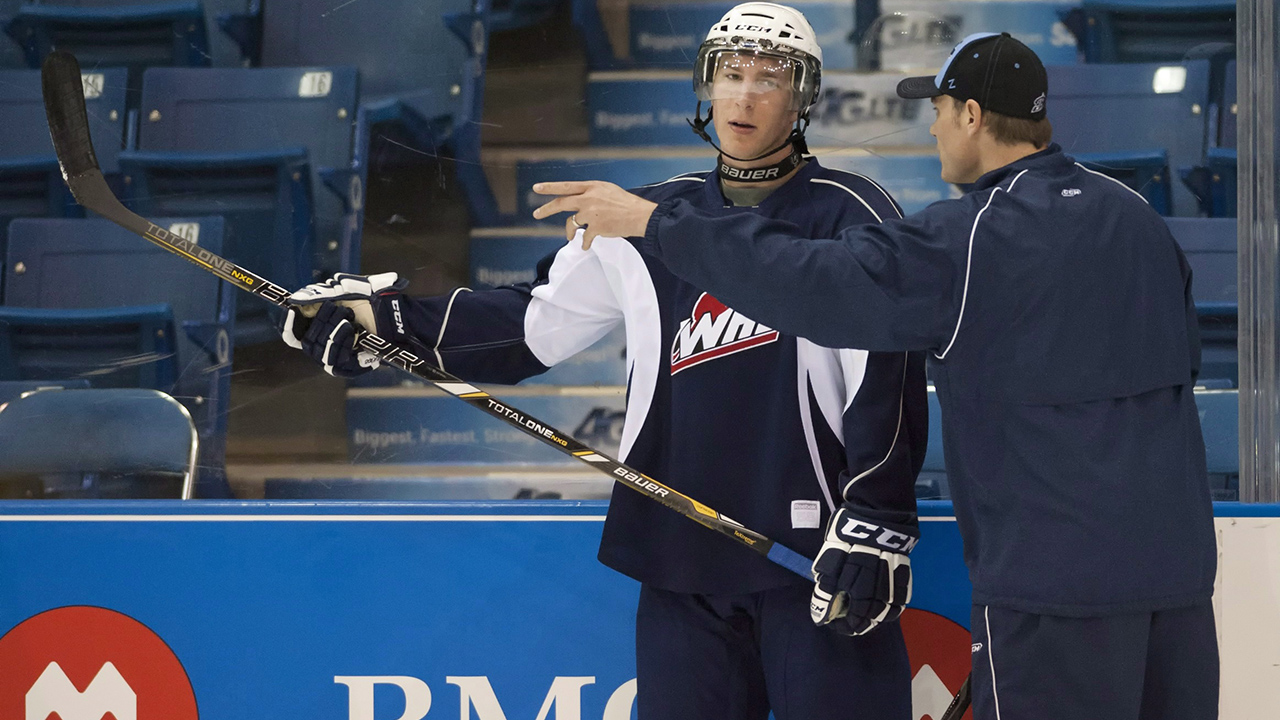
Lorne Molleken could only stare at the prepared statement in front of him. Once he gathered himself, he spoke slowly, at times stumbling over his words. He’d taken a six-hour overnight bus ride from Medicine Hat, Alta., to Saskatoon, agonizing over what had gone wrong. And today—wearing a white dress shirt and faded blue jeans, his hair slightly out of place—he looked haggard, every bit his 56 years.
But a lack of sleep wasn’t the biggest issue for the Saskatoon Blades coach and GM. No matter how hard he tried, the words he’d written didn’t seem to make sense as he read them to the horde of media in attendance. Barely a week earlier, Molleken had stood behind the very same lectern at the Credit Union Centre, flanked by team captain Brenden Walker and Western Hockey League commissioner Ron Robison. It was the eve of the playoffs, with supposed first-round fodder Medicine Hat waiting. A long playoff run for the East Division–winning Memorial Cup host was the subject du jour. But just four games later, dreams of the first championship in the team’s 49-year history were dashed by the seventh-place Tigers. The Blades were swept for the third playoff series in a row.
All season, Molleken—one of just two WHL coaches to have won 600 games—and his players talked about “going through the front door” by winning the Ed Chynoweth Cup rather than using their already secured all-access pass to the Memorial Cup. And yet there they were, the first host team to be ousted in the opening round since, oddly enough, the Molleken-led Regina Pats in 2001. It would be seven weeks until their next game. “Looking ahead,” Molleken said before pausing, “as a group, we think this can be one of those building blocks in our season.”
What will work in the Blades’ favour as they attempt to knock off the three teams that have topped the CHL’s rankings for much of the year is that they are completely healthy and undoubtedly the freshest team in the tourney. In a short tournament where you only need to win one game to get into the playoff round, that makes the Blades scary. There is some history on their side as well. Molleken’s 2001 Pats made it to the national semifinals before losing an overtime heartbreaker. And last year’s Memorial Cup champs, the Shawinigan Cataractes, lost in the second round of the Quebec Major Junior Hockey League playoffs before winning it all weeks later. But the big question is whether the Blades can overcome losing to Medicine Hat, the lowest point of a season full of twists and turns. Nearly a month later, it was still hard for Molleken to make sense of everything. “As a coach, you put trust in the players that they’re going to compete,” he says. “And we didn’t. It’s all about commitment and effort, the will to pay a price to succeed. We didn’t.”
He’s been behind the bench for nearly 30 years, but Molleken can’t think of a season quite like this one. He went for broke, dealing away first-round draft picks until 2016 to acquire players he thought would make the Blades tougher to beat. In all, he made 13 trades from the end of the 2011–12 season to this year’s January deadline. The addition of Walker and fellow forwards Shane McColgan and Jessey Astles, gritty veterans brought in last May, was meant to change the culture. To emphasize that point, Molleken stripped the Colorado Avalanche’s 2011 first-round pick Duncan Siemens of the captaincy and handed it to Walker a week into the season. But the Blades won just two of their first nine games, and the glare of the spotlight turned brighter. “You felt the pressure of everyone in the country wondering what’s going to happen with this team,” says centre Lukas Sutter, son of longtime NHLer Rich Sutter and a Winnipeg draft pick. “That weighed on a lot of guys.”
There was also the added stress of having cameras track their every move for an eight-part HBO 24/7-like series, On the Edge, which aired on Sportsnet. With the tension mounting, Molleken enlisted local leadership coach Gregg Cochlan, who gave the players tips on staying positive and channelling their anxiety. “When you’re dealing with teenagers, it’s our job to make sure we deflect those pressures as much as possible,” says Molleken. “I thought we did a good job.”
But all the positive talk could do nothing to stop a string of injuries. Astles missed 50 games when he stepped on his own wrist after a fight and cut the radial artery and four tendons. Defenceman Dalton Thrower, a 2012 Montreal Canadiens second-rounder, was sidelined for a month after he was concussed in practice. Then, Siemens missed two games in late November after his father, Errol, was hospitalized. But slowly the Blades chipped away, climbing above the .500 mark on Nov. 30 for the first time since a season-opening win. Then they rattled off six straight victories before Christmas. “They went through so much in the first few months,” says Saskatoon native Peter Loubardias, the television voice of the WHL. “They tried to show the hockey world that they are a deserving host.”
But Saskatoon then went out and lost consecutive games to the Prince Albert Raiders after the Christmas break, dropping 12 points off the division lead. The inconsistency prompted Molleken into action at the deadline. The additions: over-ager Micheal Ferland, Walker’s old linemate in Brandon and a 2010 Mem Cup participant; Erik Benoit, who played in the 2011 tournament; and veteran winger Collin Valcourt. “We didn’t expect to make that many trades,” says Molleken. “But we had to.”
[pullquote]“You felt the pressure of everyone in the country wondering what’s going to happen with this team. That weighed on a lot of guys.” — Lukas Sutter[/pullquote]
It took some time for the new group to gel and by February they were barely clinging to a playoff spot. Then everything clicked. Riding the superb goaltending of Russian world junior Andrey Makarov, balanced scoring and solid play from their defencemen, the Blades won all 15 contests in the month, eventually establishing a franchise-record 18-game streak. They outscored their opposition 88–28, picking up the physical play, and Makarov recorded three shutouts as the Blades received an honourable mention in the national rankings for the first time since cracking the top 10 in September. “They were big, strong and imposing to play against,” said Moose Jaw Warriors GM Alan Millar, whose team played the Blades seven times after Christmas. “The moves they made up front seemed to complement and add some real balance and depth.”
The coaches and players talked about a “belief” they could beat anyone. But some weaknesses appeared during a maddening March. The winning streak ended with an overtime loss to Moose Jaw on March 3 that included blowing a four-goal lead in the third period. Six days later, they showed some doggedness with an 8–7 comeback win over the Pats that included five goals in the third to erase a 7–3 deficit. “I thought we got knocked off the pedestal and we were coming back to where we were starting to play better,” says Sutter.
But they weren’t. To finish the season, they twice surrendered two-goal advantages in back-to-back losses to Prince Albert. Any sense of security the Blades had earned from their 18 consecutive victories was gone.
Not the kind of momentum a team wants heading into the playoffs. They fell behind early to Medicine Hat in the first game and lost 4–1. The storyline repeated in game two, a 3–0 loss. Next thing they knew, a raucous crowd at the Medicine Hat Arena was chanting, “Sweep!” “The snowball started rolling on the Blades and, when the snowball goes, it can get big in a hurry,” says Loubardias. “They weren’t able to deal with it.” The WHL’s third-highest scoring offence managed four goals and never held a lead the entire series. The number of quality Saskatoon scoring chances could be counted on two hands. The team’s top-six forwards—Walker, Ferland, Dallas pick Matej Stransky, Nathan Burns and New York Rangers prospects McColgan and Josh Nicholls—scored 394 points during the regular season but managed just three in the playoffs. “There should be some guys who are pretty embarrassed after that series,” says Loubardias. Siemens said three consecutive years being swept made him sick. Walker added: “It’s something I’m going to think about for the rest of my life.”
Following the playoff disaster, the Blades took two weeks off before hitting the ice for what was essentially a training camp. They began with conditioning and battle drills. Local university players and pros who spent the season in Europe were called in for practice. Molleken’s message is vindication. “It’s a chance,” he says. “We’re still playing. There are lots of teams that aren’t.” And the club seems to relish their role as Mem Cup underdogs. “At the start of the year, our goal was to win a championship and that doesn’t change now,” says Sutter. “I think there are a lot of guys in the dressing room who know what it’s going to take. If we can tap into that and find it at the right time, we’re going to be a scary team for sure.”
Getting their game legs quickly will be paramount. Only the 2009 Windsor Spitfires have won it all after losing the first two games of the tournament. The scorers will have to put up points, Siemens and conference all-star Darren Dietz will have to stabilize the back end and Makarov will have to be the tourney’s top goalie. All of that while under pressure to perform at home. “The one thing I’ve learned over the years is confidence can come and go in a heartbeat,” Loubardias says of the Memorial Cup. “May 17 is a huge night for their franchise.” The tournament will either be sweet redemption or the continuation of a nightmare. Just a few more sleepless nights until they can try to make sense of it all.
This story originally appeared in Sportsnet magazine. Subscribe here.