
It’s been a rough few weeks for some of those who run professional sport.
Wonder if that’s finally enough to make them the bad guys in the eyes of the fans?
Sports consumers, in their real lives, certainly understand the fundamental employer-employee relationship. Without fretting overly about what it means to control the means of production, they know from experience that the boss’s interest and the workers’ interests are by definition two different things.
Naturally, you’d think that would lead them to line up with players and officials in labour disputes, since—fame, glory and wealth aside—they’re on the same side.
But with rare exceptions, that hasn’t been the case. The opposite, in fact.
The minute players were transformed in the public mind from mythic bubble-gum card figures playing for the love of kith and kin and uniform into paid entertainers seeking something close to their market value, fans turned on them, their resentment palpable.
That happened well before the arrival of Marvin Miller in the role of the first hated union boss. Think back to Sandy Koufax and Don Drysdale, bound to the Los Angeles Dodgers in perpetuity by the reserve clause, who decided to hold out for a better wage. Or read about Joe DiMaggio’s decision to take a stand against the New York Yankees’ ownership in 1938.
Those beloved superstars were universally attacked for their “greed,” for demanding outrageous compensation to play a kid’s game.
Meanwhile, the owners were allowed to stand above the fray, as though they were de facto philanthropists fighting only to preserve valued cultural institutions rather than businessmen trying to enhance their profits. And the commissioners who worked for them were likewise treated like they operated on a higher plane, as though their only concern was the best interests of the game.
That isn’t just ancient history. Eight years ago, the governors of the NHL managed the remarkable feat of shutting down the sport for an entire season, while having most of the fan base cheer them on, believing that somehow the union-busting fight for a salary cap was also a fight to stave off financial ruin, to preserve small Canadian markets, to ensure competitive balance, and even to lower ticket prices.
But this time it feels different.
This time, Gary Bettman and his bosses didn’t even bother mounting a propaganda campaign to disguise an obvious cash grab, while making cavalier statements about how they can count on consumer loyalty no matter what. Then Red Wings senior vice-president Jim Devellano referred to the players as “cattle,” a rather telling offhand remark.
Do that in the wake of all of those long-term, lucrative contracts that were signed just before the doors were padlocked, do that after celebrating years of record revenues, and even the most union-hating, player-resenting fan is surely going to question their allegiances.
If that fan happens to live in Edmonton, their feelings might be further swayed by the actions of Oilers owner Daryl Katz, who, having already worked out a deal in which a substantial amount of public money would subsidize the construction of a new home for his franchise, decided that the arrangement wasn’t quite good enough, asked for more, and then took a trip to Seattle just to make it absolutely clear that blackmail is an option.
Over in the NFL, commissioner Roger Goodell, emboldened by his victory over the players in last year’s lockout, decided to further flex his muscles, acting as judge, jury and executioner in the Bountygate scandal, while at the same time (presumably at the owners’ behest) locking out game officials in order to claw back some of their pension benefits, which represented a relative pittance in a thriving multi-billion dollar industry.
The result? A judgment at least temporarily overturning player suspensions, a farcical first three weeks of the season, the strongest brand in all of sport made a laughingstock, the single most embarrassing night in NFL history, a hasty, undignified retreat, and all of it absolutely unnecessary.
None of that is the players’ fault or the officials’ fault. None of that is the unions’ fault. None of that was done with the fans’ interests in mind.
Yes, there are two sides to every story, and it’s our nature to seek a rooting interest, to identify heroes and villains not just on the field or on the ice, but in the boardroom as well.
In the past, though, it was the owners who received the automatic benefit of the doubt. Surely, in their arrogance, they’ve squandered that luxury now.
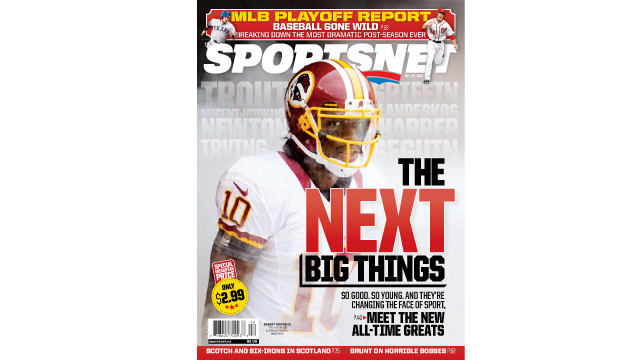
This article originally appeared in Sportsnet Magazine.