Before the 2026 season began, it was apparent that Louis Varland had fans up and down the Toronto Blue Jays organization.
The front office moved a promising outfielder, Alan Roden, plus a pitcher who ranked fifth on its MLB Pipeline top prospect list, Kendrys Rojas, to grab Varland (and to a much lesser extent, Ty France) last July. Then, manager John Schneider asked him to make more appearances than any reliever ever in a single post-season during the team’s World Series run. That level of investment and trust reflects the lofty expectations the Blue Jays have for Varland whenever he takes the mound.
Even with that context in mind, Varland has been better than Toronto could’ve possibly hoped. The 28-year-old — who has stepped into the closer role with saves in three of the Blue Jays’ last four wins — has a sparkling 0.56 ERA, with stellar underlying numbers leading to an fWAR total of 1.0.
That number may not leap off the page, but it is almost equal to the 1.2 he produced in 2025, and ranks 15th among all pitchers, including starters. Among relievers, only Mason Miller of the San Diego Padres is his equal.
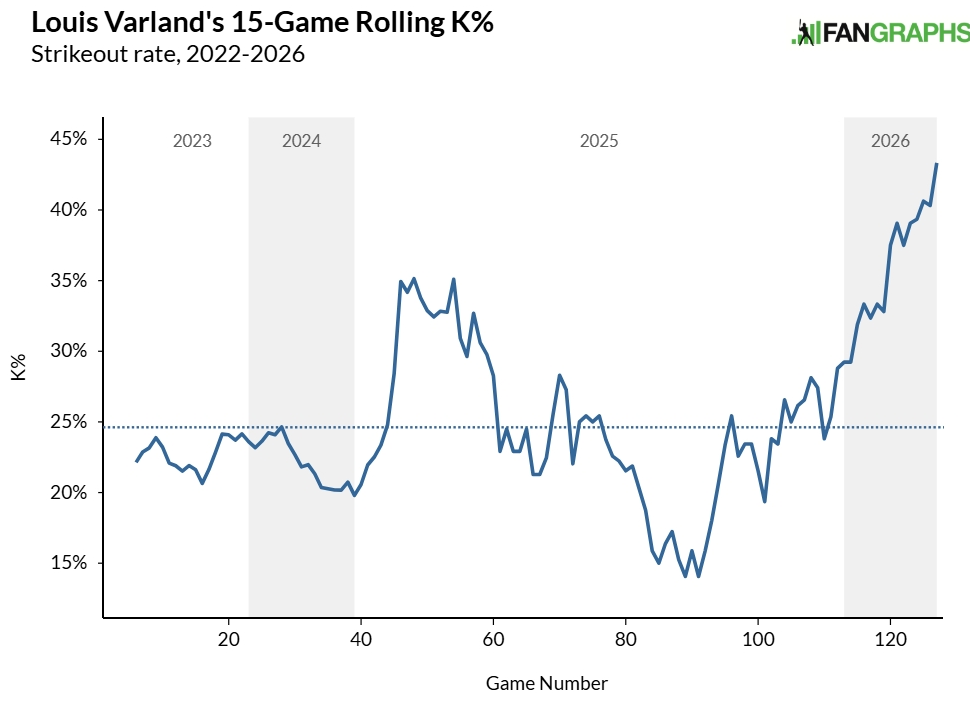
Varland’s impeccable 2026 results may come in a small sample, but they are unprecedented for him. The right-hander has had similar stretches keeping runs off the board, like when he produced an equal 0.56 ERA in 15 games from late June into early July last year, but his underlying numbers are far more impressive now. Most notably, he’s striking out hitters at a rate unlike anything he’s managed over a similar span.
That’s led to similar ground broken in FIP, which helps cut through the noise of small-sample pitching data by ignoring batted-ball outcomes.
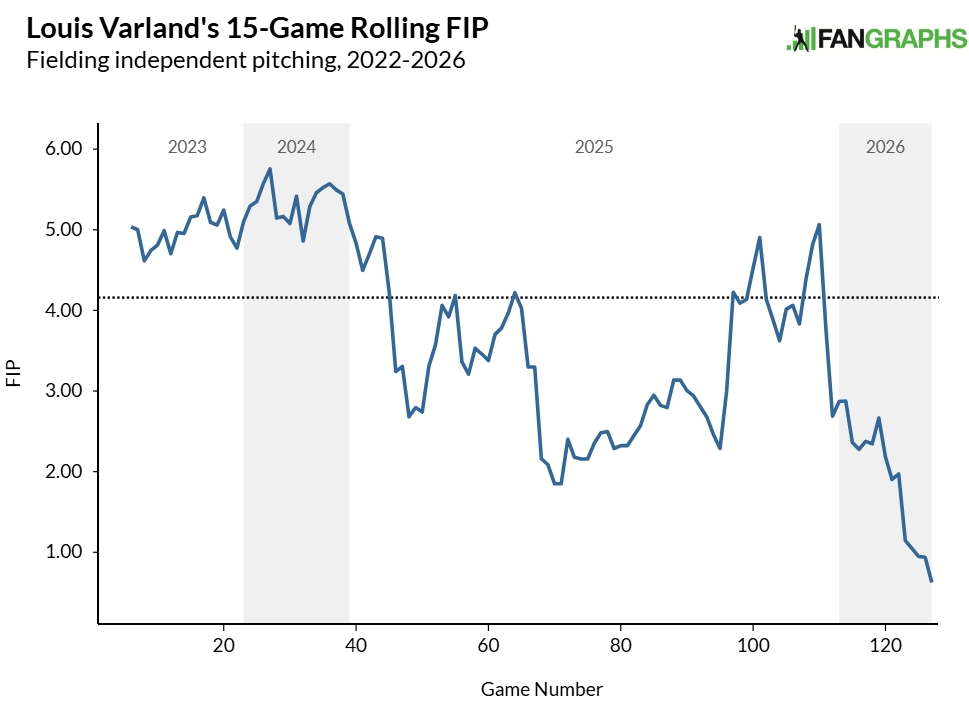
Those numbers aren’t chosen to obscure some issue with hard contact, either. Varland’s average exit velocity against (88 m.p.h.) is in the 67th percentile league-wide, he hasn’t allowed a barrel all season, and his xERA (1.45) ranks third among 378 qualified pitchers.
Varland’s excellence goes beyond a standard hot start, but what’s driving it isn’t immediately intuitive. The high-leverage reliever’s fastball velocity (98.2 m.p.h.) is essentially the same as 2025’s (98.1 m.p.h.), and he hasn’t added any new pitches to his repertoire. None of his existing offerings are moving radically differently than they have in the past — and the only pitch that is more than 10 per cent above-average, either vertically or horizontally, is his seldom-used slider. That pitch has generated an ugly 11.1 per cent whiff rate, doing little to boost his surging strikeout rate.
One pitch that has been generating improved results is Varland’s changeup. Last season, he threw it just 4.7 per cent of the time, and that number is up to 10.8 per cent in 2026. Varland already has more strikeouts with it (five) than he did in all of 2025 (two). He’s used the pitch a total of 29 times this season, making it difficult to say anything conclusive, but there seems to be an increased comfort level. Saturday provided a strong example as Varland faced a bases-loaded, one-out situation and used his changeup on seven of his last 13 pitches, earning five strikes, two whiffs and a strikeout.
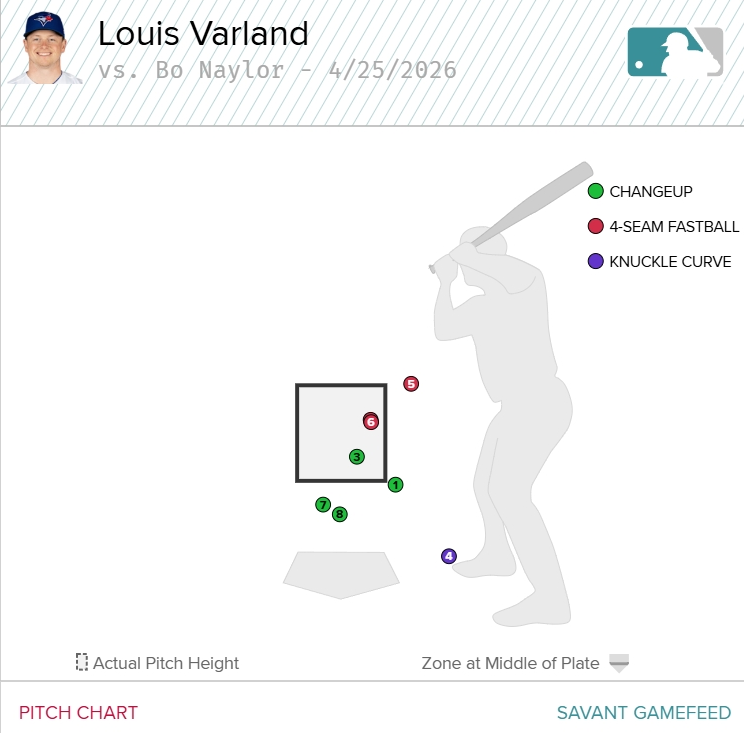
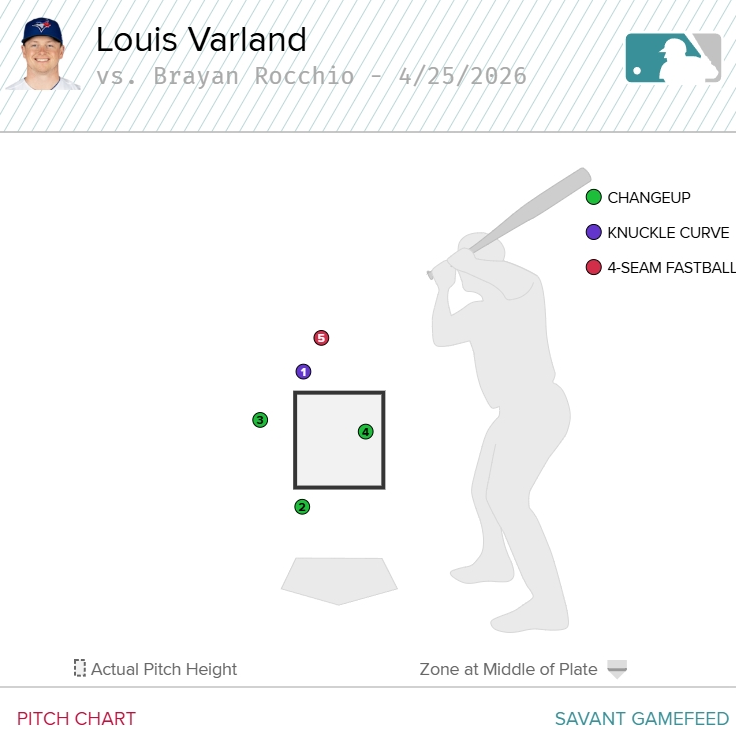
Varland’s changeup is dropping a bit more, but the big difference is location. Last year, he consistently hung the pitch…
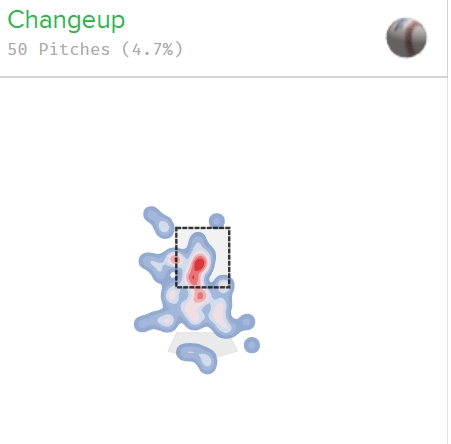
… but this year, he’s placed it exactly where it should live, competitively below the zone.
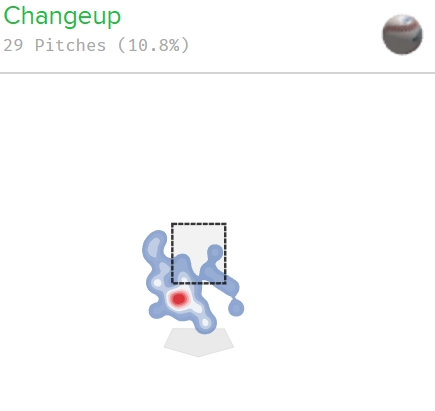
While the changeup is a small part of Varland’s arsenal, the difference is emblematic of what he’s done in 2026. Command is difficult to quantify, but measures available, ranging from FanGraphs’ all-in-one location+ to the percentage of pitches put in Statcast’s heart, shadow, chase and waste attack zones, to meatball percentage and raw zone percentage, tell the story of a pitcher who is working the edges and staying out of the middle.
Year | Location+ | Heart% | Shadow% | Chase% | Waste% | Meatball% | Zone% |
2025 | 101 | 32.6% | 40.9% | 19.9% | 6.7% | 8.9% | 53.8% |
2026 | 114 | 24.3% | 42.5% | 23.1% | 10.1% | 5.2% | 45.5% |
None of these metrics are infallible, but taken together, they display a picture of Varland painting corners. The difference is also visible in basic heatmaps on the reliever's most common pitches: his fastball and knuckle curve.
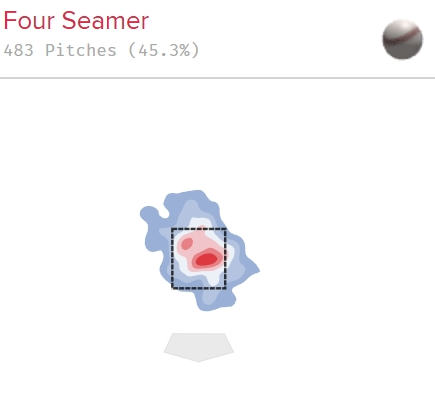
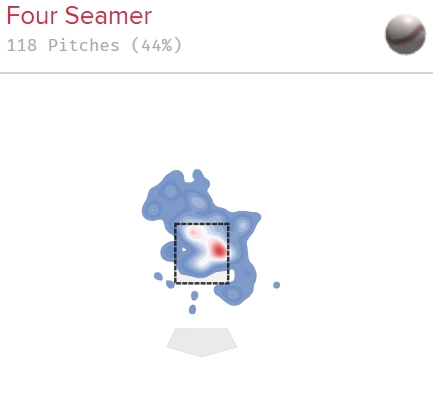
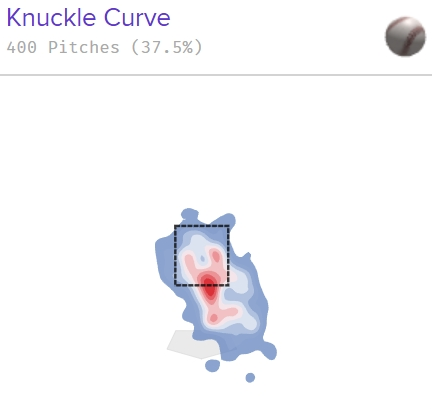
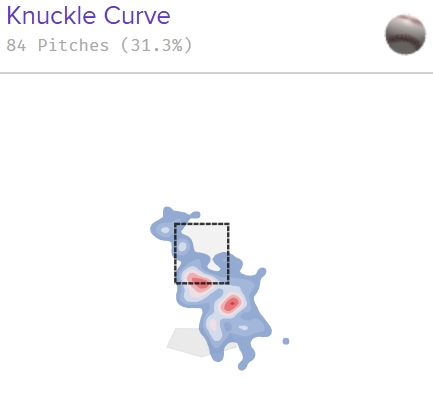
This may prompt an adjustment from opposing hitters. They could catch onto the fact that he’s around the zone less and make a concerted effort to work counts more. Decreasing your zone rate isn’t a guaranteed route to success. It definitely hasn’t helped Jeff Hoffman this year. At the same time, Varland is staying away from trouble more than he did last year while running a chase rate (34.9 per cent) even higher than 2025’s (31.9 per cent), which was already in the 86th percentile.
It is impressive that Varland has become more precise with a repertoire that was already good enough to overpower opponents. If the strides he’s making with his command hold up, he will be a significantly better pitcher than the one the Blue Jays traded for less than a year ago.
Whether that will happen isn’t clear just yet. Varland isn’t a brand-new pitcher. He hasn’t found a totally different arm angle, discovered a potent pitch he’s never used before, or added multiple ticks to his fastball. He is just an improved version of the reliever he was last season. It might take a little longer to determine if his location improvements are durable or if he’s just locked in, but for now, Schneider has a pitcher he can use in the ninth inning with minimal stress.
That’s quite the luxury for any manager, and one he hasn’t enjoyed for most of the season.




 2:04
2:04
 0:41
0:41