TORONTO – Jackie Robinson Day is always a good time for reflection, especially right now after a week in which 10 Major League Baseball games over two days were postponed to highlight ongoing racial inequality, the sport following the NBA’s lead into impromptu protest.
It was 75 years ago Friday that Dodgers general manager Branch Rickey famously met with Robinson to discuss breaking the colour barrier, challenging him with the type of vile abuse that awaited him as the first Black player in the majors. That we can look back now with disbelief and revulsion at the racist norms of the time demonstrates how much progress society has made since, although as the events in recent months show, much work remains.
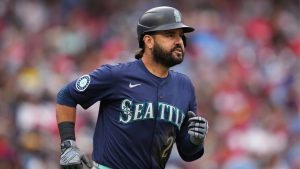
“It means everything,” Taijuan Walker, the right-hander just acquired by the Toronto Blue Jays, said of celebrating Robinson’s legacy. “He definitely paved the way for me to be out here and not only have a chance to pitch every five days, but to also have a platform to speak on everything going on in the world right now.”
The latest flashpoint came Sunday when Jacob Blake, a Black man, was shot in the back seven times by a white police officer in Kenosha, Wis. The situation became further inflamed when Kyle Rittenhouse, a white teenager, was arrested for allegedly killing two people and injuring a third in the local protests that followed.
On Wednesday, the NBA’s Milwaukee Bucks felt they needed to provide the space for focus on social justice rather than a distraction on the court, spurring others in the sports world to follow suit, and Walker was among the 10 Black players who helped the Seattle Mariners decide to sit out against the San Diego Padres hours later. “It just didn’t feel right to play that day,” he said. “I don’t think our heads were in it. Our hearts weren’t in it. It just wasn’t the time for us to play.”
Robinson endured unconscionable abuse to open doors for future Black players, and that Walker and others made such a stand – supported by white teammates and the game’s almost exclusively white infrastructure – would be a fitting tribute to his legacy if it wasn’t so troubling that protesting social injustice was still necessary.
Still, there’s an opportunity for the killing of George Floyd three months ago under the knee of a white police officer to be an inflection point, opening up a reckoning on where race relations stand amid a pandemic that has highlighted a wide range of societal disparities.
The polarization in the discourse is a by-product of both willful and unintentional ignorance, and while some in the former camp appear to be digging in their heels, having athletes speak out is at least opening some eyes in the latter.
Whether that leads to lasting change is another matter, and that’s ultimately the realm of lawmakers as opposed to athletes, which is why making efforts to become educated and understand is a lot of what sports teams are trying to do at the moment, pulling the public along with them.
The Blue Jays, beyond the good work of their JaysCare charitable arm, are among those to have taken a deep dive into the learning end of things, with lost-on-waivers Anthony Alford looming large in that process.
Their willingness to play Thursday’s series finale against the Boston Red Sox, a game ultimately postponed when Jackie Bradley Jr., decided to sit out in protest and the rest of the club did the same in solidarity, came after Cavan Biggio had consulted with Alford.
As third baseman Travis Shaw, who came up in the Red Sox system and had a good relationship with Bradley, was feeling out where they stood on the game, Biggio was on the phone with Alford because, “he had left our team and we had lost that bit of perspective.”
Like Walker, Alford is involved in The Players Alliance, a coalition of more than 100 Black current and former players dedicated to using their platform to “create increased opportunities for the Black community in every aspect of our game and beyond.” The two discussed what others around the league were doing, and “that if we were willing to play, it wouldn’t be showing that we don’t care about what’s going on,” said Biggio. “After talking to him, we were able to not be numb about what’s going on in the outside world, and just go out there and play and just continue to have those conversations and continue to fight for social justice.”
Biggio is one of many Blue Jays who describe Alford as a brother, and that was even before the outfielder pulled him from his truck after randomly encountering him at an accident scene last spring.
After Floyd’s killing, he reached out to Alford about things they could do as a team and was shocked “hearing things about Anthony’s upbringing and his current life, and things he has to deal with that that I personally don’t, and wouldn’t even think of having to deal with.”
That’s a credit to Biggio and the other Blue Jays who really opened their minds and considered what Alford, minor-league outfielder Jonathan Davis and others had to share. Sadly, even that small step is too much for some, which is why stereotypes, bigotry and outright hatred persist three-quarters of a century beyond that initial meeting between Robinson and Rickey.
So even though today’s Black players don’t have to fight the same fights Robinson had to each time they walk into a big-league clubhouse, they’re still left to continue the wider civil-rights advocacy that marked the end of his career.
Walker is among those donating his salary from Thursday and Friday to help fund The Players Alliance’s work, not to mention donating his time and effort, too, as if a professional sports career isn’t demanding enough.
“It comes down to support, support from the team, front office, ownership, just having the support from everyone and everyone being all on board with it,” Walker said. “Helping, whether it’s speaking out with something or getting a message across, I think the biggest thing that makes it easier to handle both (playing and advocating) is having that support. And for myself, knowing when I’m on the mound, that’s my job, I take it very seriously. I have four days in between my starts to prepare for baseball, but also to speak out and get the message across.”
That’s certainly a meaningful way to celebrate Robinson’s lasting impact on a game that still needs his integrity, and a society yet to achieve the equality he fought so hard for.
[relatedlinks]
 2:59
2:59