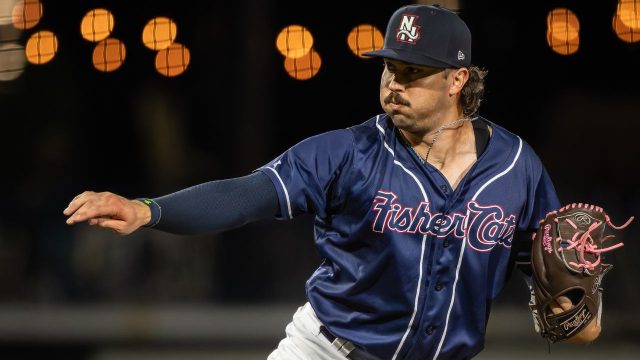
DUNEDIN, Fla. — As recently as a couple years ago, Nate Garkow was working three jobs. By day, he was a substitute teacher, covering everything from kindergarten to Grade 12. He also worked retail at Vuori, a lifestyle clothing brand. And many nights that summer, he could be found absolutely dominating indy-ball hitters.
The five-foot-10 Garkow was never drafted, but he landed with the Gateway Grizzlies of the Frontier League and soon struck out an outrageous 37 hitters in 15.2 innings while allowing just four hits. Quietly, the Blue Jays were watching.
“I had no clue I was getting looked at,” Garkow recently recalled within the Blue Jays clubhouse. “It was always in the back of my mind, like, ‘I’m doing really well, so hopefully someone’s looking at me.’”
At the time, Garkow didn’t even have an agent, but his manager told him the Blue Jays were interested and he signed within 24 hours. More success has followed in affiliated baseball, and after reaching double-A in 2025, Garkow is now in big-league spring training, on the precipice of contributing at the highest level. While the 28-year-old right-hander doesn’t seem likely to break camp with the Blue Jays, his fastball-change-up combo has him very much on the radar of big-league decision-makers as a candidate to be called up mid-season.
“Really good change-up,” said Blue Jays manager John Schneider. “When you get to the double-A or triple-A level, you’ve found what you’re good at. And then it’s, How do you get to that skillset? I’m anxious to see him. You read guys’ stats and you see the swing and miss on certain pitches. What does that look like, even in major-league spring training, as opposed to the minors? That’s what we’re targeting with him is, 'How do you use everything else to get to that change-up?’”
By the standards of most big-league relievers, Garkow doesn’t throw hard. His fastball sits in the 88-90 m.p.h. range, but the pitch gets about 24 inches of induced vertical break, meaning it drops far less than hitters expect and therefore generates swing-and-miss. Perhaps more importantly, his frequently used change-up tunnels off his fastball to create the illusion of a four-seamer before diving away from hitters’ bats.
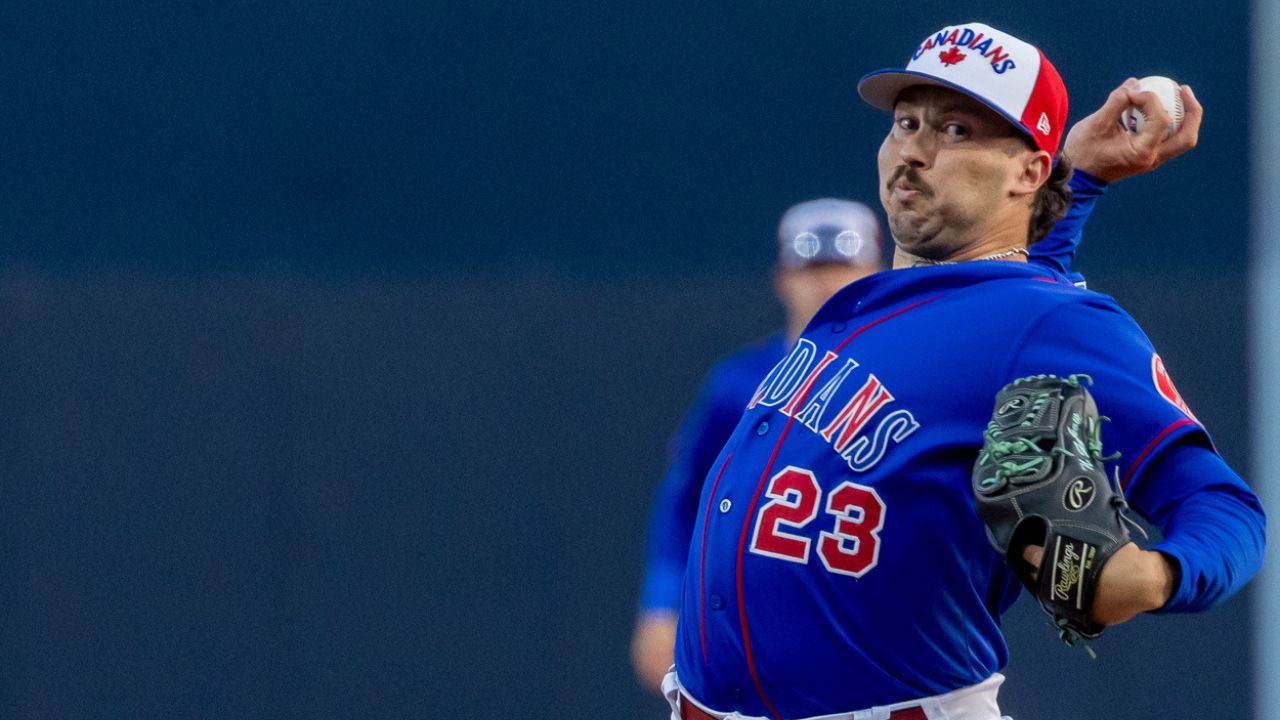
“It looks like a heater coming out, and it just dies,” said Garkow, who struck out 54 hitters in 37 double-A innings last year while posting a 1.22 ERA at New Hampshire. “To this day, they haven’t really done too much damage on it.”
Garkow also mixes in a slider to “put a wrinkle in the mix” and keep hitters guessing. He’s not on the 40-man roster and many others are ahead of him on the depth chart, but considering the Blue Jays used 29 relievers last year (not counting position players), there’s little doubt an opportunity will emerge for the minor-league relievers who perform best.
And although velocity drives pitchers up prospect rankings and draft boards, look no further than last off-season for a reminder that the Blue Jays are willing to invest in non-traditional relievers. In December, GM Ross Atkins signed sidearmer Tyler Rogers to a three-year, $37-million deal that went down as the biggest relief expenditure the current front office has made in a decade-plus in Toronto, surpassing Jeff Hoffman’s three-year, $33-million from the previous winter. A deal of that magnitude for a pitcher whose fastball averaged just 83.5 m.p.h. shows that what matters most is results, not velocity.
Just a few weeks into spring training, Rogers hasn’t yet had the chance to work with Garkow, but if the two do chat, the veteran will make it clear he has nothing against big velo.
“I throw as hard as I can,” Rogers said, smiling. “I’m actually a power pitcher.”
Although Rogers has yet to see Garkow’s change-up in person, prospect Sean Keys has felt its impact first-hand. Keys, a 2024 fourth-round pick who hit 19 home runs with a .773 OPS for Vancouver last year, enjoyed seeing Garkow pull the string on his change-up before his promotion to double-A.
“He makes hitters look foolish every time he pitches,” Keys said. “It’s incredible. Everyone says ‘Bugs Bunny change-up.’ He has a fast motion and he can go at 100 per cent, and it looks like the ball is coming in slow motion. It’s incredible — definitely a plus-plus pitch.”
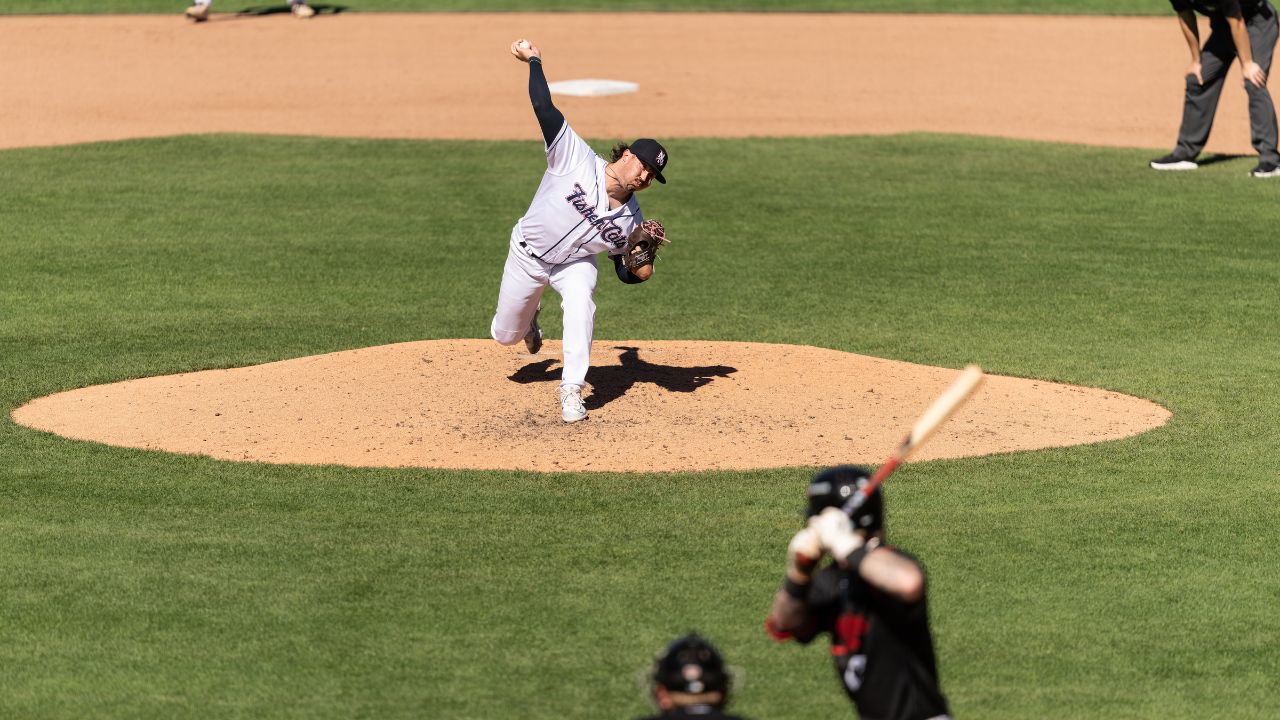
At one point last year, Keys stood in against Garkow and tried sitting on the pitch to see if that helped him make contact.
“It was still hard to hit,” he recalled.
As Garkow has gotten closer to the major leagues, his off-seasons have changed a little, too. For now, the days of working three jobs are over. He didn’t teach this past off-season, nor did he work retail.
“I enjoyed doing that,” he recalled. “I did what I had to do to make ends meet. Hopefully, I don’t have to fall back on that anymore, but you know what? I’m not worried about it.”
Instead, the right-hander taught baseball lessons just outside of Pasadena, Calif., while preparing for spring training. As a new minor-league season approaches, Garkow has a strong sense of what he wants to do on the mound, and he intends to ride that fastball-change-up combination as far as it will take him.
“Simplify,” he said. “I know what makes me good.”