It’s far too early to know exactly how the new guys will perform, but six games are enough for a few first impressions. Below is a rundown of how the Blue Jays’ new players have looked out of the gate — minus Cody Ponce, whose only outing was interrupted by an ACL injury.
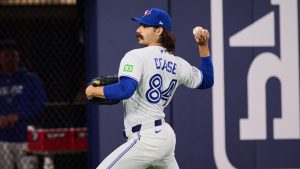
When Toronto handed Cease the largest free-agent contract in franchise history, the expectations were set high for the 30-year-old. Cease’s record-breaking 12-strikeout Blue Jays debut certainly got the deal off on the right foot.
Not only were the results stellar in his first start as a Blue Jay, but some interesting things were happening under the hood, too. Cease’s fastball looked electric, sitting at 98.7 m.p.h. — a number well above his 2025 average (97.1 m.p.h.). He’d only dialled it up that high in two of the 188 starts he made before Saturday afternoon.
Beyond the stellar heat, Cease also demonstrated a notable variability in his approach. Last season, the veteran threw a fastball or slider 82.9 per cent of the time, but that number dropped to 63.4 per cent in his first start of 2026 as he used six different pitches at least seven times. Some of that could’ve been an effort to keep an Athletics lineup of young power hitters off-balance, but an adjustment that should stick is more changeup usage.
In 2025, Cease threw that pitch just 1.2 per cent of the time, and it came in at leisurely 78.3 m.p.h. On Saturday, he threw it eight times, and it was a much tighter offering, averaging 83.7 m.p.h.
Cease’s approach in 2026 will reveal itself as he navigates multiple lineups, but strong fastball velocity and a promising new-look change are good starting points.
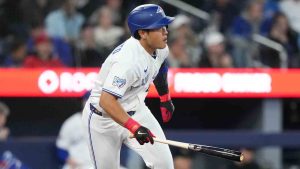
Okamoto’s start has been fascinating because he’s defied expectations of how he’d fare in the majors after eight seasons of star-level performance in Japan. The book on the 29-year-old was that he had a good approach that resulted in plenty of contact, but he might be more of a first baseman than a third baseman, and his ultimate power potential was up for debate.
In the first six games of his MLB career, he’s had significant struggles making contact with a 40.7 per cent strikeout rate, but his power production has been excellent (.542 SLG). Meanwhile, his work at third base has been sharp and included some highlight-reel plays.
Okamoto is in the midst of an adjustment period at the moment, and the Blue Jays shouldn’t be too excited about the power he’s shown or dismayed by the lack of contact. They are probably more interested in the fact he’s demonstrating tools that could lead to sustained success, like above-average bat speed and soft hands at third base.
An interesting storyline to watch will be how he handles high-velocity pitches in the weeks ahead, considering he didn’t have to deal with them as much in Japan. The early returns are good as he’s absolutely destroying fastballs (.750 SLG with a .727 xSLG) and both of his home runs have come against 96+ m.p.h. heaters.
That sounds promising, but he’s also registered just one hit against breaking balls and offspeed pitches while whiffing more than 45 per cent of the time against both pitch categories. Okamoto may be so locked into catching up with the hard stuff that it’s compromising his ability to deal with slower offerings. The veteran is likely to find a balance, but it will be worth monitoring as he settles in as a Blue Jay.
Sánchez has given the Blue Jays a jolt out of the gate with a 216 wRC+ that leads the team. There’s nothing flukey about his .375/.500/.563 line either, as his expected AVG (.409) and SLG (.727) are even better than his real numbers.
When Toronto hit its off-day on Thursday, Sánchez had some of the best expected numbers in the majors.
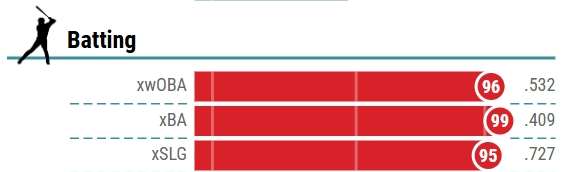
The key to those numbers is a modest strikeout rate (10.0 per cent) and some strong contact quality (91.1 m.p.h.). The hard-hit balls are nothing new for Sánchez, but the low strikeouts are, as the outfielder has a 26.0 per cent career strikeout rate. He lowered that slightly in 2025 to 22.1 per cent, and if he can bring it even lower this year, a breakout season could be in the cards.
While the 10 per cent K rate Sánchez is currently sporting won’t hold up, any improvements he makes will help his contact quality sing. What we’re seeing now is an exaggerated version of how that could look.
An early quirk of Sánchez’s first few days with the Blue Jays is that he’s the only hitter on the team to call for multiple ABS challenges (winning one that wiped a strikeout off the board). It will take quite some time to get a real understanding of this team’s ABS tendencies, but the first two series may be an indication that Sánchez has plenty of confidence in his understanding of the strike zone.
Saying Rogers has come as advertised would be an understatement. The Blue Jays signed him to a lucrative $37 million contract because of his ability to keep the runs off the board, the ball on the ground, and any contact against him relatively harmless. That’s precisely what he’s done.
Rogers has pitched in four of Toronto’s first six games without allowing a run, and even in a miniature sample, the type of contact he’s allowed is remarkably similar to his 2025 numbers.
His approach hasn’t changed either as he’s favouring the same 75/25 sinker/slider split that worked so well last year.
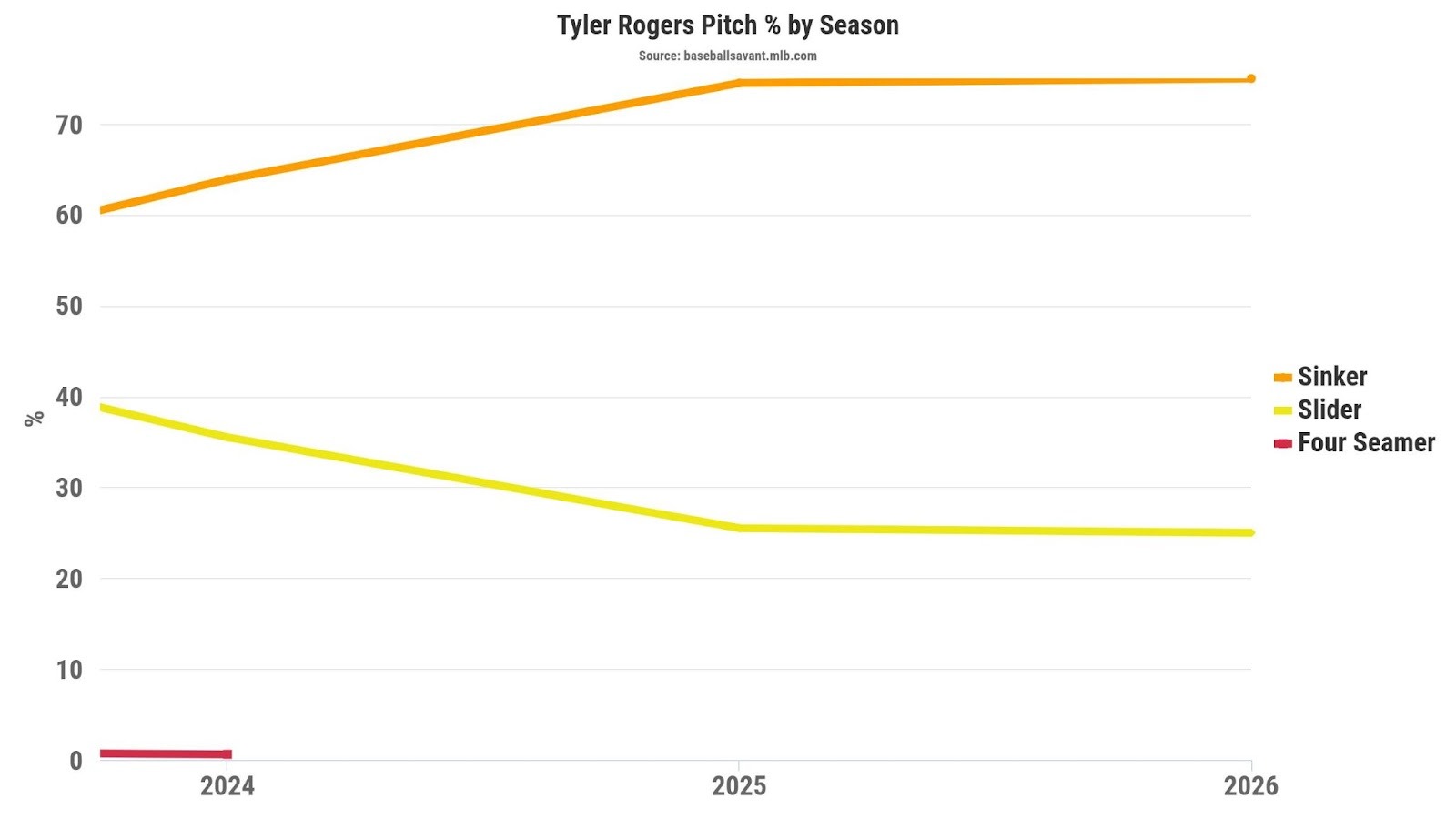
Rogers has been one of the most effective relievers in the game in recent seasons, and he seems on track to keep that success going. Pitching in front of Toronto’s stellar infield should only help him continue to suppress runs at an impressive rate.
In just two outings, Miles has shown the promise that led Toronto to select him in the Rule 5 Draft and the kind of shakiness that you’d expect from such an inexperienced pitcher.
He was thrown into the fire in his MLB debut, tasked with shutting down the Athletics in extra innings, and delivered a clean inning where his fastball and sinker both sat around 98 m.p.h., and his slider looked like a promising strikeout pitch. Two days later, the heaters were closer to 96 m.p.h., and he got roughed up by the Colorado Rockies.
Inconsistent results may be the norm for a pitcher trying to navigate the major leagues, having barely pitched in the minors with no outings at either the double-A or triple-A levels. Miles is here because of the potential his repertoire presents. His strong velocity, biting slider and four-pitch repertoire give him a legitimate chance to succeed despite his inexperience as a pro.
His first two outings have demonstrated some of his upside, but he’ll need to learn on the job quickly to earn his manager’s trust. For now, Miles is a suitable option for the lowest-leverage work available. It will take time to determine if he can be more of a near-term asset than a developmental project.