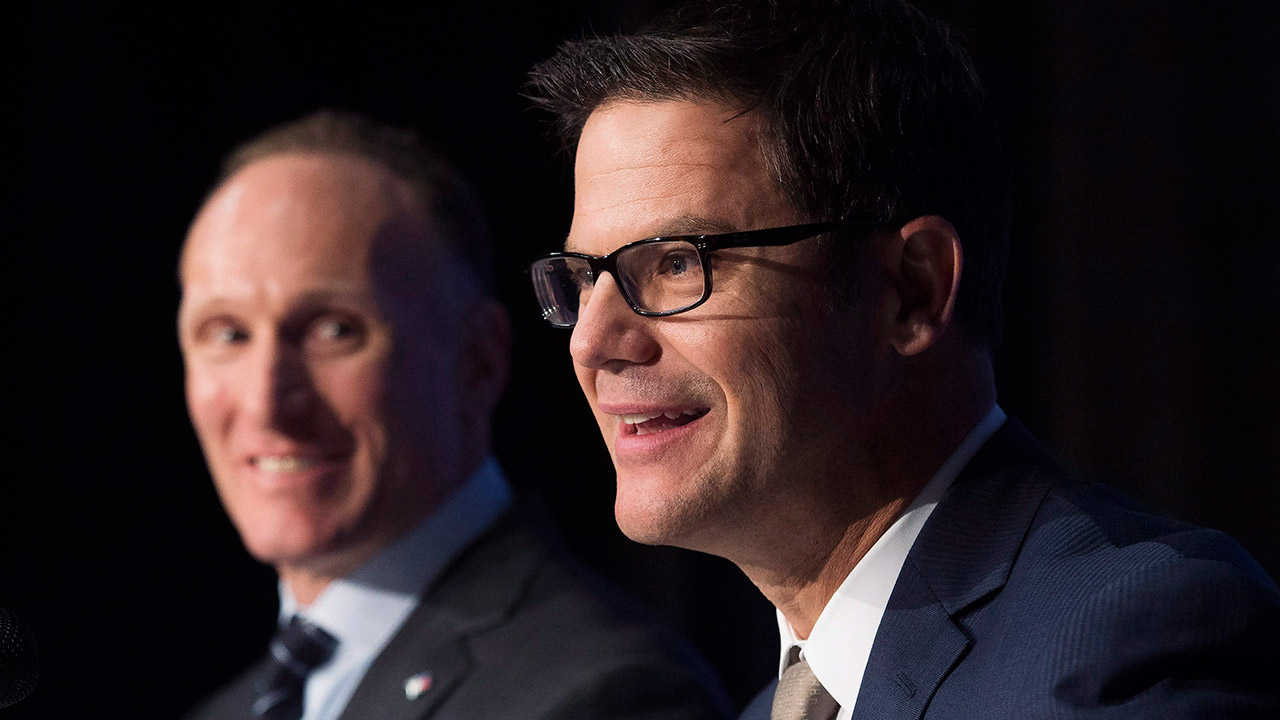
TORONTO — Every dollar can make a difference in the baseball draft, especially when a team loses its second-round pick the way the Toronto Blue Jays did this year after signing Anthony Santander as a free agent. So amateur scouting director Marc Tramuta used all the tricks available to stretch his club’s signing bonus pool of $10,314,600 — moving money around, spending up to the maximum overage before future-pick penalties hit, and what’s essentially an accounting trick through the use of a $2,500 contingency bonus.
In doing so, the Blue Jays managed to sign 12th-round outfielder Blaine Bullard for $1,697,500 — the second largest bonus they handed out this year — and Canadian fifth-rounder Tim Piasentin for $747,500, to well-above slot deals, adding more potential impact to their 2025 cohort.
"Any time you have a shortened pool of money with not having a second-round pick,” said Tramuta, “you're always looking for ways to maximize that, and I think we did a good job.”
While shortstop JoJo Parker, selected at No. 8 overall, is right now the clear jewel of the class, in signing for $6,197,500, a significant $616,100 below the eighth spot’s assigned value, his deal also did a lot of the heavy lifting for the creativity that followed.
Seven of the Blue Jays’ eight remaining picks in the first 10 rounds, which each have assigned values and are covered by the signing bonus pool rules, came in under slot, creating a total of $1,055,200 in spending space.
That helped cover for Piasentin, who got $243,700 above the 143rd spot’s assigned value, as well as for Bullard and 11th-round lefty Jared Spencer ($165,000), who each came in above the $150,000 max for players selected in rounds 11-20.
Now, teams that exceed their bonus pools face an escalating series of penalties, with overages of 0-5 per cent taxed at 75 per cent, and picks sacrificed at overages above that threshold. The Blue Jays typically spend into that five per cent buffer, meaning they had up to $515,730 more to work with.
When all was said and done, the Blue Jays were above their bonus pool by $507,300, a number that was helpfully reduced by the use of the $2,500 contingency bonus, described as “a little-known bonus to most” by Tramuta.
Those bonuses do not count against a team’s overall pool, so used creatively, a club and a player in the first 10 rounds can agree on an amount, and the contingency can lower the official amount by $2,500, while the player still remains whole.
Blue Jays fourth-rounder Micah Bucknam, for instance, received the 112th pick’s full slot of $680,800 through a $678,300 signing bonus that counts against the pool and a $2,500 contingency that doesn’t.
“That's something that even probably most scouts, maybe they're not scouting directors, don't necessarily know what that is,” Tramuta said of the contingency. “I remember a couple of years ago in New York (with the Mets), we had been haggling over a really high-round pick and it was for a lot of money. That agent simply wanted to say, ‘I got him more money,’ so we gave him a full slot and the contingency bonus.
“So there are two ways to do it. I saw a lot of teams, more so this year, lowering the actual bonus and adding in the contingency.”
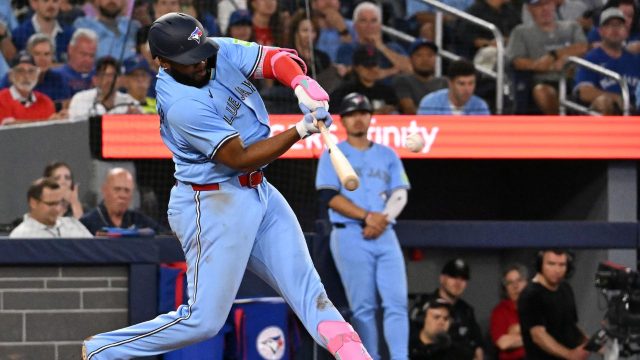
Watch Blue Jays vs. Tigers on Sportsnet
The Toronto Blue Jays are looking to sweep the Detroit Tigers in the finale of a four-game series on Sunday. Live coverage begins Sunday at 1 p.m. ET / 10 a.m. PT on Sportsnet and Sportsnet+.
Broadcast schedule
While on the surface it’s a nominal amount, $2,500 times 10 equals $25,000, which in the draft pool is a meaningful sum of money. The Blue Jays did that times 10 and had only $8,430 to spare before they would have lost a draft pick.
“It could mean one player. It could mean two players, it just depends on how many extra shots you want to take,” said Tramuta, whose sense is that teams used the contingency to lower bonuses more often than in previous years. “Unless I wasn't looking for it in the past, I've seen more of it this year. … I'll have to look deeper as all the signings come up. ... That's a good case study this year to see how many teams did it and how many times they did it this draft.”
After being forced to get creative, the Blue Jays would be prime among them.

 1:40
1:40 1:01
1:01