This year’s National League Division Series features no shortage of star power, with some of baseball’s most dynamic and exciting talent spread across the four clubs left standing in the senior circuit.
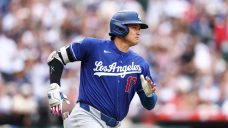
That all starts, of course, with Shohei Ohtani and his Los Angeles Dodgers as they begin their playoff quest to become the first back-to-back-to-back World Series champions since the New York Yankees of the late 1990s. Standing in their way as MLB’s second round gets underway is the NL East-champion Atlanta Braves, fresh off a dramatic wild-card victory over the Philadelphia Phillies in three games.
Atlanta dominated its season series with the Dodgers, winning five of their six meetings, including a sweep in late August. But Los Angeles will enter this best-of-five set well rested after the bye, so the Braves will have to bring their A-game if they hope to knock off the defending champs.
Catch all the 2026 MLB post-season action on Sportsnet and Sportsnet+.
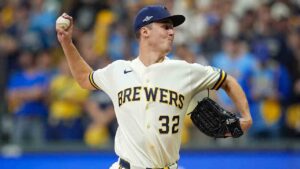
On the other side of the NL bracket, the 103-win Milwaukee Brewers will look to slow the momentum of the hard-charging San Diego Padres, who limited the best offence in baseball to one run in their wild-card sweep while piling up several big swings of their own. Jacob Misiorowski and the rest of the Brewers' pitching staff are a different beast, however, and pose a formidable challenge for the Padres’ hot bats.
So, before things get underway on Saturday, let’s take a look at the specifics of each series.
No. 1 Milwaukee Brewers (103-59) vs. No. 4 San Diego Padres (91-71)
What’s working for the Brewers: Misiorowski and Co. steal the headlines in Milwaukee after the Brewers’ pitching staff allowed the fewest earned runs in the NL and finished second in strikeouts. But you don’t get to 103 wins on run prevention alone, and the Crew’s offence scored the second most runs in baseball while pacing MLB in on-base percentage, constantly proving to be a headache for opposing pitchers. The Brewers didn’t coast to the finish line, either. They averaged 6.08 runs per game in September, going 18-6 in the final month powered by a lineup with all-star talent at the top and depth throughout.
What’s working for the Padres: San Diego’s formidable bullpen lived up to its billing in its dismantling of the Cubs. Over the two games, Padres relievers worked 7.2 scoreless frames while striking out seven batters and allowing just four hits. Michael King’s scoreless start was a major boost for a San Diego club that doesn’t have much rotation depth, but in the post-season, managers can push their bullpens a little bit harder. And the Padres’ relief corps finished the regular season as the most valuable in baseball by fWAR after posting a top-five season in strikeout-minus-walk rate, home runs allowed per nine innings and average fastball velocity.
Where the Brewers are vulnerable: When Milwaukee has faltered in recent post-seasons, it’s come when its offence hits a dry spell. Just last year, we saw the Brewers manage just seven runs over their final six playoff games before being sent home by the Dodgers. This version of Milwaukee’s offence undoubtedly has a higher ceiling than last year’s collection of bats, but it once again struggled to hit the long ball in the regular season — finishing 29th in MLB — and we all know how important homers are in October. So, if San Diego’s strong pitching staff can limit Milwaukee’s pesky, string-it-together approach at the plate, it could spell trouble for the Brewers in a short series.
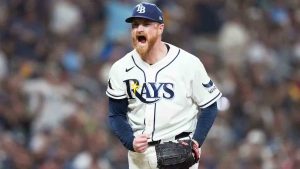
Where the Padres are vulnerable: For as good as San Diego’s bullpen is, the club will be at an immediate disadvantage on the starting-pitching front. The rested Brewers can turn to Misiorowski in Game 1, while the Padres look to get a few effective innings from Robbie Ray before the bullpen carousel starts to turn. We saw this strategy come into play when Nick Pivetta was pulled after 3.1 innings in San Diego’s wild-card triumph over the Cubs. But with a much better pitching staff on the other side in this series, the Padres figure to have less margin for error, so if a starter puts them in an early hole, it might be too tough for their offence to overcome.
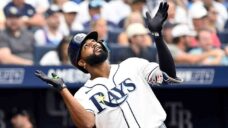
It’ll all come down to: Fernando Tatis Jr., Manny Machado, Jackson Merrill and the rest of San Diego’s lineup. Just one team (the Cubs) posted a better second-half OPS than the Padres, who will face the ultimate heat check in this series against Milwaukee. San Diego went an NL-best 65-8 when scoring five or more runs in the regular season, a trend that would seem likely to hold up if it solves the Brewers’ pitching staff.
No. 2 Los Angeles Dodgers (100-62) vs. No. 3 Atlanta Braves (94-68)
What’s working for the Dodgers: Despite operating without Ohtani for most of September, Los Angeles looked to be rounding into form at exactly the right time. The Dodgers posted their best single-month record of the season, going 18-7, while Mookie Betts, Kyle Tucker, Teoscar Hernández, Tarik Skubal, Blake Snell and Yoshinobu Yamamoto dominated down the stretch. Los Angeles’s rotation appears poised to carry the load again in October, though. With Tyler Glasnow pitching alongside Skubal, Snell and Yamamoto, no remaining stable of starters can match the Dodgers’ upside and depth.
What’s working for the Braves: Taters were the name of the game as Atlanta took down the Phillies, with the long ball playing a key role in all three contests. For the Braves, homers from Austin Riley, Michael Harris II, Ozzie Albies and Matt Olson accounted for nine of their 14 runs in the series, building on a regular season in which Atlanta cleared the fence 204 times. Now staring down the stingy Dodgers’ staff, the Braves will need to keep slugging to extend their season because multi-run rallies are much more difficult to string together against the sport’s best arms.
Where the Dodgers are vulnerable: For as much as Betts, Smith and Tucker found their footing in September, Ohtani and 2024 World Series MVP Freddie Freeman limped through the end of the season. Ohtani, clearly compromised by injury, posted a .567 OPS in eight September games as part of a larger .772 second-half mark, which makes his health a focal point of these playoffs. We all know that peak-of-powers Ohtani is a singular force never before seen in the sport, but if he hasn’t quite shaken off the rust from missing time or continues to be hampered by various ailments, he’ll need his teammates to pick him up until he gets right. And as for Freeman, the all-star first baseman may also have seen his production take a hit due to injury, slashing .184/.259/.224 in September while playing through patellar tendonitis in his right knee. Of course, the Dodgers have the lineup depth to cover many holes, but there’s no doubt their offence has less bite with a limited Ohtani and Freeman.
Where the Braves are vulnerable: Atlanta leaned heavily on its ace, Chris Sale, to get here. Manager Walt Weiss opted to bring Sale back in relief in Game 3 after the southpaw’s 95-pitch, nine-strikeout performance in Game 1, leaving the timing of his first start against Los Angeles uncertain. Tyler Mahle was excellent over seven innings in Game 2, but Atlanta’s non-Sale pitchers will remain an X-factor for as long as the Braves stay alive this October. Atlanta's bullpen took a step back in the second half, so with up to five games to cover rather than three in this series, the Braves will need some of their unheralded names to break through — just as Ray Kerr did with their season on the line against the Phillies.
It’ll all come down to: Atlanta’s bats against Los Angeles’s pitching. The Braves tagged some of Philadelphia’s top arms in the wild card, scoring multiple runs on Jhoan Duran, Aaron Nola, Christopher Sánchez and Zack Wheeler. If Atlanta can continue to find big swings against elite pitching, put extra pressure on the Dodgers and steal a game or two early, giving Sale a chance to pitch more than once in the series, it could put itself in position to pull off the upset.