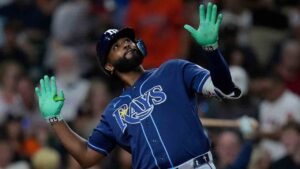
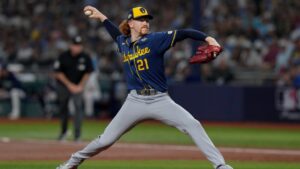
The 2026 World Series may be decided by Junior Caminero getting red-hot, Jacob Misiorowski delivering multiple unhittable outings, or Aaron Ashby continuing to do his best 2016 Andrew Miller impression. It could just hinge on the best players delivering at the biggest moments.
However, that’s far from a guarantee. The battle between the Milwaukee Brewers and Tampa Bay Rays could easily come down to finding small advantages around the edges. That’s what these small-market ballclubs are known for as much as anything else.
Below are a few smaller factors that could tilt a World Series between two clubs that topped their respective leagues in the regular season and carried that success into the playoffs.
Home-park advantage
The ways that teams benefit from playing at home can sometimes be difficult to pinpoint. It’s tough to identify the precise moment a lack of travel-related fatigue, or the benefit of remaining in a precise routine, kicks in. At the same time, it would be foolish to disregard the advantages each home team will face in this series.
Both clubs finished the regular season with identical 55-27 home records, and in the playoffs the Brewers are unbeaten at Miller Park while the Rays are 4-1 at Tropicana Field. Tampa Bay’s ballpark has more inherent strangeness that might advantage those most familiar with it, but Milwaukee probably received the biggest moment of ballpark-related home cooking of this postseason.
Both parks are generally pitcher-friendly, but Tropicana Field has been the second-best park for right-handers to hit home runs over the last three years. That’s good news for the team with by far the best right-handed power threat in the series (Junior Caminero) and a leadoff man (Yandy Díaz) who hit 16 of his 22 home runs there in 2026. Meanwhile, the Brewers only have one right-handed hitter who hit 20 or more homers this season (Jackson Churio).
On the Brewers' side, Miller Park doesn’t have many truly extreme features, but it is remarkable how much better Milwaukee played there during the regular season.
Metric | Home | MLB Rank | Away | MLB Rank |
Hitter wRC+ | 118 | 2nd | 97 | 18th |
Pitcher ERA | 3.17 | 1st | 3.88 | 7th |
To add a little context, the Rays don’t have nearly as dramatic a split.
Metric | Home | MLB Rank | Away | MLB Rank |
Hitter wRC+ | 108 | 8th | 100 | 10th |
Pitcher ERA | 3.72 | 13th | 3.71 | 5th |
If the Rays can take even one of the first two games in Milwaukee, they’ll have to feel good about their chances considering the Brewers haven’t been quite the same team on the road.
Controlling the running game
It’s safe to assume we’re going to see plenty of stolen base attempts in the World Series, as creating havoc on the bases is in both teams’ DNA. During the regular season, the Rays and Brewers ranked second and fifth in the majors in steals, respectively, and they rank first and second in the post-season.
So far in the playoffs, the teams have combined for 21 swipes in 17 games and have only been caught twice. In a series with excellent pitching and relatively limited offensive star power, it's likely both squads will try to extract as much value from their base running as they can to generate runs.
The question is whether either team is equipped to stop the other from running at will. In terms of raw tools, neither primary catcher ranks particularly highly among MLB catchers this season.
Catcher | Arm Strength | MLB Rank | Pop Time | MLB Rank |
William Contreras - MIL | 79.2 mph | 46th | 1.92 | 29th |
Liam Hicks - TBR | 79.3 mps | 45th | 1.97 | 67th |
The results for those two catchers this season have varied despite fairly similar basic throwing ability.
Catcher | SB Allowed | CS | CS% | CS Above Average |
Contreras | 48 | 25 | 34.2 per cent | +5 |
Hicks | 58 | 11 | 15.9 per cent | +3 |
The fact that Hicks has been above average according to Statcast’s throwing metric despite such awful raw numbers suggests his pitching staff has been hanging him out to dry. The same can’t be said for Contreras, who is working with his pitchers well to control opponents’ running and catch them stealing at a far higher rate than the MLB average (23.5 percent).
Both Milwaukee and Tampa Bay are likely to run frequently in the World Series, but the Brewers may be better equipped to keep the Rays in check and gain an advantage on the bases.
A left-handed hitter's hell
In most cases, life is better for left-handed hitters than their right-handed compatriots. They have the platoon advantage more often and are better positioned to get out of the batter’s box quickly and beat out infield hits.
This World Series won’t be kind on lefties, though. During both the regular season and the playoffs, the Rays and Brewers’ pitching staffs have been among the best in baseball at mowing down left-handed bats.
Team | wOBA allowed to LHH | MLB Rank |
MIL regular season | .281 | 1st |
MIL playoffs | .243 | 2nd |
TBR regular season | .288 | 3rd |
TBR playoffs | .263 | 3rd |
The only southpaw expected to start in the series is Robert Gasser of the Brewers, but three of Tampa Bay’s starters (Drew Rasmussen, Nick Martinez, and Freddy Peralta) handle lefties well using changeups that break away from them more than any other non-fastball offerings. Left-handers also found Misiorowski even more unhittable than righties this season, slashing a miserable .114/.189/.189 against him.
Both teams have potent lefty killers in the bullpen, like Cam Boozer of the Rays — who allowed the lowest wOBA against left-handers among the 375 pitchers with 20-plus innings against them and southpaw Ashby, who’s tossed 12.1 scoreless frames in the playoffs. Both closers in the series (Trevor Megill and Bryan Baker) are right-handed, but rank in the first 15 on the leaderboard Boozer tops.
The ballparks also play a notable role, as according to Statcast Park Factors, Tropicana is the second-worst place in the majors for lefties to hit, while Miller Park is the sixth-worst. Whichever team can get some surprising production from left-handed hitters — or pinch hitters used in their stead — may be able to carve out an edge.


 1:49