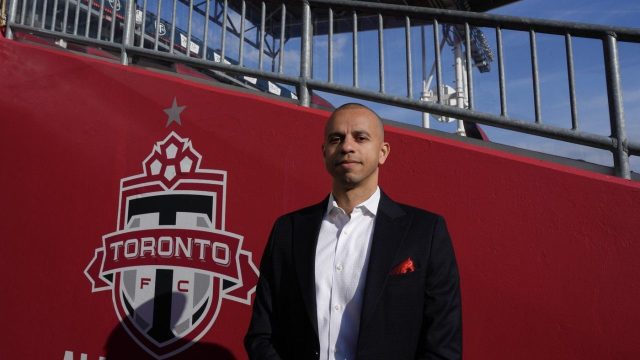
For Toronto FC general manager Jason Hernandez, this season is as unique as it is important.
The upcoming World Cup will result in a seven-week shut down in Major League Soccer, not to mention a home-heavy portion of the fixture list which sees the club currently eight matches deep into a nine-match homestand — one that will end against Lionel Messi and Inter Miami this Saturday.
“It’s been quite an outlier of a season so far,” Hernandez told Sportsnet. “Being a host city, with a ton of construction at the venue, and having to manage stretches of road games or unusual home-game runs creates unique challenges.
“Then you add the fact we’re going to take a massive pause in the middle of the season —almost two months between league games — that’s something I haven’t really seen before. The last World Cup was in the fall, so we didn’t have to deal with this kind of disruption in-season. It’s just a very different set of circumstances to manage.”
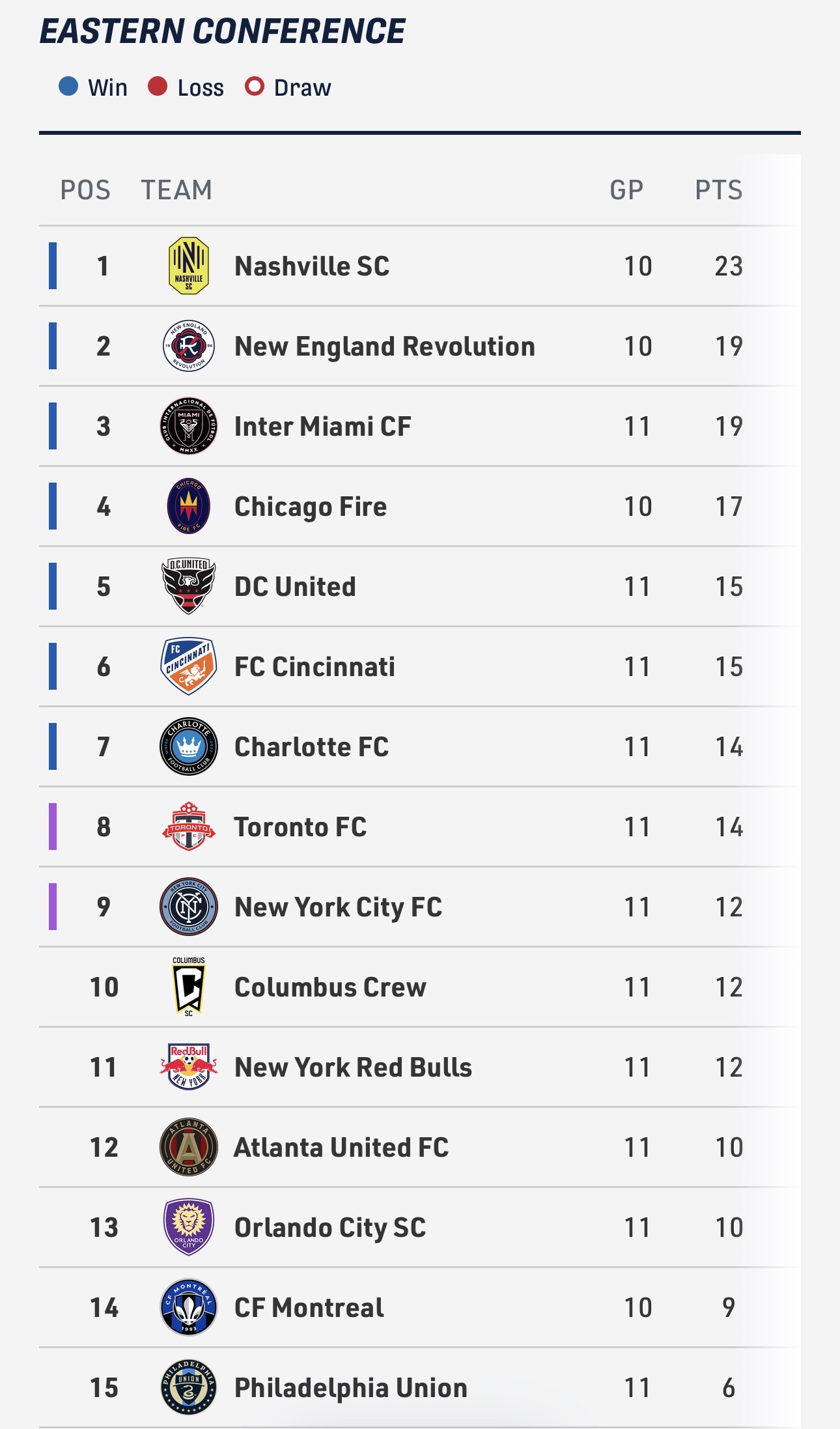
The club currently sits a couple points up in the Eastern Conference playoff race, this despite an injury-fueled season to date. Small but significant gains, considering that over the past five years, TFC has failed to make a dent in the post-season push, averaging a 26th-place overall finish. The fans have spoken as average attendance has dropped this season to just under 16,000 per match, placing the club near the league’s basement.
Hernandez acknowledges this is concerning but understands the tangible reasons behind it.
“If you look at scheduling, having long stretches of home games can create some fatigue versus having breaks where fans miss the team and then come back to it,” Hernandez said.
“Weather plays a role, too. Some matchdays aren’t always family friendly. And then we can’t ignore that performances and perception matter. Fans want to see consistency before fully re-engaging. There’s also the reality that we’re in a moment where people want to see results, not just progress. We’re showing improvement, but still not consistently enough across all phases of the game.”
Refreshing honesty from a club that has been accused in the past of alienating its fanbase.
The 2026 calendar year is supposed to be the biggest one in Canadian soccer history with the expectation of a post-World Cup bump. From TFC’s perspective, it’s important to enter the summer with momentum already established.
“A big part of our work in the last nine months, especially in the off-season, was understanding the World Cup was coming and trying to present a new version of ourselves — new faces, new voices, new energy,” Hernandez added. “From a performance standpoint, it hasn’t been perfectly linear to start the season, partly due to player availability. But I do think when we have our group together, we’ll look like a very different team. Right now, we’re showing flashes, but not full consistency.
“MLS seasons historically have been about evolution. Teams figure themselves out early, find rhythm mid-season, and then peak later. That’s been consistent over 25 years. We’re going to have to lean into that again, especially with the World Cup sitting in the middle. We still have a significant number of games left, so there’s a real opportunity to build momentum on the back end.”
Aside from the ever-growing World Cup buzz in Toronto, TFC has a daily reminder of what is on the horizon. The addition of 15,000 temporary seats for the World Cup literally looms over BMO Field each and every day. Without the colours and energy of fans within, the grey structures hardly cut an attractive picture, but the potential of what this stadium can become for the World Cup is exciting.
“The first time the club got onto the pitch with everything completed and the additional seating, it felt like a European experience. You can already imagine it at full capacity with supporters and the atmosphere that will create,” Hernandez added. “For the first time, a lot of players on this side of the world are going to experience that feeling here in North America, and specifically Toronto.”
What it signifies for the future, is not lost on the former MLS defender.
“I think you look at it and wonder, is there a world where a major global event like this helps ignite interest in the sport in a way that creates appetite for something bigger here? Could that eventually be our normal? That’s the optimistic view. From a football fan perspective, that’s exciting. And we’ve already seen some positive momentum this year.
MORE FROM SPORTSNET


Here’s some more from my conversation with Hernandez.
SN: As a GM, how do you evaluate players during a World Cup without overreacting?
JH: A tournament is just one data point. If you take long-term decisions based on a single sample, you leave yourself exposed to mistakes.
You obviously weigh it differently depending on the competition, but you have to use discretion. We’ll be watching, but we’re not going to over-quantify one tournament or overreact to it.
SN: Are you looking forward to the World Cup from a football perspective?
JH: Yeah, also trying to enjoy it. It’s the biggest tournament in the world, so you also want to take it in. We’ll be watching, evaluating, but also just appreciating it as football.
SN: There’s also a “sprint season” coming in MLS. Does that change how you plan?
JH: There are so many things changing — calendar shifts, competition format, roster rules. It’s a very dynamic period for the league.
You’re trying to forecast six months but also manage week-to-week performance so it’s a balancing act between short-term results and long-term planning.
SN: Could MLS become a true top-tier global league after aligning its calendar?
JH: I think we’ll be much closer. It gives MLS a chance to align with the global standard and really test itself.
But it also means entering the big market at the same time as everyone else. Historically, we’ve operated in different windows. Now we’ll be competing directly in the same ecosystem.
It’ll be a good way to understand where we sit globally and how we close that gap.
SN: Will the salary cap still be effective in that environment?
JH: That’s an interesting one. If resources don’t change, the ability to buy players doesn’t really change either.
What may change is more appetite for loans, because calendars will align better. Clubs might be more willing to send players for 12-month loans knowing the season structure matches.
That could actually be a real opportunity.
SN: Who wins the World Cup?
JH: Probably Canada, given proximity. (laughs) But realistically, you can’t look past Argentina. Messi is just something different. What he’s doing — even in MLS at this stage of his career — is unheard of.
SN: Can you actually enjoy watching him as a GM?
JH: Not really (laughs) … it’s hard to switch off.
But you do appreciate it. I’ve watched him live and it’s just not normal — how he walks through a game and then suddenly produces a goal or assist. At his age, it shouldn’t be possible, but he keeps doing it.