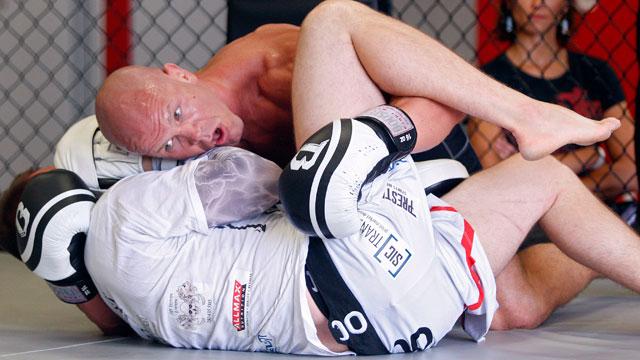
Brian Beauchamp, aka the “Third Man in the Cage,” is a professional MMA referee and judge and has worked for Bellator, Maximum Fighting Championship, Super Fight League, Aggression, King of the Cage and various other organizations.
He has an extensive combative sports background and is a double black belt in both Judo and Brazilian Jiu-Jitsu. He was a former member of the Canadian National Judo Team and recently won a gold medal at the 2012 IBJJF World Championships (Black Belt) in Brazilian Jiu-Jitsu.
He will blog regularly for Sportsnet.ca, giving his thoughts on the world of MMA from an insider’s perspective of an official.
This week, he discusses why the sport is particularly successful in Alberta.
BBQs, beef and brawling — these might be a few of the top things Alberta is known for, and of course oil.
When I mention brawling, I’m not talking about the kind found at a hockey game between the Oilers and the Flames. It can be arguably stated that one of the most successful provinces for combative sports in Canada (boxing, kickboxing and MMA) is Alberta.
Despite being from Ontario, I have primarily spent most of my time officiating MMA out west and have gotten to know the MMA industry in that province quite well. As such, I have some opinions on why combative sports are successful in that region. Let me share what I’ve learned.
Commissions in Alberta — First Edmonton, then Calgary — started regulating MMA well over a decade ago, and many of the early commissioners from that time are still in the game today. Having a strong and successful history in the sport of MMA is vital for proper regulation because experience can solve a lot of problems before they happen.
Speaking of commissions, Alberta is one of the few provinces as well as New Brunswick that does not use a provincial commission, relying on regional commissions to regulate shows. In a time where many provinces are becoming self-regulating, Alberta has maintained a successful formula of using regional municipalities to regulate the industry across the province. I think this is one of the reasons it succeeds.
Let me explain. For any combative sport to succeed and ultimately grow you need to have events — ideally lots of them. You also need promotions to be successful and promoters to make money because this keeps the industry growing and thriving as fighters get fights, and referees, judges and commissions gain experience.
Events are the one thing Alberta is not lacking. On any given weekend you can have multiple shows at once throughout the province. It doesn’t matter if a show is running in Calgary at the same time as Red Deer or Lethbridge because each commission can handle its own jurisdictions respectively, regardless of what is happening anywhere else. This is something generally unheard of in other provinces. It also means that many diverse municipalities are enjoying the economic benefits that come from these events versus just one or two centralized jurisdictions such as Toronto or Montreal, where provincial commissions tend to be based.
Having many shows also provides various benefits, one of which involves developing a local fan base. Alberta has only had one UFC event, that being in Calgary last summer, despite the province’s involvement in MMA regulation from the start. This means that the Alberta fans have had to embrace various local promotions over the last decade and support the local athletes. Local fighters compete on a regular basis and sell tickets to their hometown crowds. An abundance of successful local shows has helped develop Albertans into true MMA fans and not just UFC fans. Alberta athletes such as Jason MacDonald, Jordan Mein, Ryan Jimmo and Nick Ring were supported by local fans on smaller shows well before they made it big in the UFC and Strikeforce.
Lower commission costs also keep local promotions successful. Local commissions generally employ officials located within their municipalities, with the exception of having to bring in the odd outside official (such as myself from Ontario). This keeps the cost down for promoters who aren’t billed excessive traveling costs for commissions based centrally in one location, as with a provincial commission. Anytime a promotion can save money, especially with promotions just starting out, it keeps it involved in the sport longer and that helps everyone.
From an official’s point of view it means that all of your local officials are working more and getting experience and improving their skills. If you don’t use your skills as an official you become complacent — judges need to judge fights and referees need to referee. Furthermore, they need competent mentors to make sure that they are improving all the time. I have been lucky enough to have one of the best mentors for MMA officials in the business, Dale Kliparchuk.
Regional commissions also get to know the local promoters and the local fighters extremely well because they are all part of the same local community. Most promotions tend to be from the same municipality as the commission. Getting to know all the players in the game is part of successful regulation. It helps commissions approve matchups and better monitor local fighters who are injured. It translates into better risk management and reduced liability.
From a local officials’ point of view, we know what to expect from the fighters we officiate because we officiate them often and in turn they know what to expect from us as officials. I know the fighters who are experienced tacticians on the ground and I know the fighters that can inflict devastating strikes.
I appreciate the time I’ve spent in Alberta and the opportunity to work many of the events in that province. I’ve honed my skills as an official and I’ve had the opportunity to be mentored and improve as both a referee and a judge. As one of the most active provinces for MMA for well over a decade, I hope the success in Alberta continues because for MMA to be successful the smaller local shows must continue to thrive.
That applies not just in Alberta but across Canada.