By Tyler Mason
Wrestling has been removed as an Olympic sport as of 2020. The oldest sport in the world has been effectively reduced to a curiosity. When mixed martial art fighters begin to clinch or go to the ground a chorus of boos ring out from the crowd. There is a vocal and monetary pressure for fighters to be “exciting.” It’s a topic that easily merits an essay, but without the time or incentive, I’ll simply pose the question. What makes a fight exciting?
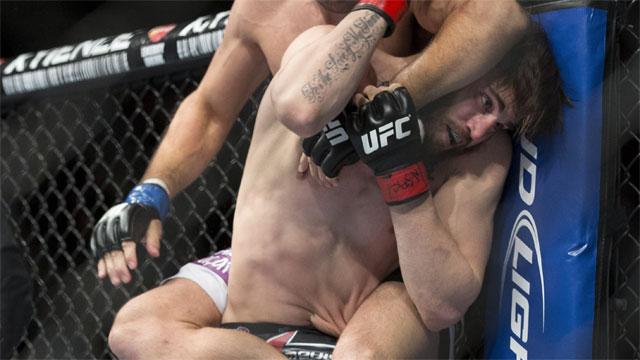
Jon Fitch was cut from the UFC, despite a 14-3-1 record under its banner. Much of the speculation for Fitch’s dismissal spotlighted his grappling-centric fighting style.
“He was ranked No. 1, fought for the title, then he was ranked No. 2, 3, 6, 7 and now he’s 9. That’s called the downside of your career.” UFC president Dana White offered as an explanation post-UFC 157, but added, “(Fitch) is super f—ing expensive.”
Now I could argue through each of Fitch’s, Georges St. Pierre’s or any number of fighter’s bouts to determine which are and are not exciting, but I won’t. What I will do is point to several mitigating factors in the decline of grappling, despite Joe Rogan’s assertion that wrestling is the best foundation for MMA.
The Western fan: a varying collection of sport enthusiasts, event goers, and early adopters. To the chagrin of the hardcore base, the push to make MMA mainstream has been a double edge sword. It brings with it money, acceptance and tons of content, but in tow is an entitled, impatient, alcohol-fueled fan base. Some may be offended, but there is no denying, despite their obvious difference in demeanor, the Brazilian and Japanese audiences are more receptive and respectful of the ground game.
Rogan would point to the lack of educated fans, and while true, it’s not necessarily the issue. The problem is an uneducated media. The media’s job is to explain to the fans what they don’t know. If the audience does not know what’s happening then the media isn’t doing its job properly. Some fighters have already made the move to broadcasting, but developing the ability to explain something you’ve spent the majority of your life doing to an audience that has little frame of reference takes time.
Adding to the problem is a world where everything is quick and dirty. Pieces are reduced to sound bites or published as quickly as possible. In-depth analysis is virtually non-existent and the perception is the mainstream audience doesn’t have the patience for it. The result is a media that speaks in generalities rather than specifics and focuses on whether a fighter is a simply a grappler or striker instead of analyzing details of his complete arsenal.
MMA has seen a move away from technique and tactics towards conditioning and athletics. There is a mantra in the sport, that MMA fighters are the most conditioned athletes in the world. It fuels fighters to push the action with little result, or stay busy, but not do much. You’ll see fighters work on submission defence, but not guard passing, never attempt a sweep only to hope for a stand-up, or press their opponent against the cage to increase their “octagon control.” This doesn’t even scratch the surface of referees that stand fighters up in dominant positions or judges who think “leg kicks don’t win fights.”
Even winning tactics come under fire if they are not deemed entertaining. White has criticized coaches such as Greg Jackson, saying of Jackson-trained fighter Nate Marquardt post UFC 122, “You see this consistently with the Greg Jackson camp, where these guys consistently, I don’t know if they’re told or what their deal is? That they’re winning the fight and in their minds they’re winning the fight going into the last round, and it’s not true. There is this ‘avoid the fight’ because we think we’re winning thing with that camp.”
Early UFC events were dominated by grapplers. However, knockouts are exciting and there is no doubt the success of Chuck Liddell and Anderson Silva have influenced a generation of fighters to become defensive wrestlers and striking specialists. Their careers do not negate the existence of exciting grapplers, but the evolution of their bank accounts may influence upcoming athletes more than their styles have. Chael Sonnen’s bank account certainly has. After the 185-pound contender talked his way into a light-heavyweight title fight with Jon Jones, numerous other fighters have taken the cue to ask for money fights. Anthony Pettis asked for Jose Aldo, Ben Henderson hinted at a fight with GSP, Johny Hendricks said the welterweight champ was afraid of him, etc.
When the actions of the UFC say your drawing power matters more than your ability in the cage, it leads one to believe the UFC is home to the biggest stars, but not necessarily MMA’s best. Perhaps, we need to ask not what is more exciting, but rather, what is more interesting? Watching two of the world’s best technicians compete in a violent chess match or allowing two trash-talking super athletes to swing at each other until one falls down?
Tyler Mason is the co-host of UFC Central on Sportsnet Radio FAN 590 and FAN 960 and occasional blogger for Sportsnet.ca. Follow him on Twitter @TylerMason.