By Neil Davidson
THE CANADIAN PRESS
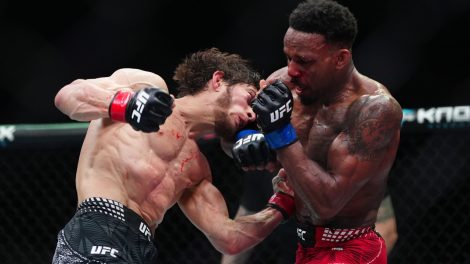
TORONTO — In the wake of a Canadian Medical Association resolution calling for a ban on mixed martial arts, here is a look at the medical checks for fighters instituted by the Nevada State Athletic Commission.
The Nevada commission is considered an industry leader, given the number of boxing and MMA fights it oversees each year.
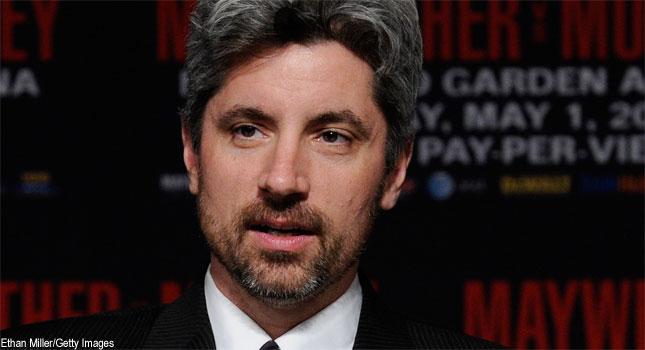
Keith Kizer, executive director of the Nevada commission, says he understands why doctors or others may be against combat sports. But he says he is bothered by "intellectual dishonesty" when some critics base their opinions on false information.
Kizer, however, is well aware of the dangers of boxing and mixed martial arts.
"We appreciate that. That’s why we treat it so seriously."
FIGHTER LICENCES
To get a licence to fight, athletes must submit evidence of an annual physical, dilated eye examination and bloodwork to test for HIV, hepatitis B and C. Scans — MRI (magnetic resonance imaging) and MRA (magnetic resonance angiogram) — are required before fighters make their pro debut and "as needed thereafter."
"Then in different situations, you might require more," said Kizer. "If a fighter gets knocked out, you require a CAT scan. If a fighter is over a certain age, you might require an EKG (heart test) or additional bloodwork or chest X-ray."
Licences have to be renewed annually.
PRE-FIGHT CHECKS
Fighters get a "detailed physical exam" at the weigh-in, the day before their bout. It includes checking blood pressure, pulse, the skin and agility drills. Doctors review the fighters’ licensing medical results and question them about recent history. Fighters are checked again the day of the fight.
Kizer said it’s rare someone fails a pre-fight physical, because promoters and matchmakers do their due diligence.
FIGHT NIGHT
The Nevada commission has at least three doctors — "usually four" — at every MMA and boxing fight card. An ambulance is also on standby, "stocked by EMTs (emergency medical technicians) or higher classification." If that ambulance has to leave, another has to be on site before the next fight can proceed.
DURING THE FIGHT
Fight referees work in tandem with ringside physicians and commission inspectors.
"That’s why we use the same referees over and over again," said Kizer. "Because we want our referees to be on a first-name basis with the doctors — and the inspectors."
The referee "is the sole arbiter of the fight," but is in consultation with the doctors. "It’s very common to see referees and doctors referees talking inbetween rounds. A doctor might tell the referee to look for this or look for that. Or this guy can continue but have him on a short leash — things like that."
The inspectors monitor fighters in the locker-room before and after their bout. During the fight, they sit in the corner and monitor the athletes.
Kizer cited one example where an inspector heard a fighter complain about his ribs. He told the doctor, who checked the ribs and advised the referee to stop the fight. An X-ray later showed a broken rib.
"We have a lot of sets of eyes and ears on the fighter," Kizer said.
AFTER THE FIGHT
Doctors give the fighters a "quick check" in the ring regardless of the outcome or nature of the bout — "because sometimes some symptoms could present and then be gone within five minutes."
Fighters get a "detailed exam" in the locker-room afterwards. That doctor decides whether the fighter needs more attention, tests or a visit to a hospital.
Fighters are also randomly tested for drugs, both performance-enhancing and so-called social.
POST-FIGHT RESTRICTIONS
Fighters can face a range of medical suspensions arising from their bouts. Twelve of the 20 fighters in action at the Aug. 17 World Extreme Cagefighting card in Las Vegas emerged with some kind of suspension.
If a fighter is stopped due to strikes or has taken a lot of strikes during the bout — "even if they win the fight, there’s going to be some sort of suspension," Kizer said.
For example, lightweight Anthony Njokuani — at the wrong end of the knockout of the night at the WEC show — was suspended until Oct. 3 with no contact (in training) allowed until Sept. 18.
Bantamweight champion Dominick Cruz, who successfully defended his title in a five-round decision, was suspended until mid-February pending results of a hand X-ray.
Sometimes the suspension can be shortened if a doctor provides clearance. But that’s not a certainty.
Welterweight Dustin Hazelett, knocked unconscious by a sledgehammer left hook from Paul (Semtex) Daley on Jan. 2 at UFC 108, was handed a two-month ban from contact and six-month fight ban after suffering a fractured orbital bone and nose.
A specialist refused to clear him in advance of the six months. Hazelett did not fight until last Aug. 7 at UFC 117.
Commissions share information on suspensions, licence denials etc.
‘FESSING UP
The Nevada commission instituted a rule in 2006 requiring licensees to inform authorities if they know another licensee has been injured in practice. That came into play recently when a boxer was knocked out in training four days before a bout in Reno but still wanted to fight. His trainer — "luckily for him, his father" — informed the matchmaker, who told Kizer. The fighter was pulled from the card. "That’s happened a couple of times in the last year," said Kizer, while admitting not everyone is willing to share such information.
Zuffa, which owns the UFC, has its own doctor on staff — Jeff Davidson, a former Nevada commission physician.
"It’s good for them," said Kizer. "It’s almost like having a team doctor as well that does a lot of (medical) work."
Some fighters cite training injuries in their post-fight comments. Kizer says that is sometimes just down to an attempt to make excuses. But he is concerned about possible injuries that fighters know about but are not caught by pre-fight checks. Not to mention, fighters lying even if they have to sign a document "under penalty of perjury" about any medical issues.
"We’ve had issues where fighters have been dishonest with us," he said.
The Nevada commission has a long memory and has denied licences to fighters who have played fast and loose with the truth.
Many MMA fighters walk into the ring or cage at less than 100 per cent, however. Their training is so severe that it hard not to get hurt preparing for a fight.
And there is temptation to fight injured, given the alternative means not getting paid.
BOXING VS. MMA SAFETY
"I think the similarities far outweigh the differences," said Kizer. "And that’s why our medical requirements are exactly the same.
"The risks are all the same," he added. "Boxers get cut and MMA guys sometimes get concussions, but for the most part it’s the flipside. I’d say there are more injuries in MMA fights but they’re usually cuts and/or strained ligaments. There’s less injuries in boxing but there are more concussions. … The quality of the injuries in boxing is probably worse but the number of injuries in MMA is probably greater."
Added Kizer: "That’s why you’ve got to be ready for anything. Our doctors are ready for anything, from a minor nick all the way up to severe head trauma."