THE CANADIAN PRESS
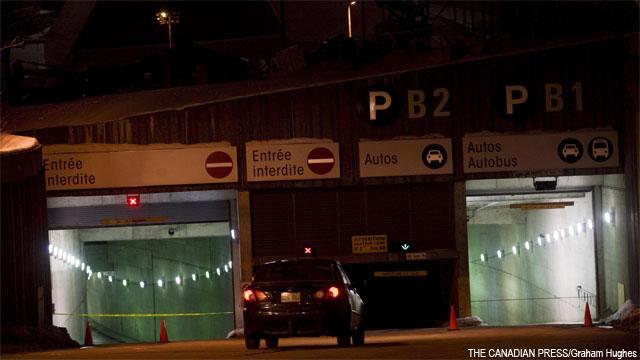
MONTREAL — Montreal’s Olympic Stadium will be ready to host a huge soccer crowd in less than two weeks, despite the collapse of a 96-square-metre concrete slab inside a stadium parking lot, provincial authorities said Monday.
The Quebec government was downplaying the latest in a series of infrastructure incidents in Montreal — one of several to have befallen the Olympic site over the years.
But the government stressed that the weekend collapse did not actually occur at the stadium, and really happened at a parking lot hundreds of metres away.
Tourism Minister Nicole Menard linked the accident to the ongoing expansion of a nearby soccer stadium. She said preliminary findings suggest it was triggered by construction work at the home of the new Major League Soccer team, the Montreal Impact.
"It seems to be the cause. Now experts will tell us," Menard told reporters. "The stadium . . . there’s nothing to worry about — everything’s okay."
The new MLS team, the Impact, is scheduled to play its first games at Olympic Stadium until their adjacent stadium is revamped.
Both the Impact and Olympic Park officials said they expect the Impact opener on March 17 to go forward as planned, at the Olympic Stadium.
About 41,000 tickets have been sold. The team still hopes for a 58,000-seat sellout, despite Sunday’s mishap.
"It’s tough timing. But whatever doesn’t kill you makes you stronger," team president Joey Saputo said of ticket sales.
"It’s going well… We hope this incident won’t affect that."
The team also says it plans to stick to its original target date — June 16 — for moving from the Olympic Stadium to its newly renovated Saputo Stadium next door. Work will continue apace on the site, except for the patch where the collapse occurred.
When asked about Menard’s apparent conclusion about what caused the collapse, the team urged caution.
"It’s an opinion that (Menard) had," Saputo said.
"At the end of the day, it’s important for us not to rush to any judgment. I think it’s important for us to go through the necessary work that needs to be done to see what happened."
David Heurtel, head of the Olympic Park, stressed that the findings are preliminary, but appear to point to some earth that had been removed from the MLS stadium site and weighed down on the concrete slab that collapsed.
On Monday crews were removing the earth from the northeast corner of the Olympic Park site, far from the stadium itself.
"The structure of the stadium is sound," Heurtel told a news conference. "There are close to 500,000 people that come to the Olympic Stadium each year. There are over 3 million that come to the Olympic park."
Nobody was injured in the weekend incident; the stadium is empty most of the year, without a regular tenant since the departure of baseball’s Montreal Expos in 2004.
A security guard spotted the fallen slab and alerted emergency officials. There was also some flooding when a sprinkler pipe burst from the collapse.
The collapse of the eight-by-12-metre slab of concrete rekindled concerns about the safety of the site that hosted the 1976 Summer Olympics.
There have been several mishaps at the building — most famously a concrete slab collapse in 1991 that forced the now-defunct Expos to play their final 13 home games on the road that year.
A Montreal civil engineering professor expressed doubt at the government explanation Monday. He said he finds it hard to believe that work on the soccer stadium would have triggered the collapse.
"We design buildings to resist all kinds of things so I don’t think the work next door (at the MLS stadium) had any effect on this," said Adel Hanna, an engineer and professor at Concordia University.
"If the slab is correctly reinforced from one side to another side, nicely anchored in all four directions, this will not happen."
Hanna has not inspected the site himself, but believes the collapse is probably because of bad design. He believes a poor connection, combined with weather and other factors, contributed to the incident. If the work at Saputo Stadium had an impact, he believes it was minimal.
Hanna said the falling slab calls for a "complete and full inspection," including X-rays, tests on the quality of the concrete and checks on how well it’s reinforced.
Inspection was already underway by Olympic Park engineers Monday.
The Olympic Park is undergoing a major re-branding effort to revive interest in the site.
While the stadium tower is considered a landmark element of the city skyline, the broader Olympic site is also viewed by many locals as a notorious monument to poor planning and cost overruns. Many blame the cavernous east-end stadium for causing the demise of baseball in Montreal.
The province has invested $95 million over the next four years to fix up the stadium and surrounding park. There are another $100 million in plans including the revamping of Saputo Stadium, reviving the Olympic tower and the building of a new planetarium on the site.
Part of the project includes finding a naming-rights partner for the stadium to go along with private sector investment on the site.
"For the Olympic Park to really revive itself, it’s going to need some private-sector funds," Heurtel told The Canadian Press in a recent interview.
"One of those ways is corporate sponsorship and we’re looking very seriously at how to get involvement from the private sector in the Olympic Stadium, in our sports centre and in the tower — and corporate sponsorship is something we really want to explore."
Last summer, Quebecers were consulted on plans for the future of the stadium, unaffectionately dubbed the "Big Owe" by Montreal sportswriters for its out-of-control pricetag.
The board that oversees the site says it has high hopes for it and believes it has a lot to offer. It says demolition is not one of the options for the stadium, noting that the cost of destroying the site is estimated at $700 million and would take up to four years.
"This park is dynamic, this park is working and what we’re doing right now is getting rid of the old conversations, the old ways of talking about the stadium," Heurtel said.