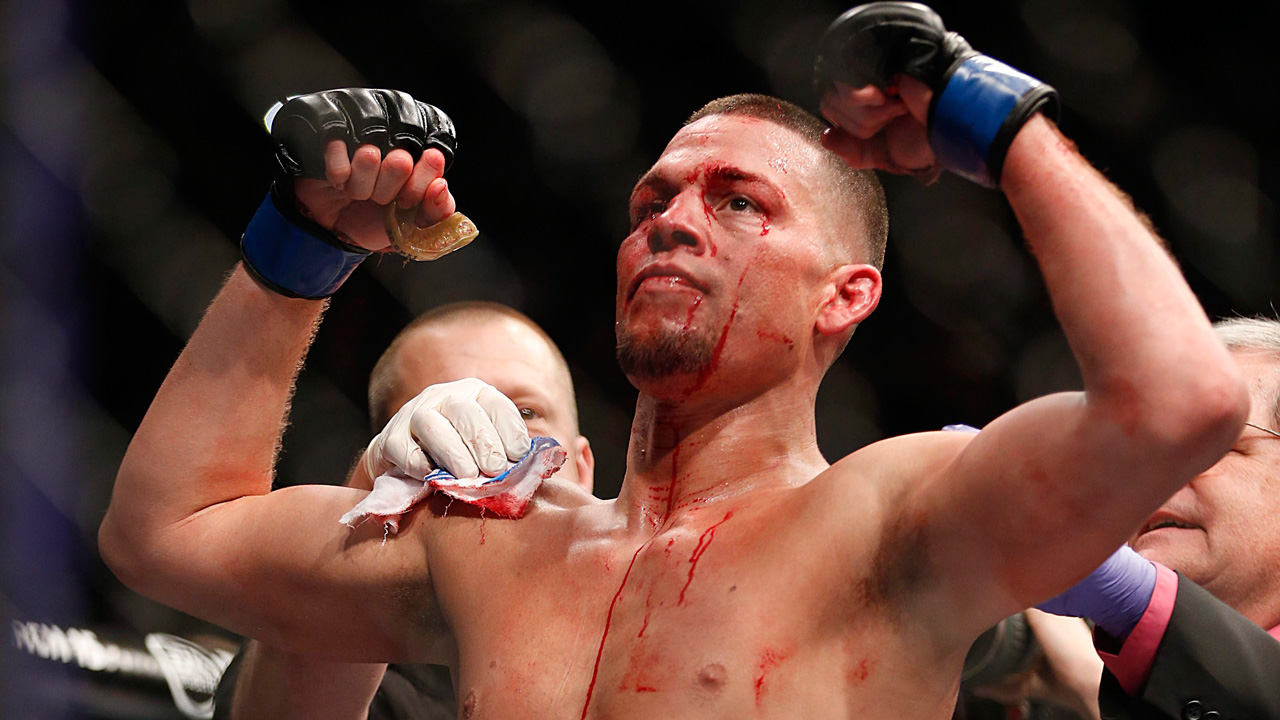

On Saturday night, women’s MMA takes the spotlight with an opportunity to be showcased.
It will also be opportunity for the sport of judo.
The relatively modern martial art — invented in 1882 in Japan — has long been one of the disciplines used in MMA. But it has also been underused, often overlooked, and perhaps even underestimated.
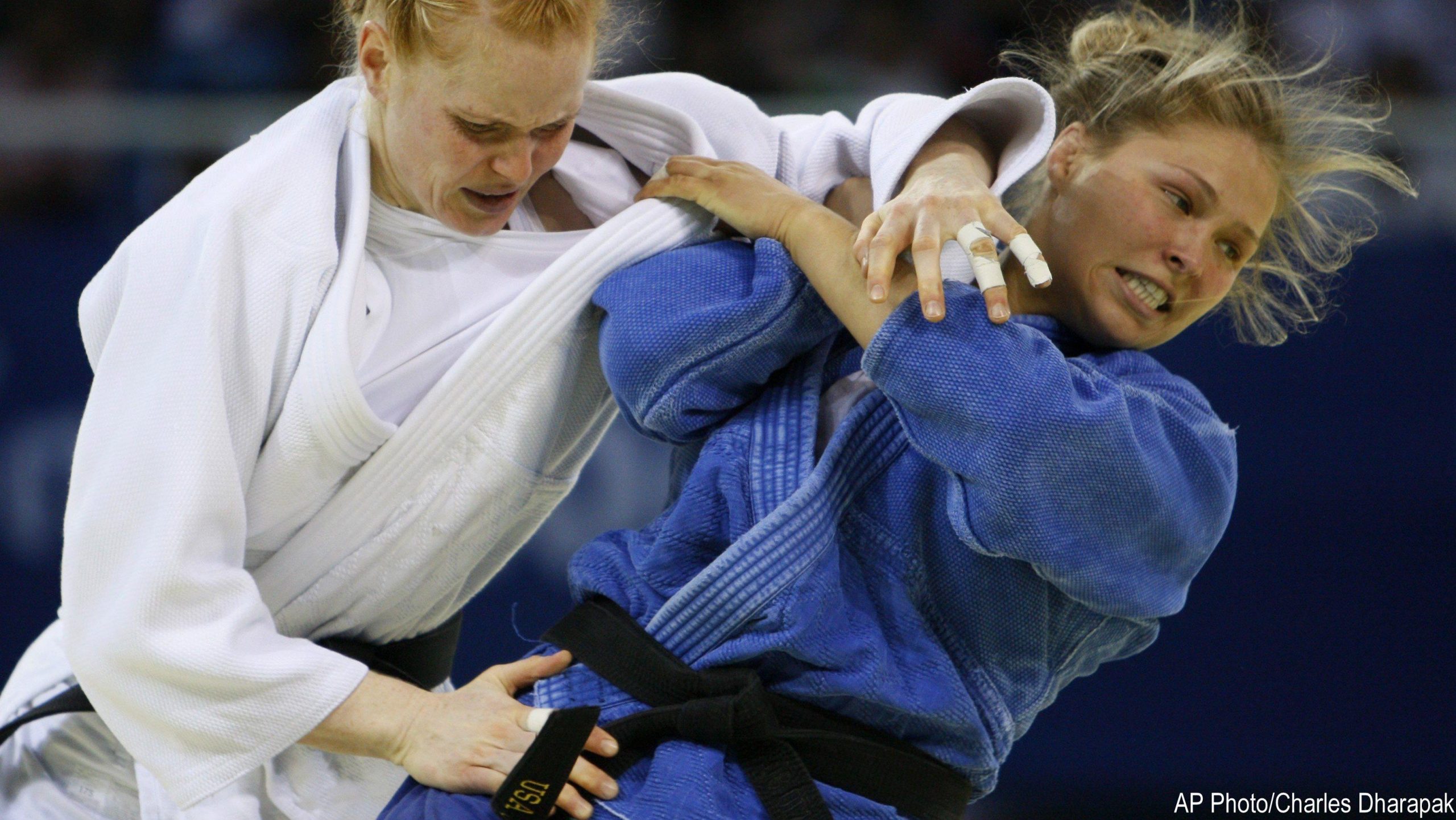
On Saturday night, in the main event of a Strikeforce card in Columbus, Ohio, Olympic bronze medallist (Rowdy) Ronda Rousey will carry the judo torch as she looks to continue her torrid run in mixed martial arts with a chance to capture the women’s bantamweight championship belt from Miesha (Takedown) Tate.
And she’s ready to take on that role.
“I think (judo has) been really underappreciated,” Rousey said on a recent conference call. “One of my major goals when I started doing MMA was not just to push women’s MMA but also to promote judo because judo has also been kind of going downhill for the past few decades.”
For a long time the most well-known judo practitioner in MMA, at least to the casual fan, was former UFC fighter Karo Parisyan, whom Rousey trained with since she was very young. Parisyan would excite viewers with throws while piling up nine wins out of his first 11 in the UFC from 2004-2007, including a five-fight win streak.
Unfortunately a positive test for banned painkillers, a bout with anxiety and a string of losses knocked the Armenian-American out of the UFC and the spotlight. With him seemed to go the mainstream recognition of judo in mixed martial arts.
While judo is similar to Brazilian jiu-jitsu in many ways, it is almost always the latter that is referred to when MMA is described as a mixture of boxing, wrestling and grappling.
It appears lately however that a few fighters have been adding judo into their arsenal in UFC fights — guys like Yoshihiro Akiyama, Dong Hyun Kim, Manny Gamburyan and Jimy Hettes. Rousey acknowledges that the use of judo by MMA fighters has picked up a bit, and that always excites her, even if it still doesn’t get the recognition it deserves from the masses.
“It was really cool to see other really respectable athletes like (UFC light-heavyweight champion) Jon Jones doing judo throws all the time and stuff like that. Every single time I see that happen, I freak out.”
Judo means “gentle way,” which is somewhat ironic, considering the brutal way in which Rousey has finished all of her MMA fights — both professional and amateur. In all seven, she’s won by nasty armbar in the first minute; in November she dislocated the arm of Canadian opponent Julia Budd.
Rousey said it’s all about a fluid motion from the highlight-inducing throws to the fight-finishing moves.
“Judo is a grappling art for MMA. It’s one of the few ones where your takedowns create a lot of change in your level,” Rousey said. “I think it’s one of the best for clinching, I think it’s the best way to take anybody down in the field. Also it’s the only grappling art that emphasizes transitions, going straight from a throw into submissions right away.”
She isn’t alone in thinking judo is taylor-made for MMA.
Canadian Olympic judoka Nick Tritton, who is a good friend of Rousey and has known her since they were kids, thinks she will be “the next superstar girl” in MMA.
“I went to the (2008) Olympics with her, I trained with her forever,” said Tritton, who lost his first-round match in Beijing.
Tritton, who was the 2010 gold medal winner at the Pan American Judo Championships and goes to the final Olympic qualifying next month in Montreal with a very good chance of securing a spot for London 2012 this summer, also thinks the sport is misunderstood. He finds it ironic and unfortunate that many people used to look at Parisyan as the best example of a successful judo player moving to MMA.
“The thing is people are like, oh, judo is not a good MMA sport,” Tritton said. “But no top players actually go over normally to do MMA. (A fighter might) say that judo is their background and they might talk like they were good in judo but when I watch Karo Parisyan, he wasn’t good at judo. He says he was good in judo, but he was nobody in judo. He wasn’t good as a junior in judo. He wasn’t good, period …
“If you actually look at the good people that go over from judo (such as Rousey), they’re very good in MMA. Obviously MMA is a whole different sport, but the background is there. They don’t realize we do groundwork, we have chokes. It’s not the same scoring system as jiu-jitsu but it’s very similar.”
WRESTLING VS. JUDO
It’s no secret that Rousey and Tate don’t like each other.
In fact, they almost got into it at the weigh-ins Friday. After both competitors hit the scale at 134.5 pounds — half a pound under the limit — to make the championship bout official, there was a little shoving during their staredown.
Tate first initiated some forehead contact, and Rousey immediately pushed back hard with her head. The two were separated and turned to pose for photographers, but while Tate was simply straight-faced, Rousey looked really upset — almost gritting her teeth.
Yet Saturday’s fight won’t just be a battle of personalities and MMA experience, it will also be a battle of disciplines. Everyone often talks about the classic striker vs. grappler duel. This time we’ve got wrestler vs. judo player.
Tate, as her nickname “Takedown” suggests, represents the former and brings a strong amateur wrestling background. She competed on her men’s team in high school before going on to win state and national championships in the women’s division.
But Rousey scoffs at that experience compare to hers, saying she doesn’t think “any high school wrestler could ever beat a judo player.”
Rousey goes further than that, suggesting any fighter would actually be wise to choose to practise judo over wrestling.
“The throws that require a lot of muscle are wrestling, and the throws that you can do just with timing, those are judo,” Rousey said. “So I think that any smart athlete would want to, you know, conserve their energy and just use judo.”
Tate said she “completely disagrees.”
“I think some of the best wrestlers in the world have good timing,” Tate said. “It’s not all about brute force and everything like that although wrestling is, I believe, a much rougher sport. It involves more upper body strength and more battling. More grinding, more pressure. It’s a very rough and tough sport.
“Jon Jones is not a judo player, he’s a wrestler. So therefore the technique that he’s using without a gi in mixed martial arts is wrestling.”
Rousey and Tate can’t seem to agree on anything these days.
On Saturday night, more than one score will be settled.
Viewers can watch the full Strikeforce: Tate vs. Rousey fight card Saturday on Super Channel, starting with the preliminary fights at 8 p.m. ET, followed by the main card at 10 p.m. ET.