By Ryan Young
2012 has come and gone leaving with us with a handful of memorable moments in the world of mixed martial arts, as well as some forgettable ones, and of course, many a lesson learned.
As one year passes the inevitable human instinct is to look ahead in anticipation of what’s to come.
It’s near impossible to predict what will happen during a 12-month span in the crazy world of MMA, but here are five storylines that should be worth keeping an eye on as we begin 2013…
1. International expansion
The commonly accepted major turning point for the UFC in North America was its inaugural Ultimate Fighter reality series that aired back in 2005. By giving an inside look into what these athletes go through on a daily basis to prepare themselves to compete, it allowed viewers to see the sport in a light that it previously hadn’t been.
With that success in mind, the UFC launched Ultimate Fighter series in foreign countries for the first time in 2012.
First up was Brazil, an emerging MMA hotbed who hosted three UFC cards last year and will likely see more in the year ahead. Also, there was “The Smashes” which was filmed in Australia and pitted Aussies against the United Kingdom.
This was merely a starting point as India and Canada are both strongly in the running for their own Ultimate Fighter shows in the near future, with more countries likely to follow sooner rather than later.
It’s not just reality television shows coming to all these new places, the UFC also put on events in more countries (seven) in 2012 than ever before.
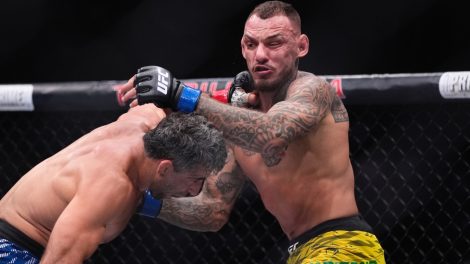
They visited a super-excited Sweden for the first time in April. Cung Le provided one of the best highlights of the year by knocking out Rich Franklin in the first UFC show on Chinese soil less than two months ago. Calgary was treated to a less-than-spectacular show in July during the promotion’s debut in Alberta, but at least they know they’ll get a redo this upcoming year.
Lastly, much to the chagrin of the Japanese mafia (P.S. what’s more intimidating, an upset Dana White or the Yakuza?) the UFC returned to the Land of the Rising Sun for the first time since UFC 29 in Dec. 2000.
The UFC isn’t the only promotion looking to venture to all corners of the globe.
Bellator brought in an influx of Russian talent with Andrey Koreshkov, Alexander Volkov and Shahbulat Shamhalaev making their mark in 2012. The success of those fighters helped them land a television deal with Russia 2, the ESPN of Russia (if you will), and led to Bellator CEO Bjorn Rebney proclaiming the company could host an event in the country as early as this year.
Finally, with the Super Fight League making in-grounds in India and the Singapore-based ONE Fighting Championship holding events across Asia, mixed martial arts promises to become even more international in 2013.
2. Strikeforce invasion
Is Gilbert Melendez the best 155-pounder in the world? Can Luke Rockhold assert himself as a possible challenger to Anderson Silva’s middleweight crown? Is Daniel Cormier really THAT good?
Thanks to Strikeforce shutting down operations in a little more than a week, we will soon find out.
Speculation over cross-promotion battles between fighters on the UFC and Strikeforce rosters began as soon as Zuffa purchased the latter in March 2011. We came close to actually seeing one when former UFC heavyweight champion Frank Mir was going to meet Strikeforce’s heavyweight Grand Prix winner Cormier in November, but yeah, that whole injury thing.
Now there’s nothing standing in the way of Strikeforce’s best talent getting to showcase their skills inside in the Octagon. The last time the UFC saw an influx of talent even remotely near this level was in 2011 when it brought in the lighter weight classes that formerly made up World Extreme Cagefighting.
How did those WEC fighters do? Well, in the only weight class the WEC and UFC shared (lightweight), one WEC fighter is now the title holder (Benson Henderson) and another two will face off in a likely No. 1 contender’s bout when Anthony Pettis and Donald Cerrone fight at UFC on FOX 6 later this month.
Will the Strikeforce fighters, who have already seen heavyweights Alistair Overeem and Fabricio Werdum prosper in their UFC arrivals, be as successful? We should know shortly.
3. Fighter health
An increased level of injuries, especially to those scheduled in main events, made it difficult to put together the best fights possible in 2012 and reminded fans everywhere that the old “card subject to change” line printed on the bottom of every fight card cannot be ignored.
UFC champions Georges St-Pierre, Dominick Cruz and Jose Aldo combined for just two fights all year, and a Dan Henderson knee injury sparked a string of events that led to the first cancellation of a UFC card.
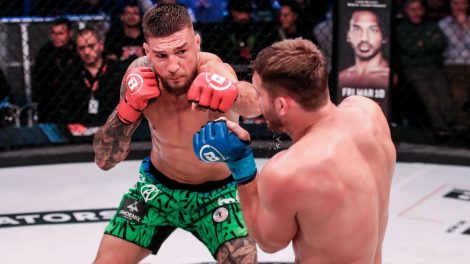
In Bellator, injuries to champions Pat Curran, Eduardo Dantas and light-heavyweight No. 1 contender Attila Vegh cost the promotion three title fights in Season 7 alone. And the promotion even lost one of the two competitors of its first ever fan-voted tournament matchup when War Machine was hurt, nixing a welterweight fight against Paul Daley that was to be scheduled for early this year.
Strikeforce was arguably killed by the injury bug. Ailments to Frank Mir, Gilbert Melendez and Luke Rockhold forced the promotion to cancel two events in the latter stages of 2012 and virtually gutted what would have been a star-studded lineup for its final fight card on Jan. 12, 2013.
The rash of injuries has been attributed to everything from the relatively newly issued Zuffa fighter insurance to fallacies in the way athletes are training for their bouts. Or possibly even, if you were to ask Tim Kennedy, some of the Strikeforce members just making certain their UFC roster spots wouldn’t be in jeopardy with a loss before the organization folds.
No matter the cause, MMA promoters and matchmakers will certainly get a lot more sleep this year if they don’t have to worry about losing another star to injury every time their phone rings.
4. Women’s MMA
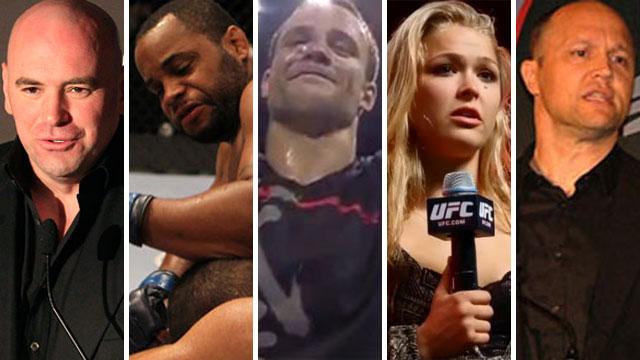
The disbanding of Strikeforce also opened the door for something never before seen in the UFC; women’s MMA, or in the words of Uncle Dana, “the Ronda Rousey show.”
While there’s no question Rousey is the driving force behind the ladies finally getting their shot on the sport’s grandest stage, the onus will be on all the female fighters (however many that may be) to prove they can deliver exciting, skillful scraps on a consistent basis. That is, if they want this experiment to work.
Not only will the girls be getting all kinds of attention for their efforts in the UFC, the all-female Invicta Fighting Championships will also be moving their upstart promotion to online pay-per-view beginning with Invicta FC 4 on Saturday.
Having put on three shows that were generally well-received by the MMA community in 2012, the role Invicta will play in 2013 should be worth watching. Will people cough up money to watch the cards on their computers? Will the organization turn into a talent-feeder for the UFC? If women in the UFC are a huge draw, can Invicta compete with them?
There are so many question marks surrounding WMMA it’s mindboggling but there’s little doubt the future of the ladies fighting landscape will come into clearer light throughout the next 12 months.
5. Bellator on Spike
There’s nothing better for the quality of a product than some healthy competition which is exactly what Bellator will be trying to provide the UFC when it moves to Spike TV this month.
With roughly 100 million homes in America carrying Spike, the same network that aired live UFC content for six years ending in 2011, Bellator will have its biggest platform to display its tournament-based promotion.
While a lot of casual fans may not have heard of Bellator before, they know Spike was once the home of UFC. If this brand new organization is being shown on the same channel that once carried UFC it has to be pretty good, right?
Much like the females in the UFC, it will all come down to the performance of the fighters. The UFC didn’t gain its popularity simply because it was on Spike — they needed an entertaining first season of The Ultimate Fighter capped by a memorable finale between Forrest Griffin and Stephan Bonnar. Bellator may have to count on some signature performances from the likes of champions Michael Chandler or Pat Curran.
Whether Bellator has that singular memorable moment at some point remains to be seen, but with three title fights scheduled for its first two events they’re coming out of the gate swinging.
It’s not exactly a fair expectation to think Bellator could really steal any of the UFC’s business in their first year on a recognizable MMA channel — but they can certainly get the ball rolling.