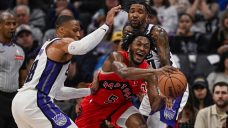
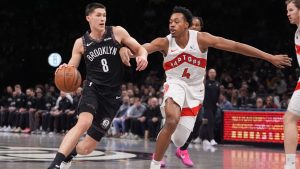
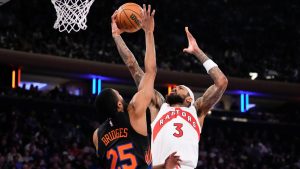
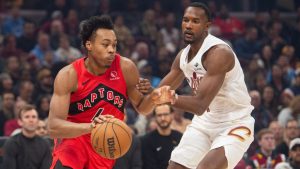
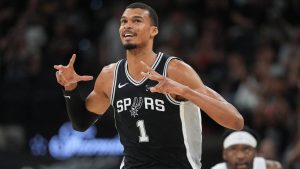
At first blush, Jamal Shead’s box score numbers don’t jump off the page.
The 7.3 points, 5.6 assists and one steal he’s averaging per game seem pedestrian, and not much of an improvement on the 7.1-point, 4.2-assist, 0.8-steal line he logged during his rookie season. The efficiency numbers paint a worse picture: 36.7 per cent shooting from the floor, 33.5 per cent from three and a 46.2 per cent effective field goal percentage — which accounts for the value of both two- and three-point shots — that ranks in the 10th percentile according to Cleaning the Glass.
Yet he’s garnered a reputation as one of the best backup point guards in the NBA. Shead is almost always on the court to close games and has jumped into the Toronto Raptors' starting lineup amid injury trouble. Brian Scalabrine said he’s better for the NBA now than Trae Young.
That might be pushing it, but otherwise, Shead is deserving. The sophomore’s development has taken a significant leap this season. He’s making better decisions faster, succeeding on the margins and driving winning for the Raptors.
It's rare for rookies to win their minutes. Shead didn’t. And probably the single greatest indicator of his transformation is the swing in his on-off differential. Last season, the Raptors were minus-5.4 points per 100 possessions when Shead played, among the worst on the team. That number’s soared to plus-7.9 now, second-best on the team and sixth in the NBA among point guards, sandwiched between Tyrese Maxey and Shai Gilgeous-Alexander.
But the way he achieves it is polar opposite of those two superstars. While they score highlight-reel buckets, Shead wins in areas that are less noticeable.
One of the biggest is his ability to get to the middle of the floor and make the right pass.
Shead’s always been fast. He’s been using his outlier speed to bolt past defenders to more threatening areas of the floor since his rookie season. What’s different now is that his processing has caught up.
Last season, when Shead blew by his defender, he often stopped well short of the rim and settled for a short-mid range push shot or floater. The results were middling
— he shot below league average on them at 42 per cent.
This season, he’s traded those looks for optimally timed and placed passes. Shead had 67 assists in 2024-25 from the short-mid range area of the floor (within 14 feet of the basket, the same distance as the free throw line). He has 62 so far at just over the halfway point of the current campaign. Meanwhile, the percentage of his shots that come from that area of the floor has dropped from 30 per cent to 23 per cent season over season.
Getting into the teeth of the defence and making a good pass has immense value. It draws teammates’ defenders, opening them up for shots, allowing them to attack closeouts with drives, and can even set up wide-open cuts and lanes to the rim. Collapsing a defence and finding the right man creates advantages.
A few years ago, when highlighting Scottie Barnes’ remarkable playmaking prowess, Raptors Republic’s Samson Folk pioneered the term “advantage assists.” The idea is that not all assists are equal. Some are easy passes, where the player on the receiving end does all the work to beat their defender and score. Others put teammates in advantageous positions, serving up layups or wide-open shots on a silver platter.
It makes perfect sense. It’s also still imperfect, not accounting for wide-open shots that were set up and missed, but how many of a player’s assists can be classified as “advantage assists” is a good barometer of their true playmaking ability.
Here are examples of passes that did nothing to create an open shot, but are credited as assists:
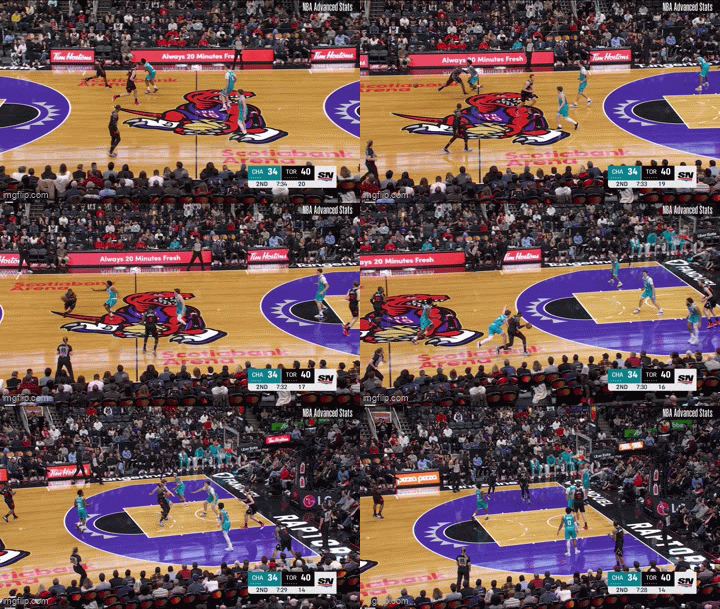
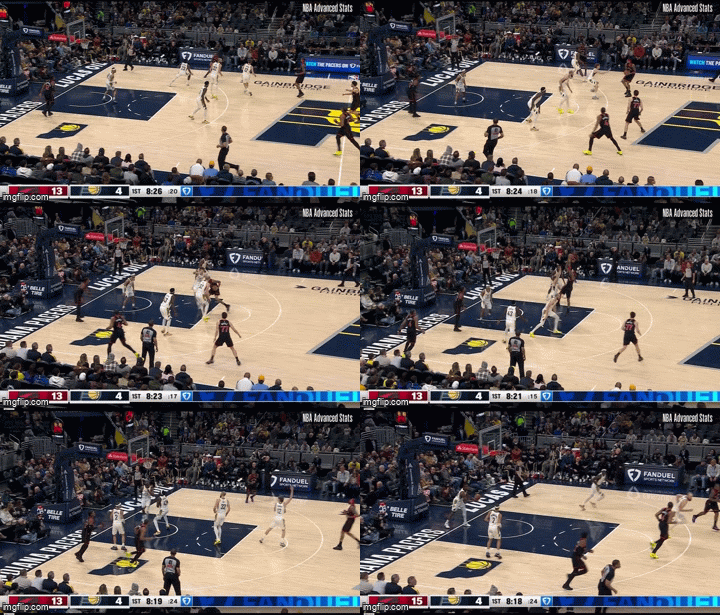
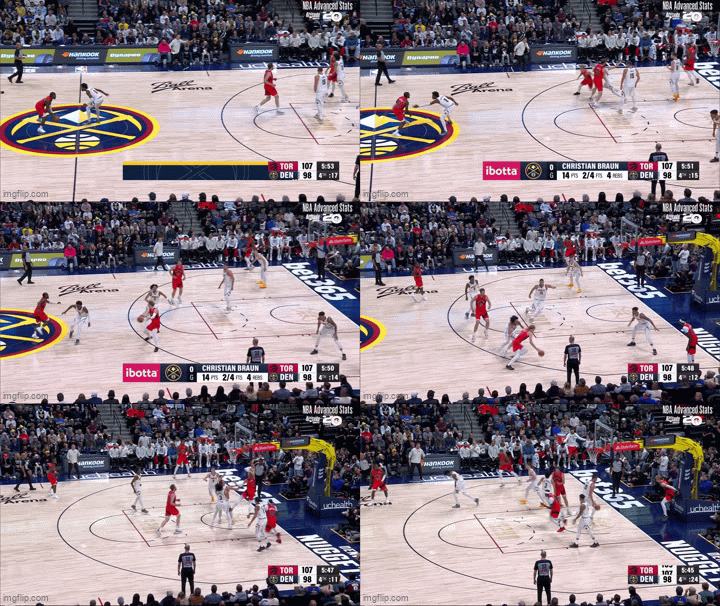
Now, here are passes that came after manipulating the defence, opening up advantageous shots:


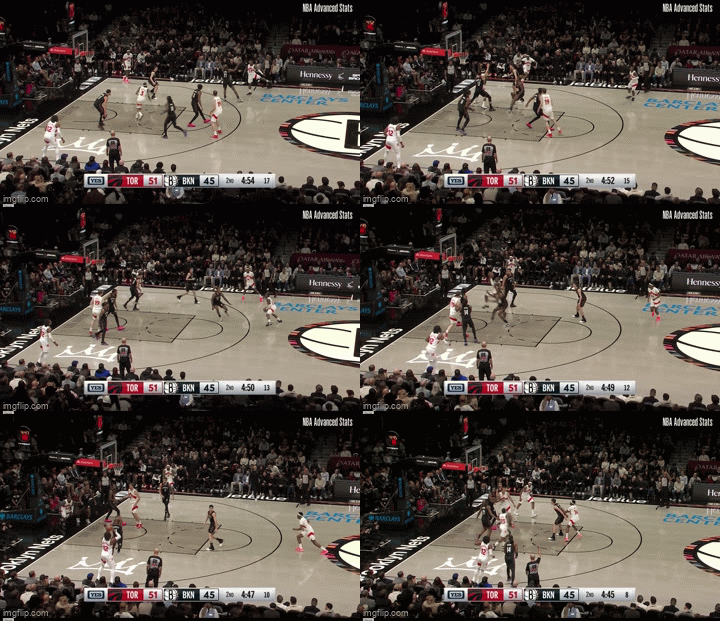
It’s plain to see that advantage assists are more valuable. The concept should be far more prevalent in how we view and evaluate basketball playmaking.
During his rookie season, 41 per cent of Shead’s 316 assists could be reasonably classified as advantage assists. This season, that number is up to 51 per cent. It’s a marked jump in playmaking for the 23-year-old. Shead currently leads the NBA in assists off the bench, ranks seventh in assists per 36 minutes and has frequently been cited as a leader in rim assists. The process backs those results up.
Additionally, of his 62 assists from the meaty middle, 60 have set up his teammates with an advantage. A whopping 97 per cent. That’s why it’s been so important that Shead’s turned those inefficient push-shots and floaters into playmaking opportunities. He’s shooting 37.7 per cent from the short-mid range over his career and 30 per cent this season (11th percentile, per Cleaning the Glass). His passes from there generate open threes, drives against a tilted defence, back cuts and layups. All far superior shot types.
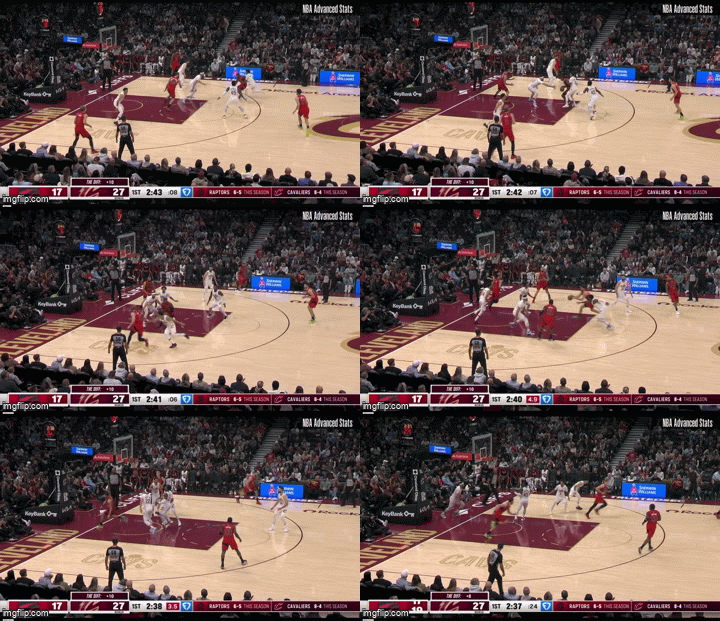
Shead has also taken his drives further downhill and at times caused larger rotations from defences than he did last season.
Here’s an example of what Shead’s drives commonly looked like last season:

Compared to this season:
This burgeoning playmaking is one reason why Shead has paired so well with Immanuel Quickley. The duo cover for each other's limitations: Quickley for Shead’s lack of gravity and shooting, Shead for Quickley’s lack of driving prowess, facilitating and defensive punch at the point of attack.
Toronto’s two point guards often share the backcourt to close games. Both have immaculate assist-to-turnover ratios, helping the Raptors take care of the ball down the stretch. It’s one of the reasons why Toronto has a 15-7 record in clutch games this season, good for fourth in the NBA.
Shead’s even started four of the Raptors’ last seven games alongside Quickley, allowing the Raptors leading guard to shift into a more suitable off-ball role. It’s no coincidence that Quickley’s record-setting game against the Warriors came while he was splitting handling duties, as seven of his eight triples were off the catch. Meanwhile, Shead can also take the assignment of guarding the opponent’s lead ball-handlers.
While Shead’s always had a reputation as a stellar defender, it’s now caught up in actuality, with his steal rate up, foul rate down, and him staying in front of his check more often thanks to precise footwork. His processing speed has caught up on this end, too. Shead’s doggedness also stands out here; he’s never hesitant to put the pedal to the floor or put his body on the line, be it picking up full court or fighting hard over screens.

The Raptors Show
Sportsnet's Blake Murphy and two-time NBA champion Matt Bonner cover all things Raptors and the NBA. Airing every weekday live on Sportsnet 590 The FAN from 11 a.m.-noon ET.
Latest episode
It’s no wonder that the six-foot guard has become a fan favourite. His status as an undersized guard that was undervalued in his draft and has outperformed expectations likens him to two championship-winning Raptors: Kyle Lowry and Fred VanVleet. He even has a penchant for drawing offensive fouls, but in this case, it’s moving screens, not charges. Shead ranks second with 40 non-charge offensive fouls drawn this season.
Whether it’s taking hard contact to win a possession or always looking for his teammates to score first, Shead is the picture of unselfish basketball. His pass rate on drives is fourth in the NBA. His assist-to-use ratio is 98th percentile. He shares the rock.
To be fair, he must. Shead is inefficient from every area of the floor aside from above-the-break threes, where he’s shot a passable 36 per cent. He’s a non-threat at the rim, shooting 55 per cent (19th percentile per Cleaning the Glass). The pesky push shot has been sneaking back into his shot diet lately as teams load up less on his drives and take away the pass more. His assist-to-push-shot ratio from the short-mid range was even more pronounced earlier in the season.
The league has started to adjust; now Shead will have to adjust back. Becoming a more dangerous scorer would go a long way in drawing greater reactions from defences. But that’s easier said than done. His percentage climbing on non-corner threes is a start, and if he can get teams to go over screens against him, it will mean he’s able to access the fruits of the middle more often.
Shead’s come a long way. But if he wants to come anywhere close to following in the footsteps of his spiritual predecessors, he’ll need another big, unexpected development.