If you’re lucky, the end comes so quick, it’s nearly romantic.
In an instant, you realize your window is about to close. In the next, it slams shut with a bang. A faulty parachute. An angry beat. Arsenic in the tea.
Way more often, though, the death of something once vibrant and promising isn’t spectacular or sudden whatsoever.
The end is realized only in wake of a series of tiny pains and mistakes. Papercuts mounting to a flesh wound. An infection that festers and spreads with time until you have none left.
There were all sorts of small signs the 2025-26 Toronto Maple Leafs under Brad Treliving weren’t a well-oiled machine churning in concert toward their common aim of winning a Stanley Cup.
A general manager that stopped going on road trips and being available to speak to reporters. A coach announcing there will be no scratches of potentially traded players hours before three potentially traded players get scratched.
The gaslight framing of prolonged losing skids and ghastly defensive metrics as necessary “adversity.” Merely a byproduct of tough scheduling and nagging injuries.
In isolation, none of these red flags were cause for panic. But always something felt… off. Unsettled and disconnected.
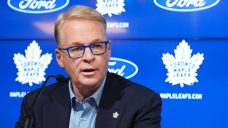
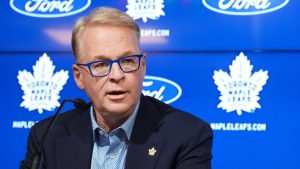
“I thought we had the right leadership in place,” Maple Leaf Sports & Entertainment president/CEO Keith Pelley said Tuesday at his press conference to announce a new leadership search.
“Without getting into the detail, I honestly believe that we didn’t have the alignment, we didn’t have the culture, we didn’t have the structure that we needed to be successful.
“Some of the things that happened this year shouldn’t happen in the Leafs culture, and it won’t going forward.”
Rare would a week pass without cause for suspicion, a reason to doubt that lofty expectations would not be met. Something you couldn’t all the way trust.
This nail-in-the-coffin campaign began with chasing crumbs for Mitch Marner, then throwing millions at the mere idea of an aging Brad Marchand.
Mattias Maccelli, Dakota Joshua, Nicolas Roy, and Michael Pezzetta. Doubling down on Max Domi and Steven Lorentz. Maybe together would all check those mystery boxes of grit, grind, and greatness.
Or maybe all those small red flags would get stitched together and dyed into a big white one.
Treliving’s moves mirrored the players’ on-ice performance, too often reactive instead of proactive. Half-measures disguised as solutions.
Why demand a top-10-protected pick when top-five is offered? Why make a coaching change when it’s cheaper and less disruptive to fire an assistant coach? Why tank with purpose when you can half-tank?
Cayden Primeau? Sure, he’s free.
And we’ll just take whatever we can get for (now 26-goal man) Bobby McMann because we thought we’d come flying out of the Olympic break and delayed an obvious trade to the last minute.
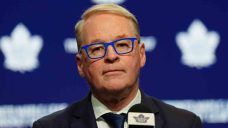
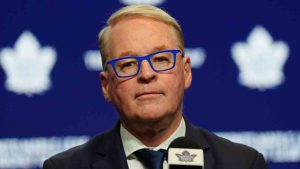
“I think I bear all the responsibility,” Pelley said, turning the page. “The definition of success for my role is about wins and losses.”
Structurally, Pelley remains open to his next hockey operations setup, which he hopes to have in place by May’s combine or, at latest, well in advance of June’s draft.
Pelley wants a “data-centric” mind involved high in the decision-making, which, he vows, will be supported by the company’s deep financial resources.
He’s aiming to gather more draft picks and prospects yet also jump right back into divisional contention.
“We have the foundational pieces in place, which gives you the confidence that we can contend very quickly. And if we put the right person in place with the right structure and hockey ops, then I’m convinced even we can do it,” Pelley said.
“I’m comfortable doing anything that gives the Toronto Maple Leafs the best chance to win the Stanley Cup. Period. End of story.”
Certainly, the Leafs’ predicament isn’t all Pelley’s fault. He inherited someone else’s vision in a time of a major ownership flip. The players, coaches, and managers are all eating a juicy slice of the blame pie.
But, today, the Maple Leafs are Pelley’s problem to solve.
Toronto’s window closed gradually, creaking over years. Does Pelley try to pry it open for one or two more years? Or will he be amenable to crafting a new window entirely?
Pelley must hire Brendan Shanahan’s long-delayed successor, then remain mostly hands off, as he said Tuesday he will when it comes to major player files. Like that of Matthews (UFA 2028), with whom Pelley exchanged texts Tuesday morning.
The next Leafs hockey ops chief must come with vision, be prepared for pain and patience, and set realistic expectations and timelines.
A smart fan base will understand.
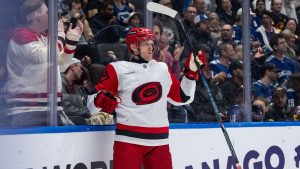
Jim Nill, a heckuva option, has already been ruled out. So, scuttlebutt names like Doug Armstrong, Mark Hunter, Chris Pronger, Mike Gillis, and Kevyn Adams may gain traction. Pelley spoke highly of Eric Tulsky, an out-of-the-box but insulated hire by Carolina.
The successful candidate’s next step will be to flesh out a brain trust built on keen, collaborative minds. Create a culture up top, then find the best coach who grasps the vision, then remold the roster.
Welcome turnover and ideas.
Manage the assets, not vice versa.
Treat picks and prospects with the preciousness they deserve. And stop treating talented players with a preciousness they haven’t earned.
Knock this next hire out of the park, and Pelley can one day lay claim to a piece of that mythical banner after all.
“At the end of the day,” Pelley said, “this is the most important decision that I will likely make it in my tenure at MLSE.”
On that, we should all be aligned.