The Calgary Flames have made six trades in 2026, moving five players out and bringing in a slew of prospects and draft picks. The rebuilding is now well underway, with a goal of returning to some level of competitiveness by the time their new arena opens in 2027.
And although the trade deadline has passed, the Flames will still be active in acquiring players.
As Eric Francis has written for the past two days, Calgary is eyeing contracts for a few players out of the NCAA when their seasons come to an end. The Flames added Cornell's Jonathan Castagna via Utah in the MacKenzie Weegar trade last week and he's indicated an openness to signing with Calgary. Cornell is the third seed in the ECAC playoffs.
Francis also wrote that Ethan Wyttenbach, Calgary's fifth-round pick last summer with a strong case for the Hobey Baker, might sign when his season at Quinnipiac ends. The Bobcats are the ECAC's top-ranked team and Wyttenbach leads the NCAA in scoring.
On Thursday, Calgary officially signed its first player out of the NCAA this season — undrafted forward Tyson Gross after St. Cloud State's season ended last week.
Gross, who completed his third season at St. Cloud, is a six-foot-three, 195-pound forward who was second on his team in scoring last season and led them with 18 goals and 41 points in 36 games as their captain this season. He'll turn 24 in September, won about 60 per cent of his faceoffs this season, and will be joining his hometown team on a two-year, entry-level contract.
What are the Flames getting in this player and how will he fit into their rebuild? We turn to scout Jason Bukala for a closer look at Tyson Gross.
SCOUT'S ANALYSIS
The Flames take a free swing at a local prospect with the signing of Gross to an entry-level contract.
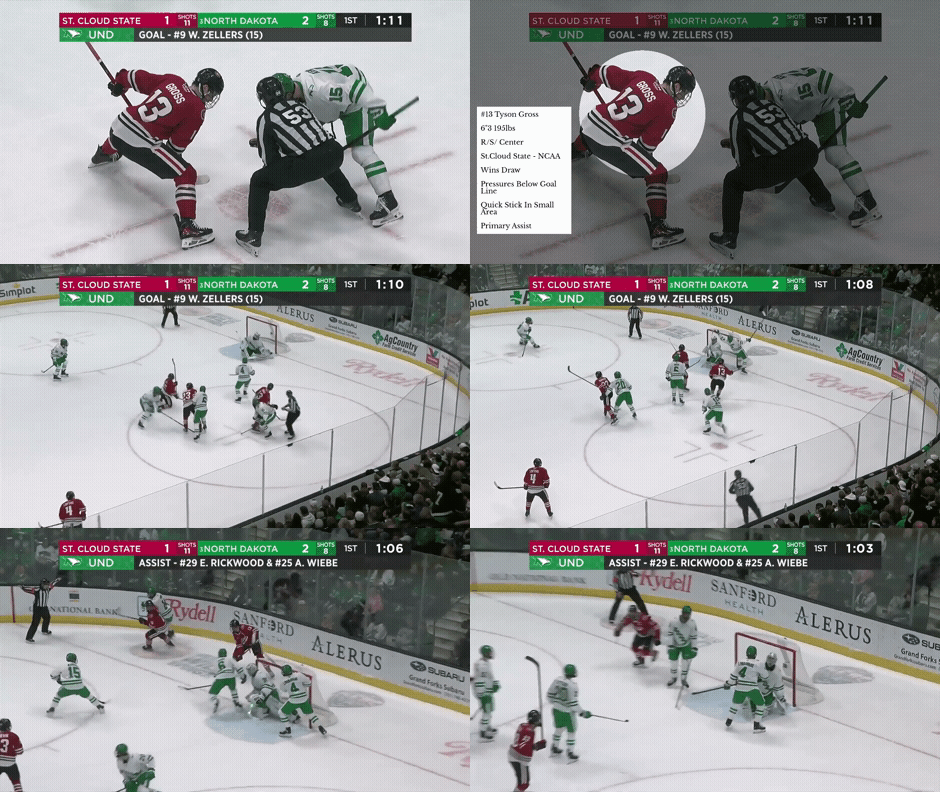
Gross is a big body, right-shot centre who is proficient in the faceoff circle. He won nearly 60 per cent of his draws at St. Cloud this season. Gross consistently averaged over 20 minutes of ice time while being deployed in all situations.
He leans shooter more than natural distributor and uses his size as an advantage when he stations himself around his opponent’s crease, especially on the power play when setting screens. I’m comfortable with his skating on straight lines, but Gross will be challenged to continue improving his small-area agility and edge work at the pro level.
Considering how many set plays pro coaches run through draws in all three zones, here are a couple examples of where Gross can have an impact in the offensive zone when he’s winning the majority of his faceoffs:

NHL Projection: Depth forward. Potential bottom-six/recall centre