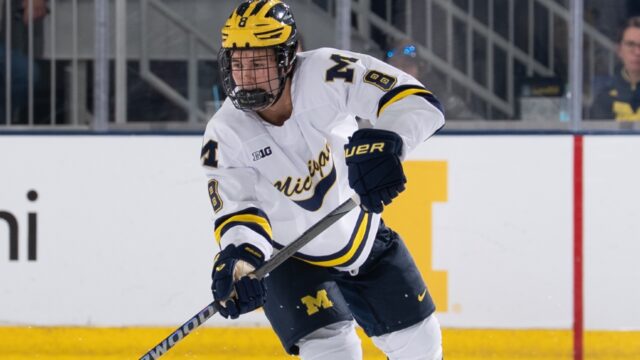
Between now and next June there is certain to be a lot of movement within the NHL Draft rankings. But judging by what I witnessed last weekend at the University of Michigan, I don’t anticipate that Landon DuPont will relinquish his hold on being the top-rated pre-season prospect.
DuPont is a 6-foot, 190-pound right-shot defenceman who made the move to the NCAA for his draft season after producing elite results in the WHL with the Everett Silvertips. Over his two years in Everett, DuPoint contributed 35G-98A in 127 regular season games and added 10G-28A in 28 playoff games over two seasons. He’s a complete player who can provide elite offensive contribution.
The NCAA can present a new set of challenges, where DuPont will face older competition and more mature bodies. Through his first two weekends (four games) with Michigan, DuPont has averaged 19 shifts per game and nearly 19 minutes of ice time. So far, the bulk of his shifts have come at even strength and on the power play, but he's also had a secondary role on the Wolverines' penalty kill. He’s quarterbacking Michigan’s top power-play unit and has contributed five assists and a plus-7 rating in four games.
Here’s a look at DuPont’s player card. The skill category marks are in comparison to the other draft eligible players in his class.
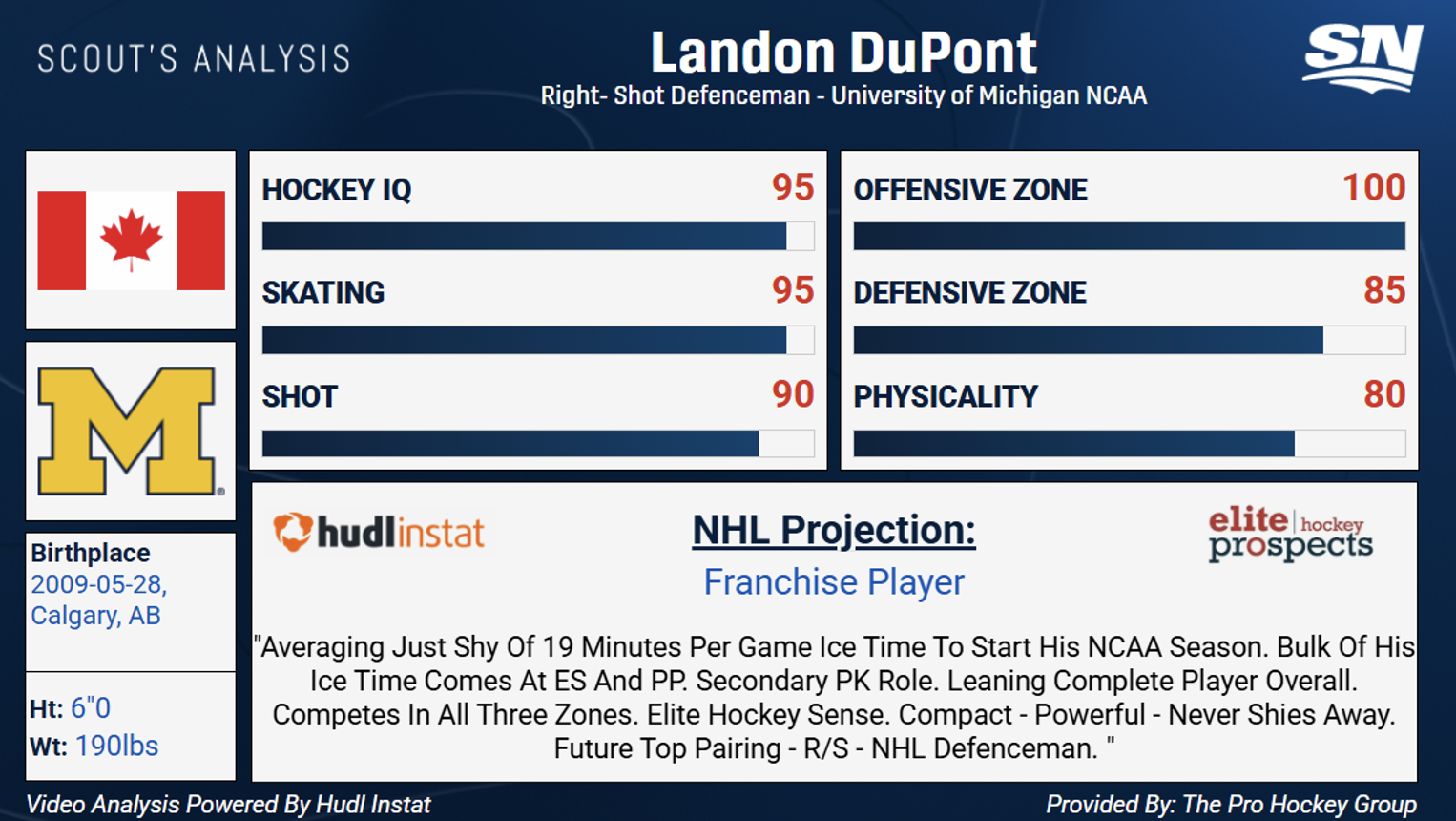
I have a fairly simple value system in place when I’m scouting prospects that I've talked and written about several times in the past. But basically, a player has to play fast, understand how to play the game on and off the puck, and display relentless competitiveness. DuPont’s ratings in these core categories are the most elite in the draft class.
Speed, Skill, Impact
Prospects who have the core values that DuPont displays usually end up impacting the game in several categories. DuPont drives play with the puck on his stick, adds an extra layer offensively when his team is in transition, battles to win possession and keeps opponents off the score sheet defensively.
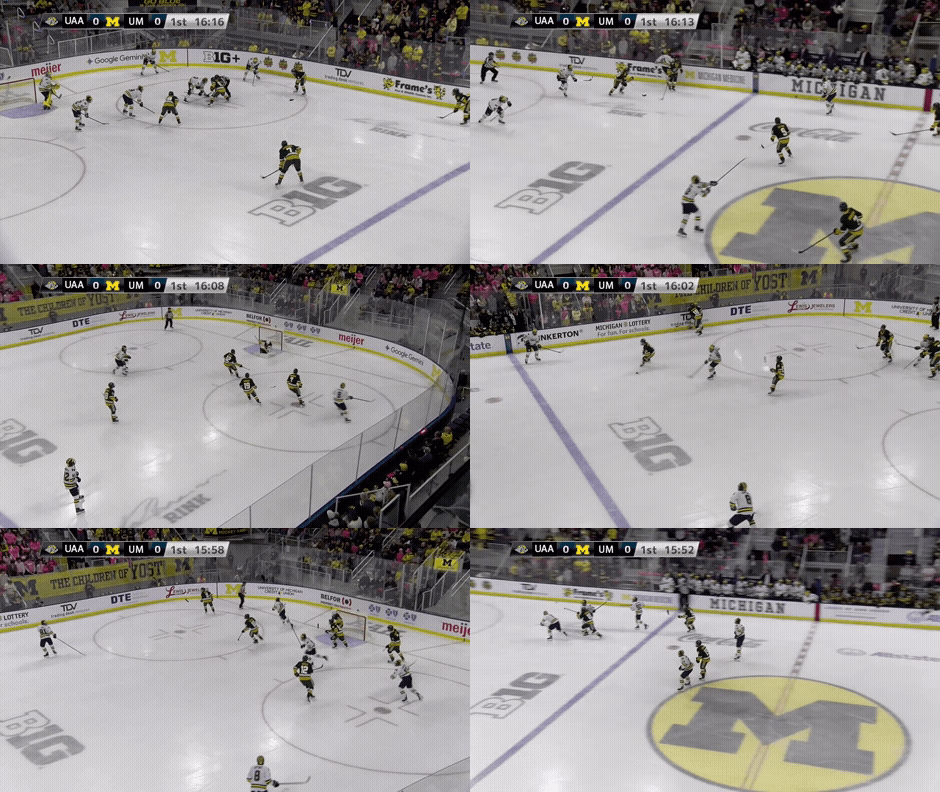
The following is an example of how DuPont (No. 8 in the white jersey) engages his check off a defensive zone face-off, then explodes up ice to receive a pass in the neutral zone. He enters the offensive zone with speed and rips a quality scoring chance on net before retreating to the blue line and making himself available for a second opportunity.
Once he has the puck on his stick at the top of the zone, he takes advantage of time and space and aggressively skates downhill to the deep slot for a second chance on the same shift. He eventually exits the zone and tracks back defensively. This sequence displays his engagement, speed, vision, three-zone detail and competitiveness.
Vision
The game of hockey has never been played quicker and faster than in its current form. As a result, only the smartest players can survive at the highest levels. The way a prospect reads how plays are developing and then reacts to make intelligent plays of his own, is extremely important.
Here are two clips from DuPont’s first two weekends at Michigan that show off his ability in these categories.
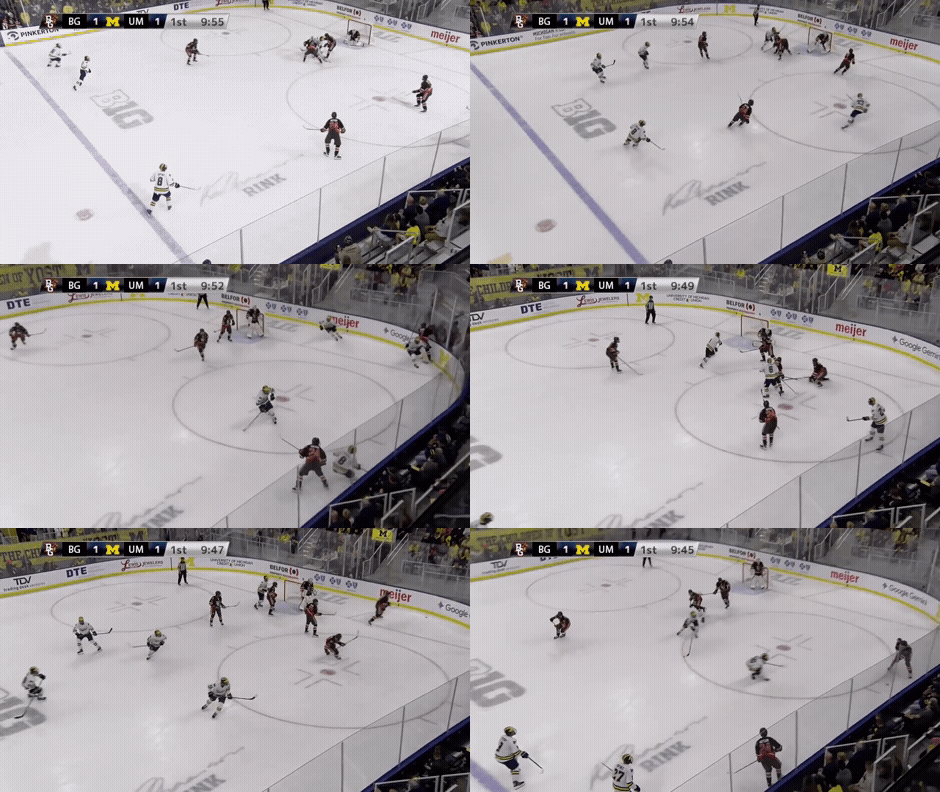
In the first clip, DuPont reads how a play is developing in the offensive zone. He anticipates Bowling Green is going to outlet the puck to the winger in front of him so he slides down the boards to step in front of his opponent, intercept the play, and direct a quick shot on net. It’s important to notice how DuPont doesn’t overextend the sequence. He was satisfied with the scoring chance and then retreated to keep the play in front of him defensively.
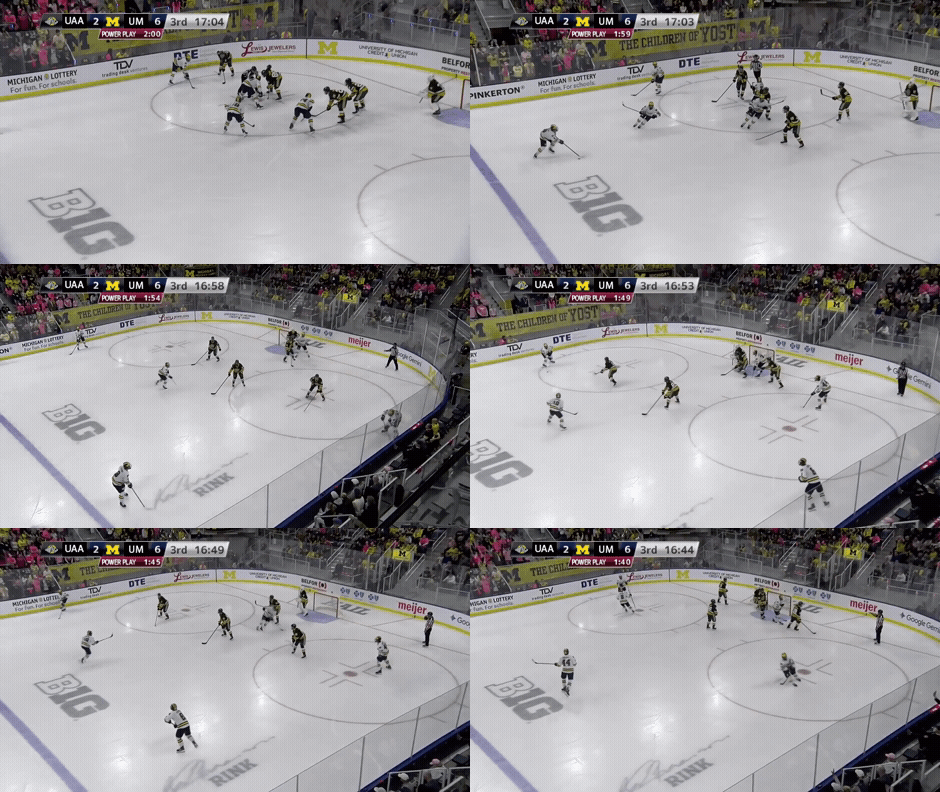
The second clip comes from last weekend against Alaska-Anchorage.
DuPont is quarterbacking the power play. Michigan wins the face-off and DuPont pushes to the middle of the ice. He then bursts towards the slot, pushing Alaska’s penalty-killers deeper towards their net in the process. This is a prime example of how an efficient power-play quarterback will set the power play with his motion and early possession distribution. At the end of the sequence, DuPont presents himself as an option and continues to roam freely before Michigan deposits the puck in the back of the net off a set play.
How to respond when mistakes happen
What makes DuPont so trustworthy is his commitment to details. No player in the NHL is perfect and mistakes happen, but what separates players is how they react when something breaks down or doesn’t go as planned.
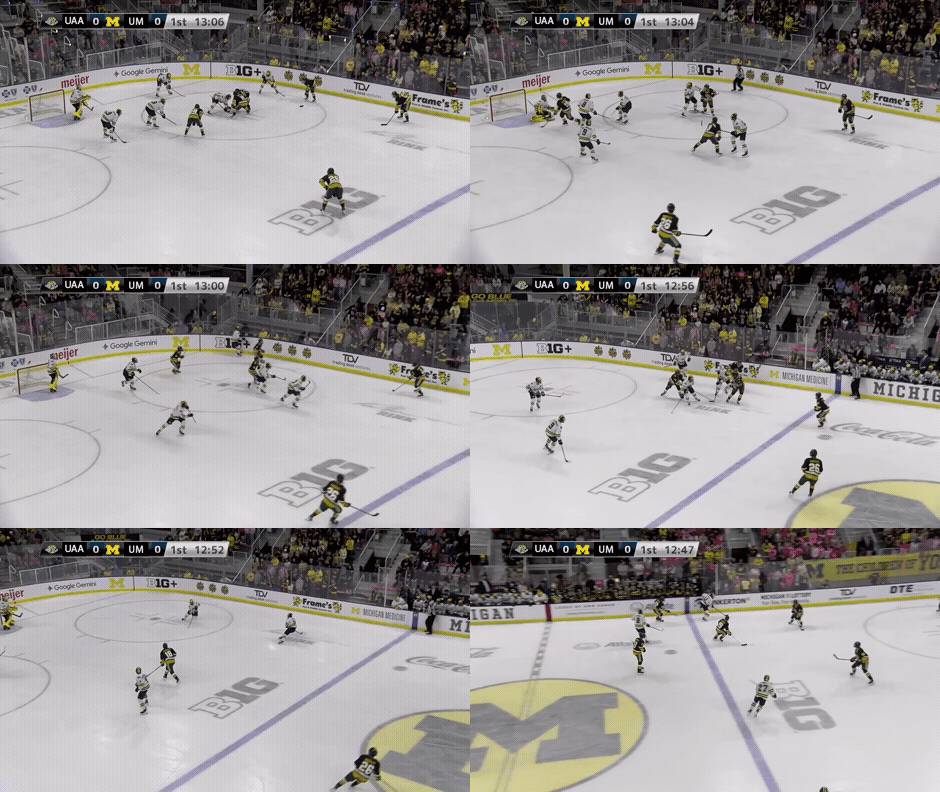
Here’s a glowing example of DuPont engaging below his goal line after a defensive zone face-off. He initially slides to the front of his net to cover his opponent. When the puck ends up below the goal line he explodes into the small area, defends with his stick on the puck, and attempts to chip the play off the glass via his backhand.
Unfortunately, he doesn’t get the puck high enough on the glass so he has to engage a second time to spill the puck to his teammate. Eventually DuPont ends up with the puck back on his stick and identifies his defence partner isn’t an outlet option. His ability to explode up ice and distribute a neutral zone outlet leads to Michigan entering Alaska's zone with speed. DuPont is responsible for most of the puck touches in this sequence. He battled to win back possession twice before launching the attack on offence.
(DuPont again is No. 8 in white, at the hashmarks for the draw)
Strength of schedule
Michigan enters the NCAA season ranked second behind the defending champion University of Denver Pioneers. The Wolverines compete in the Big Ten conference, which includes No. 3 Michigan State, No. 6 Wisconsin, No. 14 Minnesota and No. 17 Penn State. Tougher games are on the way.
Michigan travels to Denver this weekend for their first significant test of the young season. I will closely monitor how DuPont adjusts to the increased competition and report back in the coming weeks.
Videos provided by Hudl Instat. Player cards created by The Pro Hockey Group. Player statistics courtesy Elite Prospects.