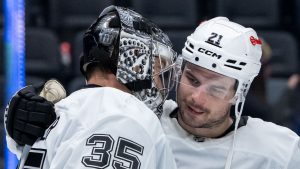
For a lot of the early part of the 2025-26 season, the Leafs played some ugly hockey. They banged it off the glass on the way out of the zone, dumped it into the opposing end, and failed to win it back on the forecheck. They spent copious amounts of time in their own zone.
Then injuries piled up, and the team sunk to last place. The coach was on the hot seat, and things were looking bleak.
But then, right around Christmas, on Dec. 23, to be exact, the Leafs beat the Pittsburgh Penguins. On Dec. 27 the Leafs scored seven against Ottawa, captain Auston Matthews tallied a goal and two assists, and they were off. They got healthier, too.
Since that game against the Penguins they’ve been 8-1-3, and have had the lead a lot, which is good. The bad news is, they’ve been pretty bad with the lead.
Why?
Well, with the lead, the Leafs tend to play like they did at the start of the season. They stop making plays, and they prefer to bang it off the wall and glass. They play with fear, rather than continuing to hang on to pucks and make something happen.
Counting only the games played during their 8-1-3 run to relevance, Toronto sits dead last in shot attempts against in the third period.
That’s 12 games, with points in 11 of them, yet they are dead last in shot attempts against (over 24 attempts against per third period) while “parking the bus” so often in the third period. They get up, then they hang on for dear life.
One thing I’ve noticed about the Leafs' improvement in play over the past few weeks has been their willingness to break the puck out on the weak side, which involves “making a play” through the middle. It means making a cross-ice pass in your own zone, which makes coaches nervous, so credit to Craig Berube if he’s become willing to take on a bit more risk. It’s tough to tell if it’s a conscious choice or not, but it’s definitely happening.

Real Kyper and Bourne
Nick Kypreos and Justin Bourne talk all things hockey with some of the biggest names in the game. Watch live every weekday on Sportsnet and Sportsnet+ — or listen live on Sportsnet 590 The FAN — from 4 p.m. to 6 p.m. ET.
Full episode
There’s open ice over there, and so when you get the puck off the wall and move it into the middle, or wider, it relieves pressure.
They’ve been trying to keep at this and Thursday night against Vegas I felt like they were doing a decent job of continuing to play into the early part of the third, even when the score was 4-3 Toronto.
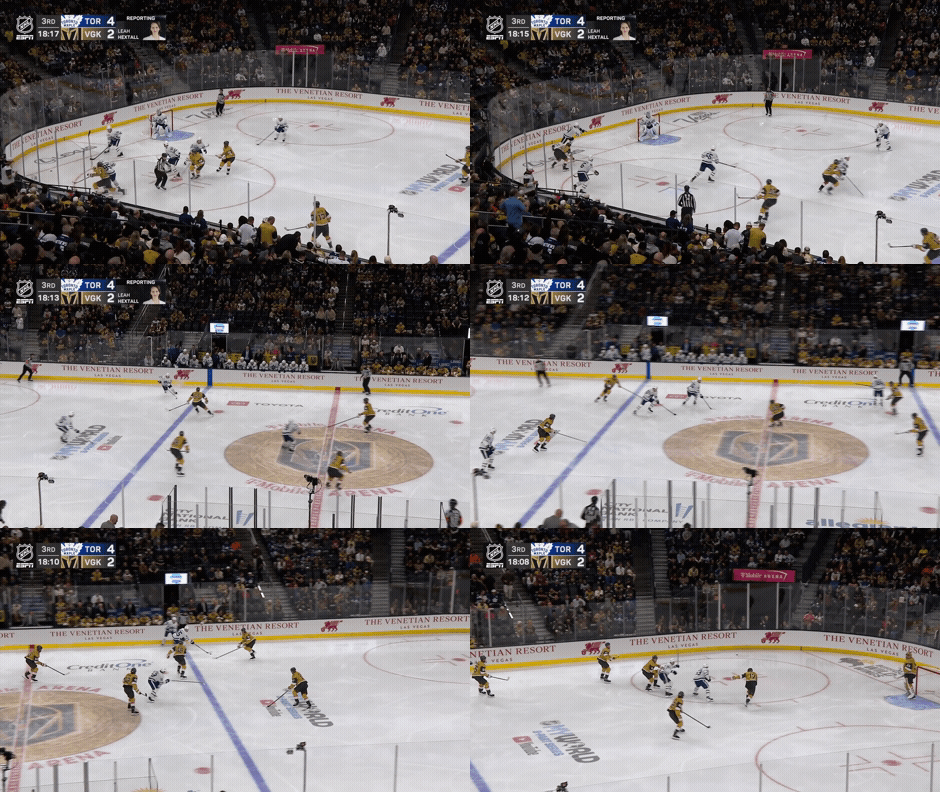
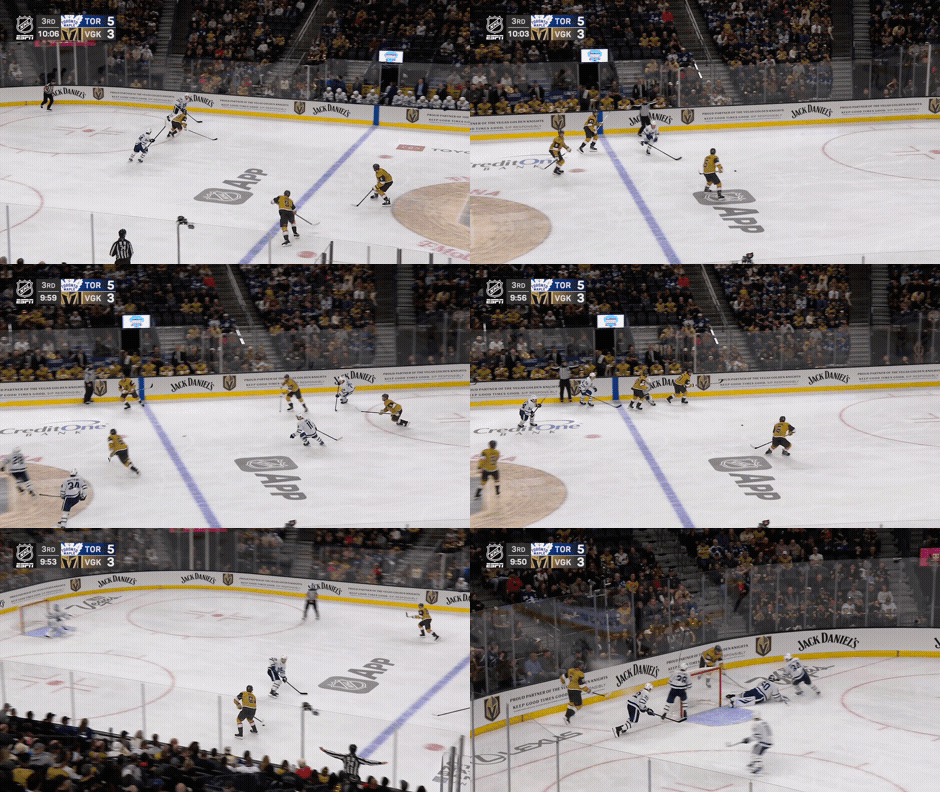
“Making plays” looks like this, shown in chronological order. They win a draw, and make a pass in front of their own net. Easton Cowan steps to the middle, and now the puck is down 200 feet the other way. (A dumb penalty follows, but that’s a separate event.)
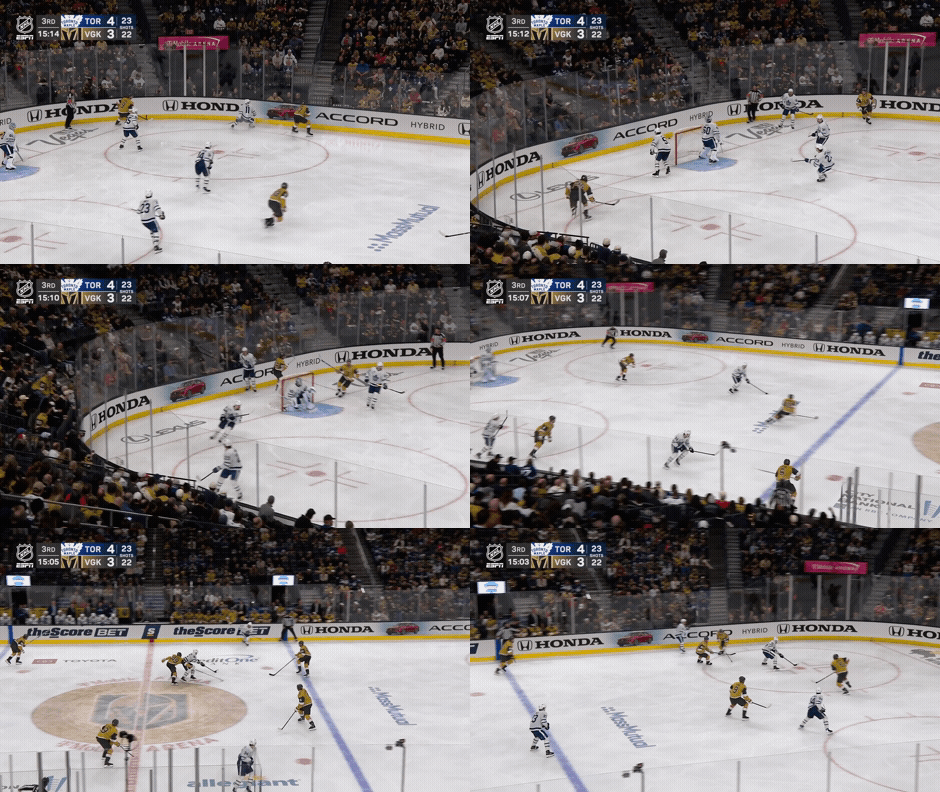
A few minutes later, Matthew Knies pulls the puck off the wall and goes cross-ice with it underneath, and they’re off.
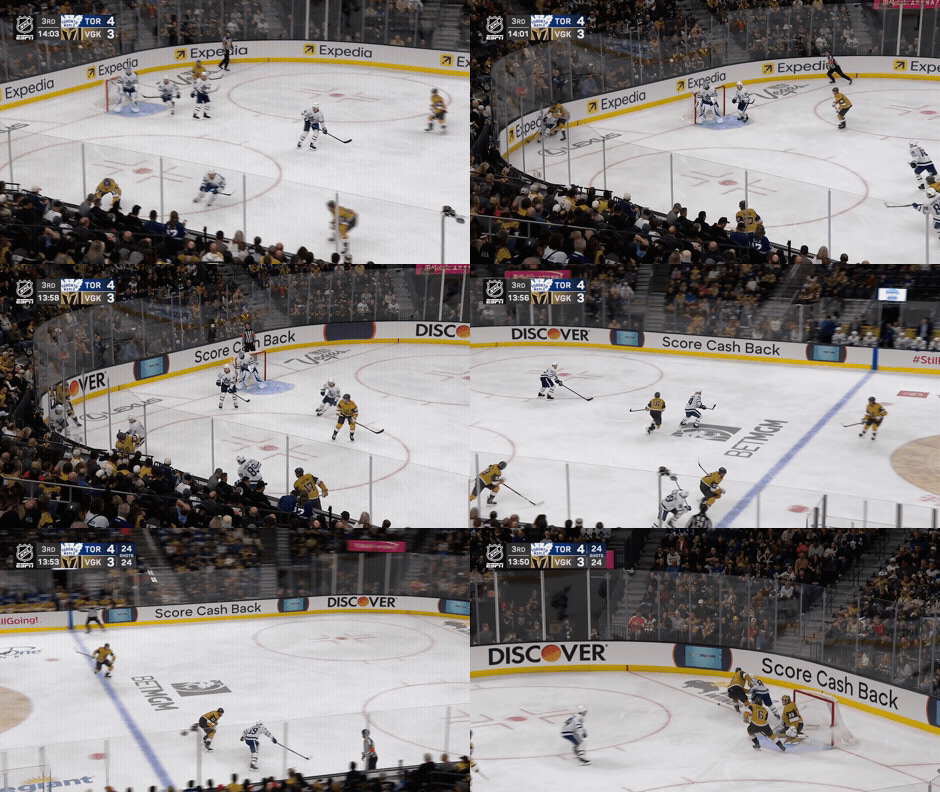
Here, winning a corner battle leads to a kick-out to the net-front, and then another pass back across that part of the ice leads to an offensive chance.
And finally, below, Philippe Myers gets the puck off the wall and puts it to the middle, Morgan Rielly kicks it farther across, and the Leafs quickly get out of the zone.
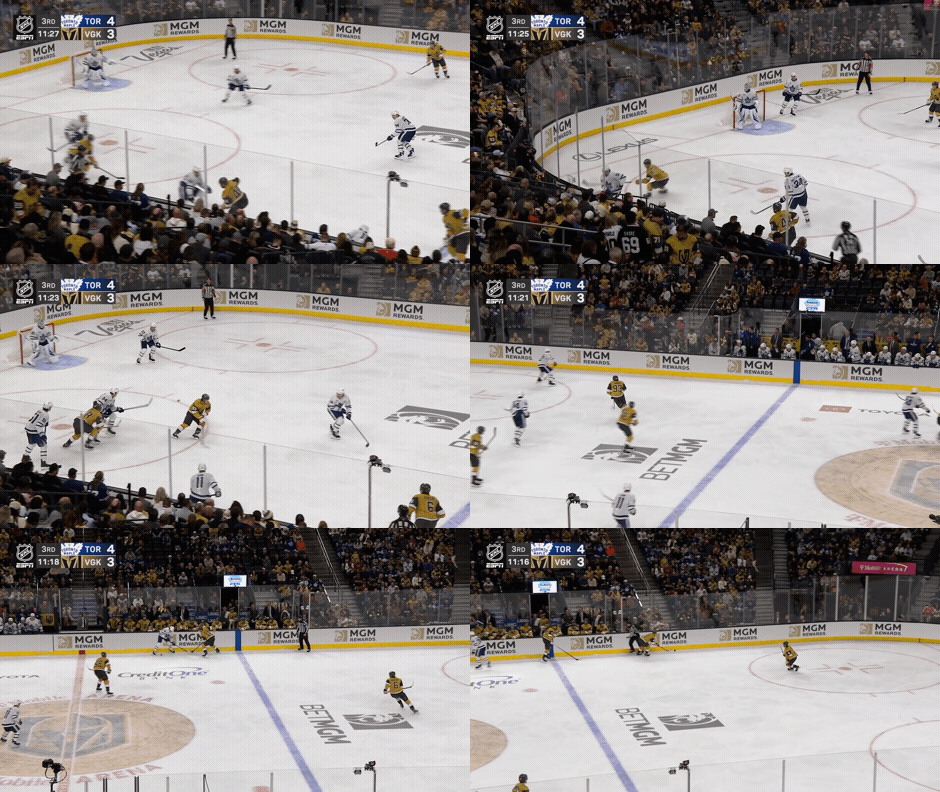
Fifteen seconds after this, Vegas failed in its attempt to go through the Leafs' neutral zone and it led to the Scott Laughton goal with 11:03 on the clock that gave Toronto a 5-3 lead. It was going well.
So at that point, the Leafs are well up, right? I think it gets in players' heads “two-goal lead on the road against a good team, time to play it safe,” which is rational thinking.
The problem is, what’s unsafe against a team with talent is to punt the puck back to them over and over again, and to just hold the door while they get to keep swinging the battering ram. That’s what “getting three-quarter iced” means, a phrase you’re hearing more coaches reference lately.
You still have to err on the side of caution positionally, but you can’t be afraid to hang on to the puck and look for a teammate.
And so once Vegas cut Toronto's lead to 5-4, tensions started to mount and the Leafs really stopped playing.
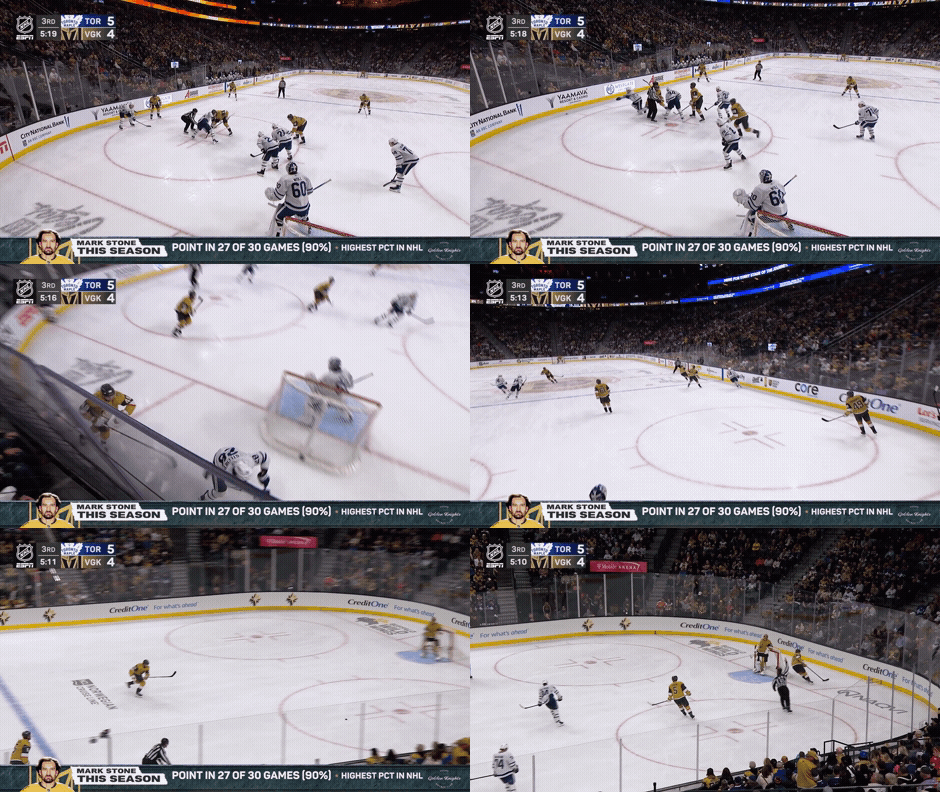
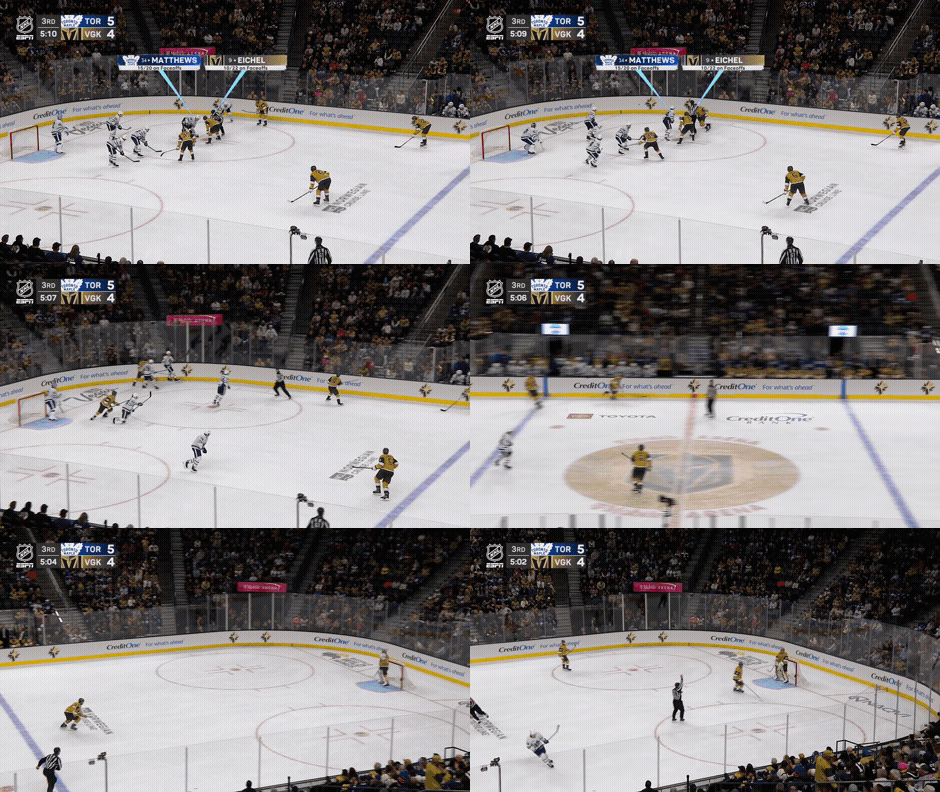
At one point, Matthews won three straight defensive zone draws for clean possession with under five minutes to go, and here’s what they did with those.
On this first example, Troy Stecher could have either skated this, or Bobby McMann could have caught the pass and made a chip of it if they wanted to be conservative. But McMann just makes a weak poke at it and lets it go down for icing.
Next draw, Jake McCabe goes back on a perfectly won draw and just rips it strong side up the wall and down for another icing. It’s not clear how a different outcome could have been expected for this play.
Now you’re asking Matthews to win a third straight defensive zone draw, which he does. This time, Laughton chops it up the wall and, in the process of turning it over, Vegas bats it out of play.
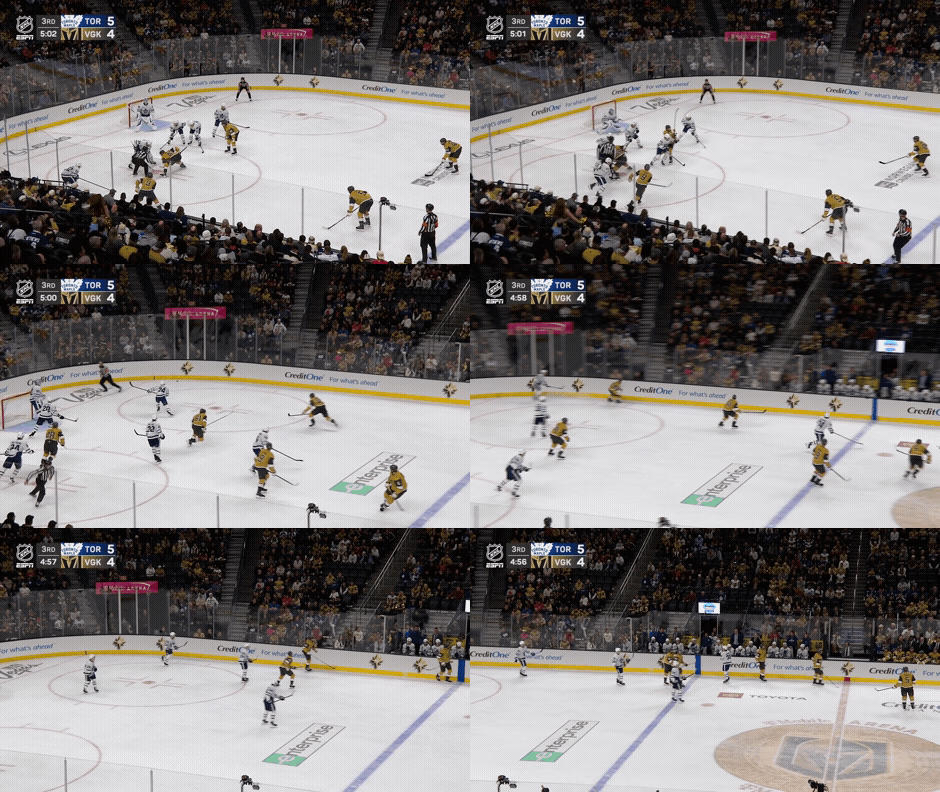
Less than a minute later, Vegas tied the game 5-5 (that goal was called back, but still).
There were countless other reasons why the Leafs failed to hold on to their lead in Vegas, including some really tough plays from Stecher and Myers.
This isn’t relevant to the greater topic here, but “keep playing” doesn’t mean being as aggressive up the rink as Stecher is here. He’s in the middle of the ice making a good step-up, but he doesn’t also need to lead a forecheck of the puck:
And stuff like having Myers on the ice with under five minutes left so he can provide this coverage at the net front. These are just other problems.
You can see in this still shot that Myers is fine in front of the net here in coverage:

But Myers (51) is not fine here one second later:

You’re up one against Vegas on the road, shorten the bench for goodness sake.
Those last couple of things are one-offs. But changing their style of play when leading in the third is not a one-off, it’s a trend, and a problematic one that needs to be addressed if the Leafs hope to continue to win at a high rate.
Healthier, and having gelled some as a team, the Leafs are showing they’re good enough to hang with good teams around the league. This version of the Leafs can compete, and might be worth adding to at the trade deadline in a soft conference.
But for them to make any hay past that, they’ll have to figure out how to play with the lead, and the answer isn’t “smash it at the glass and hope the other team fails to score.”
There’s talent there that can make plays, and so they should allow them to do so.