NORTHERN LIGHT
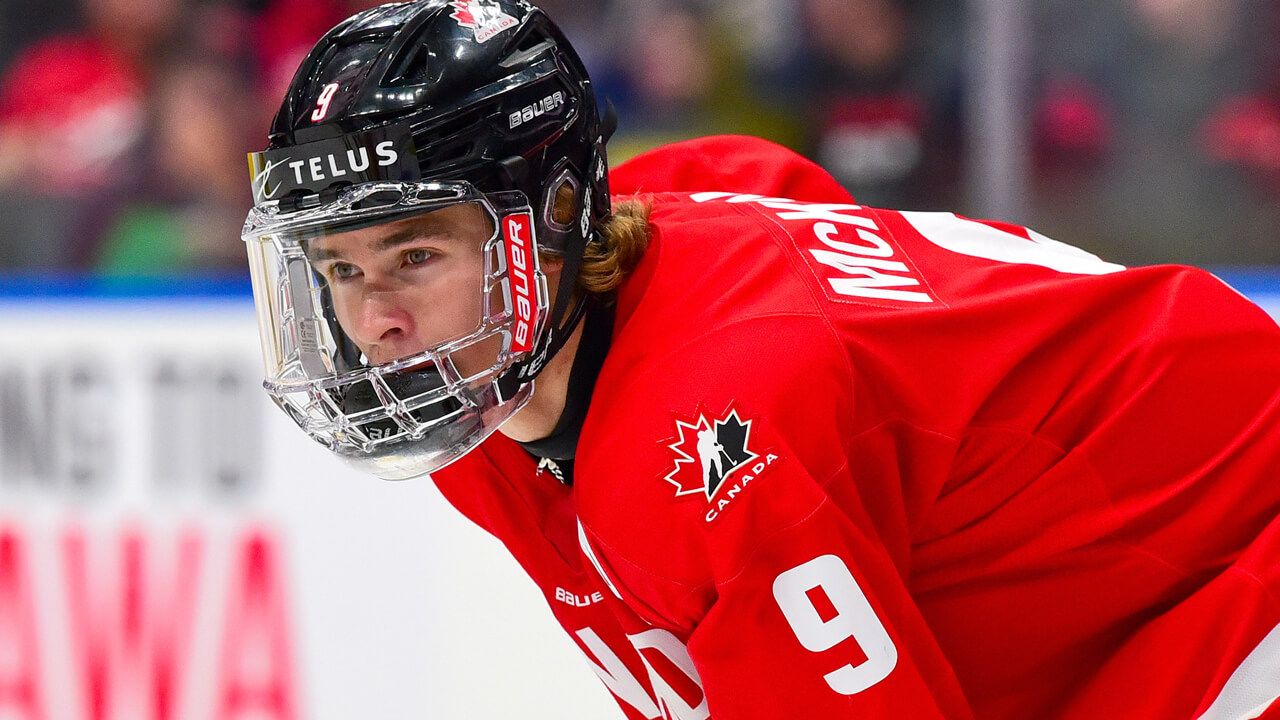
O ne afternoon a couple of months into his rookie season with the Medicine Hat Tigers, Gavin McKenna made sure he was the last player on the ice after practice, since he still had something to do. Once his teammates had all headed to the dressing room, the 15-year-old put himself through a solo bag skate, ending up doubled over and huffing and puffing once he decided he’d endured enough. Coaches sometimes order up these all-in conditioning exercises as punishment, but no coach was doing any such thing here. After all, the kid was on a point-per-game clip. It’s just that McKenna expected more of himself: “I wasn’t really satisfied,” he’d later explain.
Oasiz Wiesblatt noticed McKenna’s late return to the dressing room, and he learned the reason for it after sticking around following their next practice to see what his teammate was up to. And after McKenna skated himself to exhaustion post-practice for a third-straight day, Wiesblatt decided he had to take action. “I thought, ‘I gotta join this kid — like, this is so remarkable,’” Wiesblatt says now, adding that a handful of other Tigers soon signed themselves up for the McKenna-imposed pain, too. “It just tells you so much about Gav. He doesn’t hope for things to happen. He’s a player that makes things happen.”
In the second half of that season, McKenna exploded further offensively, putting up nearly two points per game to earn the WHL’s Rookie of the Year award. “I think all the credit goes to the hard work I put in,” he says, thinking back to those bag skates fuelled by how “hungry” he felt to produce more during his rookie year. “It’s something I’ll never forget.”
The now-17-year-old followed that season up with an even more unforgettable one: leading the Tigers to their first WHL championship in 18 years back in May, finishing third in CHL scoring, and taking home player of the year honours. McKenna capped the season off by putting up the most points per game of any skater in the Memorial Cup, where his Tigers finished a win shy of a fairytale ending, going undefeated before losing to London in the final, 4-1 — with McKenna scoring his team’s lone goal.
Still a year away from being NHL draft eligible, the shifty winger is already seen as the de facto No. 1 pick in 2026. But well before an NHL club makes a decision on him, McKenna faces a big one of his own. In the weeks ahead, he’ll pick between returning to the CHL and the place he affectionately calls “Med Hat” for another run at the Memorial Cup or becoming the highest-profile prospect to make the jump to the NCAA under the new rule permitting players to transition from the CHL once they’re of college age.
The thing is, no matter what jersey he does it in this coming season, McKenna will write a story that has never quite been written before in hockey. Players from way up north are few and far between in the NHL, and the Whitehorse-born-and-raised forward’s path to the top of the 2026 draft board highlights some of the reasons why. Willie Desjardins, the Tigers coach with nearly six years of experience behind NHL benches, says “it’s hard to believe” the athlete McKenna has managed to become given the many obstacles he’s faced. But the thing about Gavin McKenna is everywhere he goes, he makes believers.

W hen McKenna was a year old, he’d fall asleep clutching a plastic mini hockey stick, often with a puck beside his bed, and sometimes wearing little hockey gloves, too. Stuffies were never his thing. “He would even try and sleep with his helmet on his head,” his mom, Krystal, says, though her middle child never got away with that.
McKenna started walking at 10 months — earlier than most — and his parents had him on skates soon after. This made sense given everyone in the family played hockey, so McKenna had to get comfortable on blades too. By the time he was two, he could skate and come to a full stop.
He’d even take in games while sleeping, napping in a car seat as Krystal played in her women’s league or his dad, Willy, or an uncle played in their men’s league. So, when McKenna says, “I grew up into the sport,” he really means it. The shared family passion is clear as day. Krystal, an elementary school gym teacher who played hockey for the Yukon at the Western Canada Games as a teenager, puts it this way: “It’s just the most fun game in the world, right?” All other McKennas agree there.
Willy built a backyard rink for their three kids when Gavin was three, and it’s that rink McKenna points to as the biggest key to his early development. “It’s not like a practice where you’ve got to wait in line and you don’t get as many puck touches,” he explains. “When you’re out there, it’s just you and the ice.”
He’d often emulate his favourite player, Patrick Kane, who broke into the NHL in 2007, the year McKenna was born. “I’d always watch his stuff on YouTube and then go in the backyard and try it,” McKenna says. And though his family cheered for the Vancouver Canucks, McKenna favoured the Chicago Blackhawks, not just because of Kane, but because of their penchant for winning, taking home three Stanley Cups when he was between the ages of three and eight. “Seeing the kind of dynasty they were on when I was growing up, they were obviously the top dogs and I just fell in love with the way they played,” McKenna says.
McKenna played up an age group, and often two, from the moment he joined Whitehorse’s minor hockey system and he noticed from the get-go that opponents keyed in on him. But it wasn’t until he was nine and competing in the Brick Tournament at West Edmonton Mall, featuring some of the best U10 players in North America, that it became obvious he wasn’t just elite in the Yukon.
“Part of Gavin’s problem being from a northern, isolated community is his access to competition, so you never really know where your kid stands when it comes to the big centres,” Willy explains. “He went to that tournament and he did really, really well even though he was kind of an unknown player.” McKenna finished third overall in the tournament in points, and his team came in second place.
To seek out better competition, McKenna left home a lot, always accompanied by a family member. One year, he flew to either Vancouver, Edmonton or Calgary 18 times total to attend big tournaments and play with elite teams. All those trips came at a cost, largely funded by businesses and individuals who supported McKenna and his teams. “If it wasn’t for those community members and that community support, he wouldn’t be where he is right now,” says Willy, who works for the Yukon Energy Corporation. “It seemed many in the community were rooting and cheering him on throughout his young career.”
Whitehorse has a population of fewer than 30,000 — more than double that number of people aged 20 and under play sanctioned hockey in British Columbia alone. By the time McKenna was 12 and entering his first year of bantam, it was obvious he had to leave for more than a long weekend if he was going to continue to improve and find the level of competition he was after. “It was definitely tough leaving home that early, but I knew from a young age that was kind of what I had to do,” McKenna says. “The population of Whitehorse, there’s not a whole lot of competitiveness in sports.”
McKenna and his parents decided he’d move to Kelowna, B.C., to attend the RINK Academy for the 2020-21 season, his Grade 7 year. He had played with Ryder Ritchie on some elite teams before and their families had become friends, so he’d billet with the Ritchies, making the transition easier.
Three days before he and Krystal and Willy boarded that plane, McKenna was in an on-ice collision and hurt one of his hands. He told his parents he was fine and didn’t need to go to the hospital. As he flew off to his new home in Kelowna, days away from starting Grade 7 at a new school and playing in the most competitive atmosphere of his life on a new team, there were so many adjustments ahead.
Among them was the fact that McKenna needed to look after a broken wrist.

D esjardins laughs when thinks about what it was like trying to keep his team’s high scorer off the ice this past season, on nights when the Tigers coach knew McKenna needed rest and recovery. Many of those moments came up during the historic 54-game scoring streak McKenna put together from last November through this past May, the longest in modern day CHL history.
“He doesn’t like missing much,” Desjardins says. “He was beat up pretty good and I was trying to limit his ice time and he doesn’t like his ice time being limited — he wants to play. And he’s got such a great mind, he just does, and he believes that he can find a way. And honestly, it’s strange because I believe that as well lots of times. It’s like, ‘Okay, Gav, I know you’re not real healthy but I know you’re going to find a way to do it. I don’t know how, but I know you’re gonna find a way.’ I have that confidence in him, because he’s done it. You always know he’s going to give you everything he’s got.
“And the other thing is, he deserves it,” the coach adds. “He’s done so much to get us to the big moments, and he deserves the chance when the game is on the line to be the difference-maker, because of what he’s put in.”
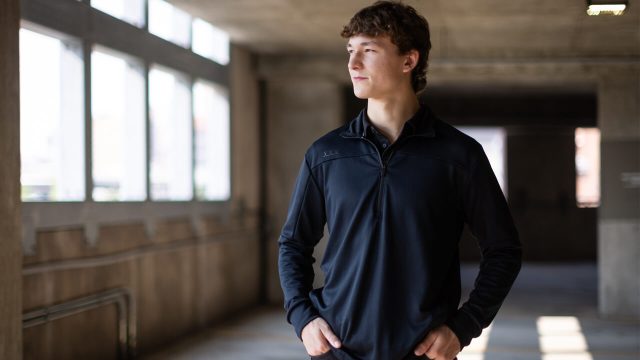
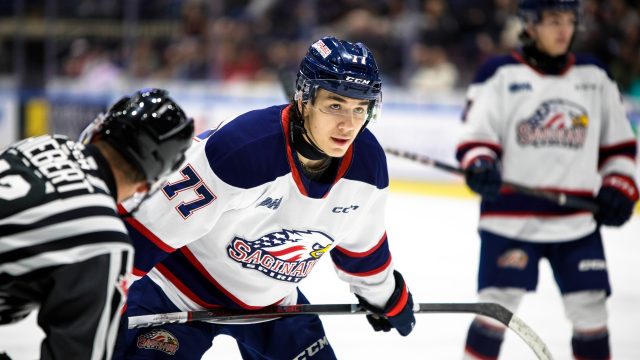
McKenna’s lengthy streak — which started on Nov. 2, 2004 and saw him pass big named-authors of impressive runs like his role model Sidney Crosby and his cousin-by-marriage Connor Bedard — came to an end in Game 2 of Medicine Hat’s WHL Final against Spokane, on May 12, 2025.
“It was an incredible run, and to be honest it stopped because he was too injured, he shouldn’t have been playing in the game,” Desjardins says. “If he wouldn’t have played, he wouldn’t have lost his streak [per CHL rules]. But he wanted to play, he was just too beat up that night.”
“It was going to come to an end at some point,” McKenna says. “And we lost that game, so it sucked.”
Games 3 and 4 were even harder for the Tigers star, who was out due to an undisclosed injury. He returned in Game 5 and scored a goal in a 4-2 win to help Medicine Hat to the Ed Chynoweth Cup for the sixth time in the team’s history. It wasn’t a game he was going to miss.
The teammate least surprised to see McKenna play through pain was probably Ritchie, who manned the other wing on the top line with McKenna and Wiesblatt for much of last season. Ritchie and McKenna are like brothers, a relationship that began five years ago when McKenna moved to Kelowna and billeted with Ritchie’s family, with that broken wrist.
It was shortly after McKenna’s first practice with the RINK Academy that Ritchie found out McKenna had gone through the whole two-hour skate — and still impressed everyone — with a broken bone. After reluctantly showing his very swollen hand to his parents after that practice, McKenna went to the hospital and returned to the Ritchie family home with a cast on.
Four weeks later, when he was cleared to return with a no-contact jersey, his first practice back, McKenna had another on-ice collision… and broke his other wrist.
“He would’ve still played if he could’ve,” Ritchie says. “But I had to take care of him — I was zipping up his lunch box and his backpack. I was pretty much his babysitter,” he adds, with a laugh. “He couldn’t do much of anything.”
Still, Ritchie says McKenna wasn’t too down and never doubted his ability to come back.
“So, here’s this kid who’s in a new city, new town, new school, new family, and he’s got casts on both of his hands,” Willy says. “To me, any other 12-year-old would’ve basically called Mom and Dad and said, ‘Come pick me up.’ But he didn’t, and that sort of says it all.”
“That’s the thing about Gavin: He never wants to stop playing,” Krystal adds. “He has a goal and he has a dream and he’s going for it despite what everybody says.
“Being in the North, there’s just so many potential setbacks. He’s had so much to get through, and past,” Krystal continues. “There have been lots of different circumstances that could’ve brought him back home or could have just changed his path. But he’s working hard to make sure that his path is going the way he wants it to go. If it doesn’t, he works around it and keeps going.”
J ust before McKenna turned eight, he decided to make a change at his birthday parties. When the big day rolled around in December, he’d still have a party with all his friends, but with one caveat: zero gifts, for him at least. Instead, he asked his buddies to bring something he could donate, like a Tim Horton’s gift card, to help out people in need.
After his birthday, McKenna would go downtown and walk around, handing out those gift cards to people he knew could use a warm meal. Since his birthday is near Christmas, some of the people he helped would tell him, “This is the only Christmas gift I’ve gotten.” Others called him an “angel.”
McKenna grew up acutely aware that there are many people in need, and acutely aware of the injustices suffered by First Nations people. His family belongs to the Trʼondëk Hwëchʼin First Nation, and his grandpa on his mom’s side, Joe Mason, attended a residential school.
“My grandpa went through a lot growing up, and hearing some of his stories, it really makes me care that much more about the Indigenous peoples, because I know he’s not the only one with those stories,” McKenna says. “It sucks hearing what some people have to go through. I’ve been lucky enough to grow up where that’s becoming less and less, and looking back, I don’t want it to become like that again. It influences me to be the best human I can be.”
At 17, McKenna is very aware of the role model he can be for kids. “I think that’s near No. 1 for him,” says Wiesblatt, who wore the ‘C’ for the Tigers this past season. “He wants to make his Indigenous community really proud and he’s such a great example where, like drugs and alcohol, he stays away from it. He teaches the young kids that, and he’s a great ambassador.”
“My parents have always told me, ‘Treat people the way you want to be treated.’ That has stuck with me,” McKenna says. “Growing up, I’ve seen struggles people have gone through. I don’t want anyone to go through that, so I want to give back as much as I can. And the community has done a lot for me. I want to give back and I want to be a good example for young kids coming up.”
This summer, he’ll be helping out at a First Nations hockey camp in Whitehorse that his older sister, Madison, is helping to organize through her work at the Council of Yukon First Nations. Meanwhile, Willy and Krystal have been looking at the possibility of starting a hockey program in the Yukon so that kids don’t have to leave when they’re 12 to continue to develop. They’re hoping attention brought to the various barriers their son had to break down will shed light on the need for these opportunities, “and maybe we can help other kids in the First Nation and all through the North along the way,” Willy says.
Certainly, they have a good promoter on staff in their son. “He hypes the Yukon up a lot,” Ritchie says, of his buddy.
“He always tells us it’s the nicest place ever,” Wiesblatt adds, pointing out McKenna has been campaigning for a team trip to his hometown.
His pitch is solid, too: “Sometimes you’ll wake up and you’ll see a bear walking around your neighbourhood, or you’ll wake up in the night and the Northern Lights will be out,” McKenna says of home, where he likes to fish and hike and rip around on a dirt bike. “I don’t think you’ll see nature as good as that anywhere else. Every time people come up, they’re always in awe over how beautiful it is — and the people are amazing up here.
“It’s just a great spot to grow up.”
A territory that just three players in NHL history have called home, too. And only one from the Yukon, Dylan Cozens, has played more than seven games in the league.
McKenna is hoping to bolster that stat.

T he McKenna family — Krystal, Willie, Madison, Gavin and Kasey — took a trip to Maui earlier this month, in part so that their son could be a kid and not think about what Willy calls “the million-dollar question,” that being whether he’ll stay in the CHL or go play in the NCAA. After the trip, McKenna spent some time at home.
“When he’s home, he can be a kid — he can turn on a cartoon if he wants to, he can eat whatever food he wants, he doesn’t always have to be on, right?” Krystal says. “He can just chill out, hang out with his sisters, do whatever he wants.”
That’s a stark contrast to this past season for McKenna, who graduated high school a year early so that he could focus on hockey. Desjardins described the attention around No. 72 as “a circus,” despite all the team’s attempts to ensure McKenna wasn’t overtaxed with the many requests thrown in his direction.
The way he plays certainly commands attention, as Dejardins points out. The Tigers coach thinks back to the first regular-season game McKenna played for the team as a 14-year-old, when the coach still had zero expectations for the No. 1 draft pick, seeing as he was so young. “Then he got four points his first game against Lethbridge in the season opener, and that was kind of well, ‘I guess, here we go.’ Unbelievable,” Desjardins says, with a laugh. “You hope he might get one point or get a couple good shifts, but never four points.”
Wiesblatt remembers seeing McKenna turn up with hair down to his shoulders, sporting a ballcap that “looked like it was floating on top of his head,” and seeming like a really nice kid right off the bat. Then he saw him play for the first time.
“He just shook me up right away how good he was,” Wiesblatt says. “It was crazy how much confidence he had at such a young age. The way he skates and the plays he makes are so top-notch — he does it all so nonchalant, in a way, and he’s just so comfortable doing it. You can just see how special he is with the things he does on the ice. There’s no one else really doing that, and it just shows how creative he is.”
“You can just tell when a player has that gift,” adds Ritchie, Minnesota’s second-round pick last year. “His hockey IQ, it’s a skillset I could tell was just way above everybody else’s.”
That IQ was on display a lot during the playoffs, though perhaps never more acutely than in Game 2 against the Prince Albert Raiders. The Tigers were on the penalty kill when McKenna came streaking down the ice with the puck, then he made a behind-the-back play in the high slot, wheeled 360 degrees to lose the defender, took the puck on his forehand and put it top shelf.
“It kind of just happened — it just happens naturally,” he says by way of explanation. McKenna likes to review all his goals and admits watching that one over again was “definitely pretty cool.”
“You certainly don’t coach that,” Desjardins says. “He’s made other plays this year where you’re just kinda going, ‘Geez, where did that come from?’ And you never get used to that. You just don’t.
“He’s comparable to guys I’ve coached in the NHL with his vision and his creativity. He’s at a different level at this age, for sure — a totally different level.”
Ritchie considers his pal’s smarts on the ice his most elite skill (he’s a big fan of McKenna’s sense of humour off the ice, too, which Ritchie says is also top-shelf). “He’s so smart. And then I think his edge work, and the way he can create space is just unbelievable,” Ritchie says. “I mean, he’s a great passer. But his scoring touch is also unbelievable, too. He’s just very, very gifted.”
“I’m sure you could put him with anyone and he’ll make them look good,” adds Wiesblatt, who points out: “It’s almost that he’s just better than everyone else.”
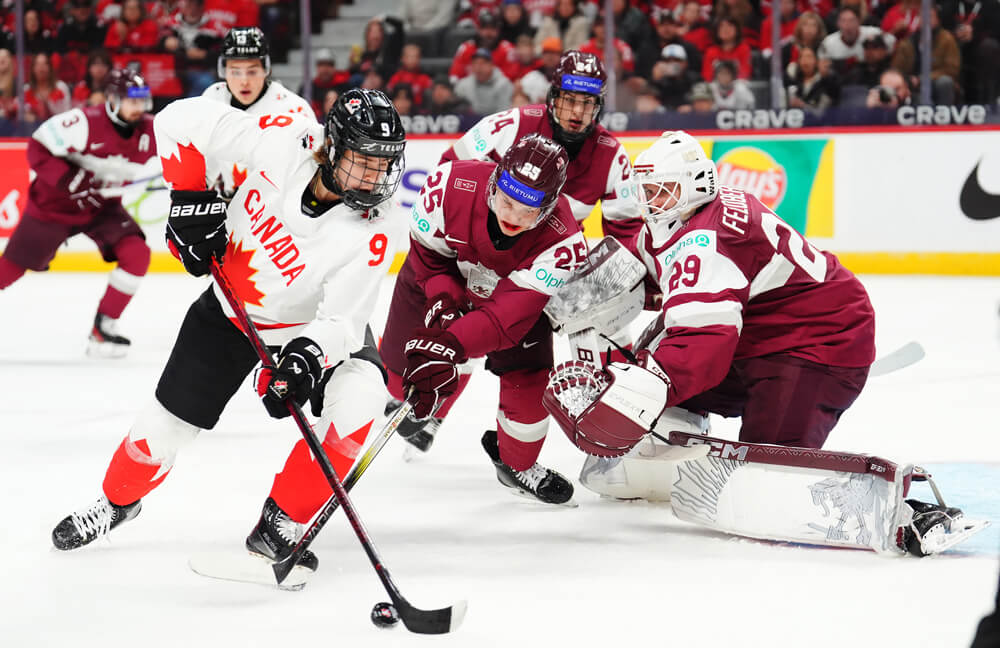
Last year, in his international debut for Canada at the U18 world championships, McKenna set a national record with 20 points at the tournament. He had a hat trick in the final, leading Canada to a 6-4 win over the United States. Earlier this year, at 16, McKenna was the youngest player on Canada’s world junior roster, and his role and ice time grew as the tournament wore on, though the team returned disappointed after losing to Czechia in the quarterfinal.
McKenna returned to Medicine Hat and kept his points streak going into the playoffs. Shortly after the Memorial Cup, he was awarded the CHL’s David Branch Player of the Year Award, with 129 points in the regular and post seasons. McKenna was held off the scoresheet in just four out of 76 games.
“I think what blows me away the most is how hard he works in practice — the stuff he does in practice is just remarkable.”
The Tigers often played a keep-away game near the end of practice, with four players and one puck, and every player trying to gain possession and get a scoring chance. “That’s where he probably shocks me the most, how he can kind of dance through some highly skilled players and walk [around] all four of them sometimes,” Wiesblatt says. “He’s just an unbelievable player and to be honest he shocks me almost every day. For me to have the privilege to play with him and to have been his teammate for as long as I have, it’s been a true honour and something I’m really proud of.”
The last year in particular, Wiesblatt has seen the pressure on McKenna rise, being so highly touted and owning the responsibility of being a good role model. “He’s handled it so well. There’s a lot of people in his ear but he’s super focused, and he doesn’t let anyone distract him. He’s been a guy who I think has been prepared for this his whole life,” Wiesblatt says.
The million-dollar question about what he’ll do next, McKenna will answer soon enough. “I’m not sure yet,” was his answer in mid-June, ahead of university visits and further discussions with the Tigers coaching staff.
“There’s been moments where he wants to stay in the CHL and then he’s like, ‘Oh maybe the NCAA,’ and so he’s kind of gone back and forth,” Willy says.
What’s certain is that a year from now, McKenna will be NHL draft eligible, a thought that’s driving much of his hard work.
“It’s for sure in the back of my mind lots. When you’re in the gym, you obviously want to think of that stuff as motivation and seeing how cool it is for people to get drafted around me, it motivates you,” he says. “I’m super pumped for it. It’s been a lifelong goal. To finally be coming close and to be my year, I want to make sure I make the most of it. I’m sure it’ll fly by, so I want to take it all in as best as I can.”
If he is picked first-overall in the NHL draft next June, McKenna will be the first Yukon-born player to earn that distinction. What he thinks about most is what that moment would mean for his home.
“It’ll be awesome,” he says, of the 2026 NHL Draft. “I saw the influence Dylan Cozens had on the community and how special it was to have a guy like him get drafted. I know that it’ll be amazing. I know the community will be super happy and I’m excited and hopefully it will happen.”
When it comes to McKenna, you can count on one thing: He’ll do everything in his power to make sure it does.