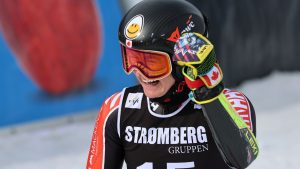
Mikaël Kingsbury was just four years old when he first put on skis in Saint-Sauveur, Que. Some 29 years later, after becoming the greatest athlete in his sport with an illustrious career, the Canadian moguls star will take his final bow in the same place.
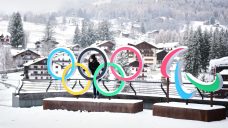
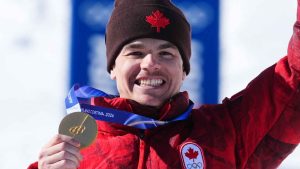
After a thrilling Milano Cortina Winter Games — where he won silver in the individual event before capturing gold in the first-ever Olympic dual moguls competition — the “King of Moguls” will come full circle at this weekend’s Canadian freestyle skiing championships.
Though he remains competitive, Kingsbury sees his final competition much more as a chance to celebrate where it all began. He had even been planning to retire after the event since last summer.
“I started skiing here. I did my first competition on the same course where I’ll do my last,” the 33-year-old from Deux-Montagnes, Que., said Thursday in an interview with The Canadian Press. “I have no regrets about my career. For me, it’s already mission accomplished. I’ve won what I wanted to win, so this weekend is like a bonus.”
“For me, (the Games) were the end of my real competitive career,” he added. “(Nationals) are more of a celebration. I put my skis on for the first time (Wednesday) since winning Olympic gold, so let’s just say it’s not the best preparation.”
Kingsbury will therefore be surrounded by family and friends when he takes to the moguls course one last time. He even took the opportunity to ski with his brother.
“I had so much fun (Thursday). I got to ski with (Maxime), who was on Team Quebec until he was 17,” Kingsbury said. “He wants to become a chiropractor, but he’s still an excellent skier. We were a bit competitive, seeing what our times were and the differences between them.”
It’s unclear who was faster. But with 100 victories, 143 podiums and 29 Crystal Globes on the World Cup circuit, plus nine world titles and five Olympic medals — including two gold — in as many Games, Mikaël certainly has the ability to beat just about anyone.
A stats enthusiast, Kingsbury reflected on his 100th victory, achieved this winter at Val Saint-Côme, Que. He reached the milestone despite an adductor tear that complicated his Olympic preparation, and made it more painful.
That injury could have had a significant impact on his next season.
“I like round numbers, and I love stats. I was going to retire once I got to at least 100,” he said. “It was clear in my mind. I wanted to reach 100.”
But if he had to pick the greatest moment of his career, Kingsbury would choose his dual moguls win at last month’s Olympics.
“Winning (duals) this year, and doing it in front of my whole family, my son (Henrik), that’s number one, knowing also that it was my last performance,” he said. “That’s what I wanted: win (duals) at the Games, then retire. With the injury, it seemed difficult, almost impossible at times. But I always believed. I couldn’t have asked for a better scenario.”
The risk of injury and the recent arrival of Henrik also factored in Kingsbury’s decision to close this chapter.
“I’m a father. I want to play with my son. I want to ski with him, do lots of sports with him and stay healthy,” he said. “That definitely weighed a lot in the balance.”
So what’s next for Kingsbury?
“I’m going to Japan. I have my ski camp for kids (in Saint-Sauveur). A few things with sponsors. Then just rest. Maybe a vacation at home, or somewhere warm. I’m excited about all the opportunities ahead,” he said, without going into detail.
From observer to champion
Kingsbury would, of course, like to win in Saint-Sauveur. But all the meaning surrounding the competition outweighs the result, he said. It’s where he first skied down a slope, landed his first jumps and discovered his passion.
“When I was seven, I thought the moguls team here in Saint-Sauveur looked really cool. They all wore the same jacket,” he recalled with a smile. “I asked my parents if it would be possible one day to join that team, and when it happened, that’s really when the passion started.”
Kingsbury climbed the ranks one step at a time until he earned a spot on his first World Cup stop. That came on Jan. 8, 2010, in Calgary, just weeks before the Vancouver Olympics.
Feeling nervous, he finished 36th and 54th in the two individual events. But beyond the results, the experience allowed him to measure himself against – and learn from – the best for the first time.
Canada’s Alexandre Bilodeau, Australia’s Dale Begg-Smith and France’s Guilbaut Colas were the three skiers he studied closely.
“I’d say that’s when I had the realization of becoming a real competitor,” he said. “I had an athlete pass, so I could go to the top of the course and watch how the best in the world, my idols, prepared. I changed my mindset a bit when I went back to the North American circuit. After that, that’s when I started to become dominant.”
And the rest is history.