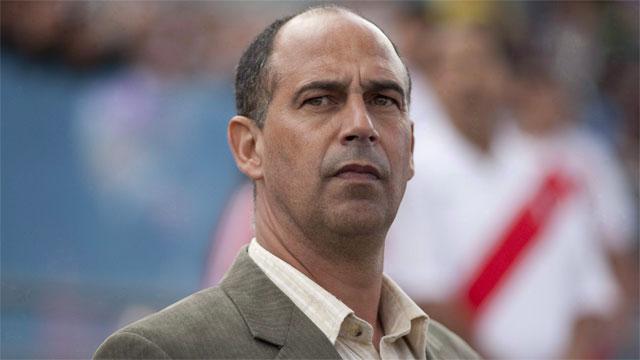

Canada’s 8-1 loss to Honduras has engendered a lot of emotional responses and soul searching within the Canadian soccer community, and it has already cost coach Stephen Hart his job.
In perusing the discussions that have been taking place within the blogosphere, and in the comment sections of mainstream media articles, one of the most preposterous ideas that I have seen put forward is the one that posits that since Canada was so soundly outplayed by Honduras, the current state of the national team program has been exposed to such a degree that the Canadian Soccer Association should not even consider a run at the 2018 World Cup and that the only focus should be long-term on 2022.
It’s certainly hard to look at the loss in San Pedro Sula with rose coloured glasses, but it also needs to be stated that a little bit too much emphasis has been put on the final score. Realistically, it’s not a major stretch to surmise that what occurred in Honduras was a situation in which an offensively-challenged team missing key attacking players went into shock that their World Cup dream was over and simply gave up when they figured they had no chance to come back from being down 3-0.
Looking at Canada’s 2012 World Cup qualifying run as a whole, it was a marked improvement over the last several World Cup qualifying campaigns and it ended with the Canadian team missing "the Hex" by a single point. One more point and we would all be reading about the great leap forward by Canada under Hart’s leadership.
Yes, there is no point in denying that in a multitude of ways Canada is way behind CONCACAF nations such as Mexico and the United States. At the same time, we should certainly be competitive with countries such as Jamaica, Panama, Costa Rica and, yes, Honduras. The last time I checked, Jerry Bengtson, Carlo Costly and Mario Martinez do not line up every week at the club level in a starting eleven alongside Xavi, Iniesta and Messi.
Yes, Canada needs to improve in the areas of long-term player development and Canadian coaching development, as well as solve the issue of getting more out our players. All three are complex variables that are absolutely fundamental to ensuring long term success, growing the sport and preventing another debacle like the one we witnessed in Honduras.
At the same time, the CSA and national team program should not be sitting around twiddling their thumbs until 2019 or 2020. Preparations for a serious run at the 2018 World Cup should have started the day after Hart handed in his resignation.
While it is likely hard to separate reality from wishful thinking at this point given the fact that it has only been a few days since the position became vacant, names that have already been suggested from various quarters include Nick Dasovic, Tony Fonseca, Bob Bradley, Richard Paez, Marc Dos Santos, Ricardo La Volpe, Javier Aguirre and Leo Beenhakker.
Only time will tell how many of those coaches are being seriously considered. That said, one thing that is a vitally clear at this point is the fact that the CSA must get this hiring 100 per cent right this time around. Not only for practical and football-related reasons, but also in terms of crystallizing the perceptions that they mean business and that they are dedicated to, at the very least, qualifying for "the Hex" for 2018 time. People will be remembering the eight goals conceded to Honduras for many years, but the progress that the national team had made prior to that final match should not be forgotten and it must be built upon.
With that in mind, Hart’s successor has to come with very clear capabilities and a proven record in the arena in which Canada competes.
First, Canada’s next coach must not only have experience and knowledge of the CONCACAF region, but also a demonstrated record of success. Essentially, the CSA should only be considering applicants who have a positive record in qualifying for major tournaments and a proven resume with victories away in Central America or at least similar environments.
Second, candidates must come with the type of experience that will command respect for the overall program and that will send a clear message that Canada is taking the national team forward to a higher level rather than regressing or merely treading water.
Third, the incoming coach must come with strong tactical knowledge and with the requisite top level coaching licenses to his credit. Realistically, Canada had three genuine shots at moving on from this just completed round via the home match against Honduras and the two away fixtures in Central America. Most pundits consider Hart to have done a solid job with the players he had at his disposal and given the circumstances, it is not a stretch to believe that a more experienced high level coach might have been able to churn out a needed result in at least one of those three fixtures. Fourth, the next coach must be a proven leader and motivator with a demonstrated record of success in dealing with the psychological approach to players and the game.
Yes, a coach with that type of pedigree is not going to be cheap, but as is the case in every industry, quality and experience does not come without a reasonably significant price tag. However, the CSA has announced some big name sponsors over the last couple of years, so we can only hope that the funding is there to continue to move the program forward in the right direction. Ultimately, where there’s a will, there is a way.
Now isn’t the time to shrink under the shadow of one unfortunate and humiliating loss. It’s time to move forward boldly and with intent, in just the manner that we all want to see our national team play in years to come.
Steve Bottjer is a Toronto-based writer, podcaster and editor for RedNation Online, on online magazine covering all aspects of Canadian soccer. Follow RedNation Online on Twitter.