THE ASSOCIATED PRESS
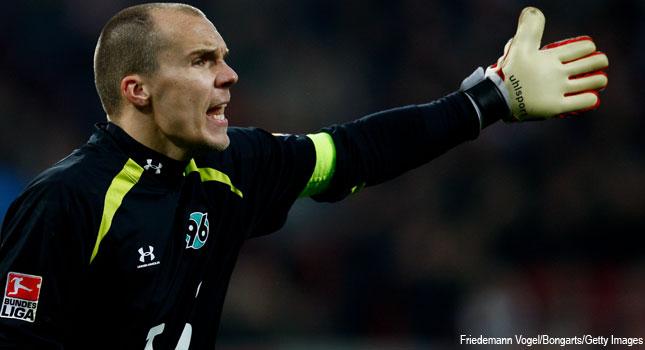
FRANKFURT, Germany — Robert Enke, the Germany goalkeeper who was killed after throwing himself in front of a train, will be buried Sunday in a small ceremony near his home following a memorial service at the Hannover stadium.
Hannover spokesman Andreas Kuhnt confirmed the details Thursday, with the burial near Neustadt, outside Hannover, following Sunday morning’s memorial service.
The entire national team will attend the service, the German football federation said, and will be joined by former coaches Juergen Klinsmann and Rudi Voeller, along with several players not in the current Germany squad.
In the wake of Enke’s death, his club urged football to rethink how it deals with the possible problems of its stars and to be more open about them.
Enke took his own life Tuesday evening when he stepped in front of a train near his Hannover home.
His widow, Teresa, went on national television a day later to reveal that Enke had been suffering from depression for six years but did not want it to be known.
“It was a free decision by Mrs. Enke. I think she wanted to make the public aware of this subject,” Hannover club president Martin Kind said. “We must learn how to open ourselves.”
Kind was speaking after attending a religious service Wednesday evening with Enke’s widow, some of his Hannover teammates, Germany coach Joachim Loew, national team captain Michael Ballack, football federation president Theo Zwanziger and hundreds of Hannover citizens.
Later, about 35,000 people took part in a silent march to city’s stadium.
The suicide of the 32-year-old Enke left the football-mad nation stunned and in mourning.
“The tragedy of Robert Enke gives us cause to think about certain things that are usual and taken for granted in football,” said Hannover general manager Joerg Schmadtke, himself a former goalkeeper. “We have to discuss the care of these young people.”
Teresa Enke said her husband had kept his depression secret from the public because he had been afraid the couple’s adopted eight-month-old daughter would be taken away from then if his illness was known. The couple’s biological daughter died of a heart ailment when she was two in 2006.
In a suicide note, Enke apologized to his family and the staff treating him for deliberately misleading them into believing he was better, “which was necessary in order to carry out the suicide plans,” said Valentin Markser, the doctor who treated him.
Enke’s ailment was not known to his teammates or coaches.
“Robert played a perfect role, he misled the public perfectly,” Schmadtke said. “By doing that he took away the possibility for us to help him.”
Enke’s longtime goalkeeping coach, Joerg Sievers, said depression was a taboo subject in football.
“Depression is surely seen in some places as a weakness,” Sievers said.
The union of professional football players urged for more psychological support for players. Some Bundesliga clubs already employ full-time psychologists, as does the national team.
Enke had a good chance of being Germany’s starting goalkeeper at next year’s World Cup in South Africa. He is the second Germany player known to have suffered from depression. Talented Bayern Munich midfielder Sebastian Deisler quit football in January 2007 after several bouts of depression and five knee operations.
The German football federation has cancelled a friendly slated for Saturday in Cologne against Chile. After attending the memorial service Sunday, the team will assemble in Duesseldorf to prepare for Wednesday’s friendly against Ivory Coast.